
Reviewed · SEOUL COOKING & KIMCHI CLASSES
Seoul : Taste of Korea, Authentic Home-Style Cooking Class
Cooking Korean comfort food is oddly satisfying. In this Seoul hands-on Hansik class, I love how you cook four dishes from scratch step by step with Jennifer, and I love the big end-of-class meal that leaves you stuffed with leftovers. The main drawback is you’ll eat a lot, so plan your day around a full 3-hour session.
This is a small setup, up to 10 people, with a mobile ticket and a meeting point at 31-5 Jahamun-ro in Jongno. You’ll learn classic home-style dishes like gimbap, spicy tteokbokki, seafood green onion pancake, and budae jjigae, plus drinks and dessert.
Quick reasons this Seoul class gets such high marks
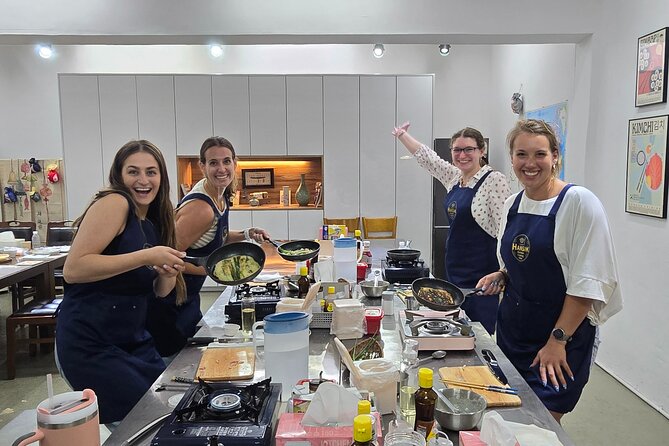
- Four dishes you actively cook in one session: gimbap, tteokbokki, haemulpajeon, and budae jjigae
- Guidance that stays patient and hands-on, led by Jennifer and her team
- A full meal plus take-home leftovers, so you do not leave hungry
- Dietary adjustments are offered, with alternative recipes when needed
- Recipes after class in digital form, so you can cook at home
- Max 10 people, which makes the kitchen feel less chaotic and more supportive
What you actually learn in this Hansik cooking class
Hansik is Korean food in the everyday, home-style sense. That matters, because many cooking classes in Seoul lean toward “show cooking.” Here, you’re learning the practical way people actually make these dishes, with technique you can repeat later.
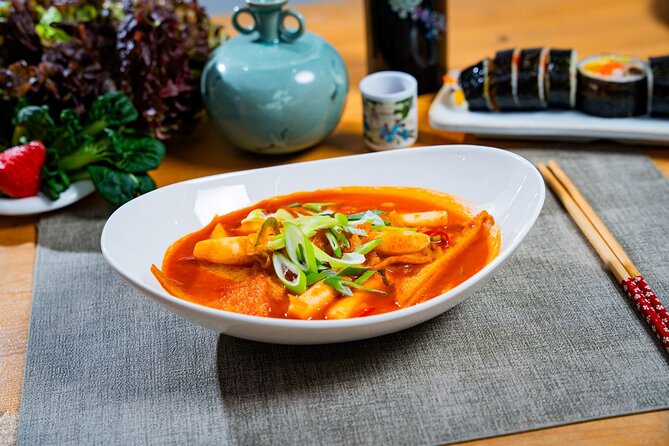
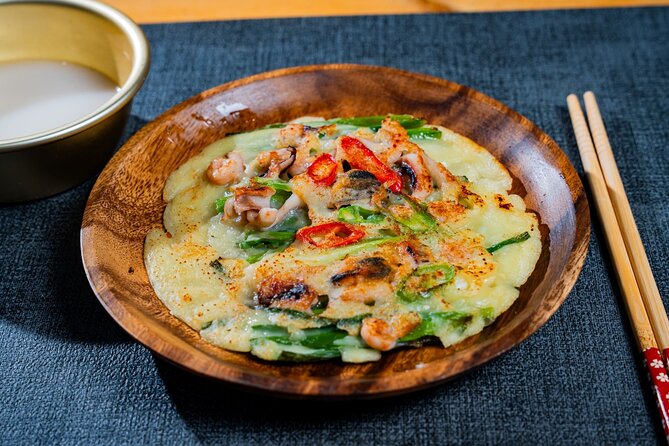
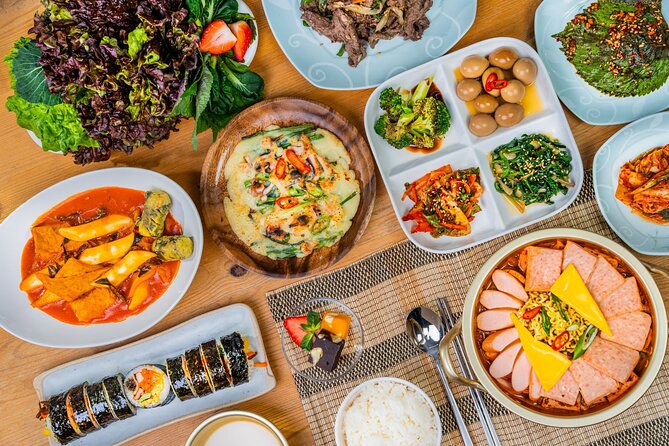
In this class, you make four staples: gimbap (rice roll), tteokbokki (rice cakes with gochujang red chili paste sauce), haemulpajeon (seafood green onion pancake), and budaejjigae (army stew). You are not just chopping while someone else cooks. You work through the steps, and the instructor helps when you need it, so you end up with real skills, not just a meal.
One more thing I like: the class includes not only cooking guidance, but also context. You get some history and even language help tied to the dishes. It’s the kind of added detail that turns a recipe into something you can explain and share when you’re back home.
A few more Seoul tours and experiences worth a look

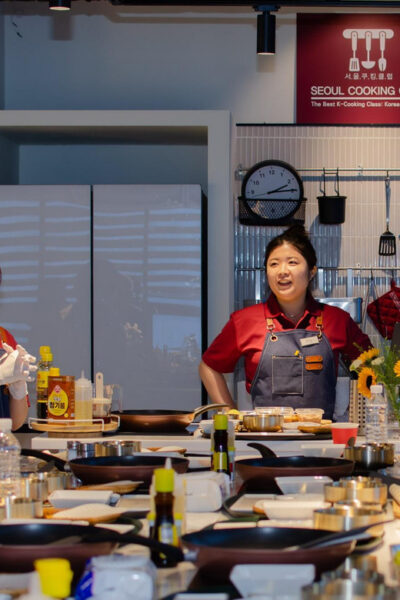
Entering the teaching kitchen in Jongno: clean setup, small group energy
The experience starts at 31-5 Jahamun-ro, Jongno District, and the activity ends back at the same meeting point. You use a mobile ticket, and the location is near public transportation, so it is not a “take a taxi into the unknown” kind of situation.
Inside, you cook at dedicated stations in a fresh and hygienic environment. That may sound basic, but it is huge for a hands-on class. Clean stations, clear steps, and space to work make the whole process less stressful, especially if you have never cooked Korean food before.
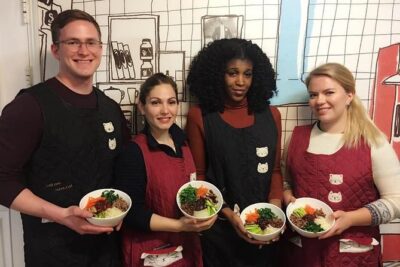
The group stays small, maximum 10 travelers, which is one reason the teaching gets such strong feedback. In a big class, you can end up waiting your turn. In a smaller group, you get more attention when you get stuck, and the pace stays friendly.
The heart of the class: four dishes in one 3-hour session
This is a 3-hour hands-on session, and it is built around efficient home-style cooking. You will not have time to “wander” while cooking. The upside is that you learn a lot in a short window, and each dish reinforces a different Korean flavor idea.
Here’s what each dish teaches you, and why it’s a smart choice for a first Seoul cooking class:
Gimbap: learning the rhythm of rice rolls
Gimbap is the Korean answer to a portable meal. You’ll work on making rice roll components and putting everything together into rolls. It’s a great dish for beginners because you can immediately see progress, from prep to assembly.
Technique-wise, gimbap is about balance. You learn how to handle rice and fill distribution so the roll holds without becoming a sticky mess. Once you’ve made gimbap once, it becomes a template you can adapt with different fillings later.
Tteokbokki: spicy gochujang sauce and stirring control
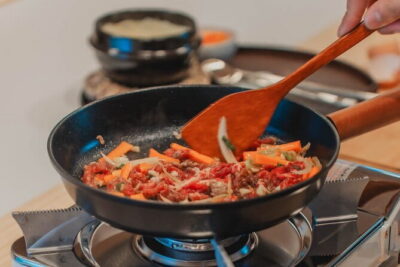
Tteokbokki is famous for its gochujang red chili paste sauce. This dish teaches you how a sauce thickens and clings to rice cakes. If you like bold flavors, this is the one that makes the class feel like real Korean comfort food.
You’ll also learn pacing. Rice cakes can go from “just right” to overly soft if you rush. That’s the kind of practical timing lesson that pays off later when you cook at home.




Haemulpajeon: making a seafood green onion pancake that actually holds
Haemulpajeon is a savory pancake built around seafood and green onions. It helps you learn how batter behaves, and how to manage heat so the outside cooks while the inside stays tender.
This dish is a good “texture” lesson. Pancakes are unforgiving if batter is too thick or pan heat is off. Getting it right during the class means you walk away understanding how to troubleshoot next time.
Budaejjigae: comfort stew and the big flavor payoff
Budaejjigae is hearty, salty, and deeply satisfying, and it’s the dish that often feels like the class finale. You’ll learn how to work with a stew base, so you get practice with Korean comfort flavors rather than just snacks or sweets.
Stew is also a helpful way to end the cooking cycle. You can smell the final dish while you cook, and it ties everything together with a warm, filling finish.
Snacks, Korean tea, Sikhye, and Makgeolli: the meal is the real reward
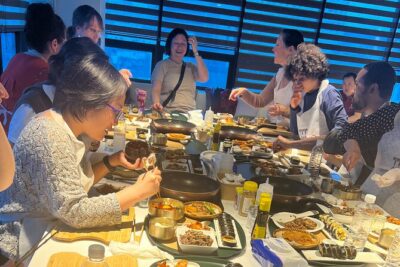
You do not just cook and then leave. You get a full-course home meal, along with Korean tea, snacks, Sikhye (Korean rice punch), Makgeolli (Korean rice wine), and desserts.
This matters for value. Many cooking classes in Seoul charge similarly, but the eating portion is small. Here, the structure is built around food as part of the learning and the celebration.
There’s also an alcohol rule you should know. Alcoholic drinks are served only to travelers age 21 and up. If you are under 21, you’ll be served non-alcoholic drinks instead. That keeps the class comfortable for mixed-age groups.
Also, expect a lot of food. Multiple people emphasize leaving full, with leftovers to take home. That means your dinner plan after class is handled, even if you ate before you arrived.
Teacher Jennifer and the team approach: patient, chatty, and practical
The cooking instructor is Jennifer, and the class is known for a welcoming, supportive vibe. People describe her as patient and communicative, and the teaching style is step-by-step without leaving you to figure things out alone.
What I find most useful is that you are allowed to do the work, but you get help in the moments that matter. You might make a mistake along the way, and the instructor can adjust so you still finish confidently. That keeps a class from turning into frustration.
There’s also added instruction beyond recipes. Many participants mention learning history and language tied to the dishes, not just the cooking process. That combination helps you remember the “why,” which is what makes recipes easier to repeat later.
Finally, you get digital recipes afterward. That’s a big deal for home cooking, because you can compare your memory to a written step list without relying on fuzzy photos.
Value check: is $89 for a Seoul cooking class actually fair?
At $89 per person for about 3 hours, this class is priced like a serious, all-in cooking experience. The value comes from what’s included, not just the fact that you get to cook.
You get:
- Four dishes made by you, with guided help
- A full-course home meal afterward
- Snacks, Korean tea, Sikhye, Makgeolli, and dessert
- Digital recipes after class
- And, based on feedback, leftovers you can take home
When you add those pieces up, the cost starts to look more reasonable than a standard meal plus a short demo. It is also a good deal if you want a hands-on activity that doubles as dinner and gives you enough food for later.
The class limit, max 10 travelers, is another value driver. Smaller groups usually mean better feedback, less waiting, and a smoother experience overall.
Who this cooking class suits best (and when it might not)
This works especially well for:
- Food lovers who want Hansik in a home-style format
- First-time cooks who want clear, step-by-step support
- Families, since the class can accommodate younger participants (one review mentions kids ages 10 and 12 participating)
- People who like learning more than just recipes, since history and language cues are part of the experience
A practical consideration: you’ll cook and eat spicy foods as part of tteokbokki because it uses gochujang. If you have spice concerns, the good news is that alternative recipes are offered for dietary restrictions and preferences. Still, it helps to tell your instructor your comfort level early.
Also, the experience requires good weather. If conditions are poor, the class may be canceled, with a different date offered or a full refund. If you are visiting Seoul during a season with unpredictable weather, keep your plans flexible.
Should you book this Hansik cooking class?
I’d book it if you want a Seoul experience where the goal is not just eating something good, but learning how to make real Korean home food yourself. The mix of four hands-on dishes, a teacher-led step-by-step approach, and the fact that you leave with plenty of food (including leftovers) makes it feel like your time is respected.
Skip it only if you want a lighter snack-style activity or you already know you do not want to cook. For most people who love food and want something practical to bring home, this is a strong choice in the Jongno area.
FAQ
What dishes will I learn to make?
You will cook four Korean home-style dishes: gimbap (rice roll), tteokbokki (rice cakes with gochujang red chili paste sauce), haemulpajeon (seafood green onion pancake), and budae jjigae (army stew).
How long is the cooking class?
The class runs for about 3 hours.
Is it a hands-on cooking class or just a demonstration?
It is hands-on. You cook the dishes yourself at dedicated cooking stations with guidance from the instructor.
What is included with the class meal?
You’ll be served a full-course home meal along with Korean tea and snacks, Sikhye (Korean rice punch), Makgeolli (Korean rice wine), and desserts.
Can I drink alcohol in the class?
Alcoholic drinks are served only to travelers age 21 and above. Minor travelers below 21 will be served non-alcoholic drinks.
Does the class offer alternatives for dietary restrictions?
Yes. If you have dietary restrictions or preferences, the instructor offers alternative recipes.
How big is the group?
The class has a maximum of 10 travelers.
Where do I meet, and where does it end?
The meeting point is 31-5 Jahamun-ro, Jongno District, Seoul, South Korea. The activity ends back at the meeting point.
Are there different session times?
Yes. There are convenient morning or evening sessions, so you can choose the time that suits you.
What happens if it gets canceled due to weather or too few travelers?
If poor weather cancels the experience, you’ll be offered a different date or a full refund. If the minimum number of travelers is not met, you’ll be offered a different date or a full refund as well.
What is the cancellation deadline?
You can cancel for a full refund up to 24 hours before the experience’s start time. If you cancel less than 24 hours before, the amount paid is not refunded.
More Workshops & Classes in Seoul
More Tour Reviews in Seoul

Not for you? Here's more nearby things to do in Seoul we have reviewed


Seoul Cooking & Kimchi Classes, compared.
 ★ 5.0Local Home Korean Cooking Class & Market Adventure in SeoulFrom $911,024 reviews
 ★ 5.0Master Korean traditional cooking with a Kimchi chefFrom $85385 reviews
 ★ 5.0Korean Cooking Class at a Local Home and Market TourFrom $98348 reviews
 ★ 5.0Korean Cooking at Seoul Cooking Club!From $109311 reviews
 ★ 5.0Cook 3 Authentic Korean Dishes with Local Market TourFrom $79231 reviews
 ★ 5.0Korean Cooking at Seoul Cooking ClubFrom $109220 reviews
Experience Korean Cooking in Modern Hanok KitchenFrom $87118 reviews
★ 5.0Korean Cooking at Seoul Cooking ClubFrom $109220 reviews
Experience Korean Cooking in Modern Hanok KitchenFrom $87118 reviews
 ★ 5.0Korean Cooking Class with Grocery Shopping at Seoul Local MarketFrom $91107 reviews
Browse the lists this tour appears in