
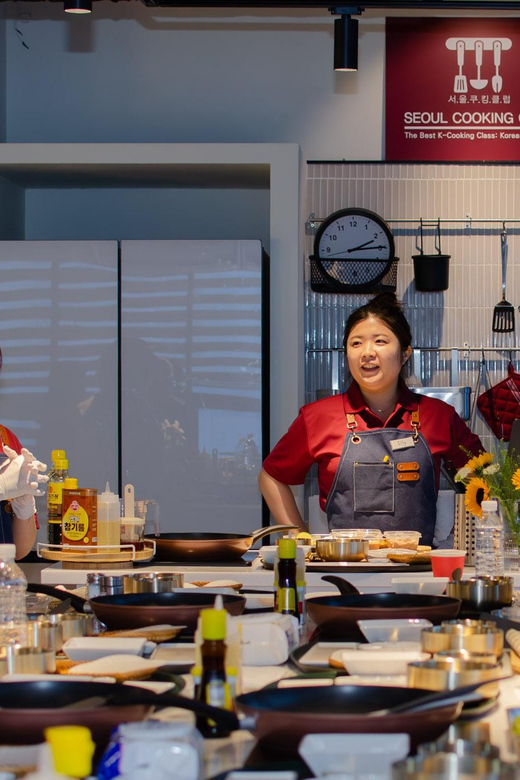
Reviewed · SEOUL COOKING & KIMCHI CLASSES
Seoul: Korean Cooking at Seoul Cooking Club!
Korean cooking gets hands-on in Jongno. I like the hands-on pace, and I love getting a take-home recipe book after a meal that runs long and full. One thing to keep in mind, it is not a quick snack class, it is a $109 hands-on cooking session for adults who plan to eat what they make.
In 150 minutes, you cook a mix of classic Korean flavors and techniques, from crisp Jeon (small pancakes) to crowd-pleasers like Japchae, Bulgogi, and Jeonju Bibimbap. You also sit down for a three-course style meal with about ten tastings, plus dessert and Korean drinks.
The location is a big plus. You meet in central Jongno, steps from Jonggak Station, and after class you can walk to Insadong, Ikseondong, Gwangjang Market, Myeongdong, and even Gyeongbokgung Palace all within an easy stroll.
Key things worth knowing before you go
- You cook multiple dishes, not just one: Jeon plus main dishes like Japchae, Bulgogi, and Bibimbap
- Jeon stations let you compare flavors, from seafood and tofu to beef and sesame leaf pancakes
- English instruction is built in, and chefs share origins and stories as you work
- Expect side-dish tastings like kimchi, seasoned spinach, radish kimchi, and more
- Dessert can include Bing-su, with daily changing options
- You can leave with leftovers, since you get take-away help and a recipe book
Cooking Seoul Dishes in a 150-Minute Class in Central Jongno
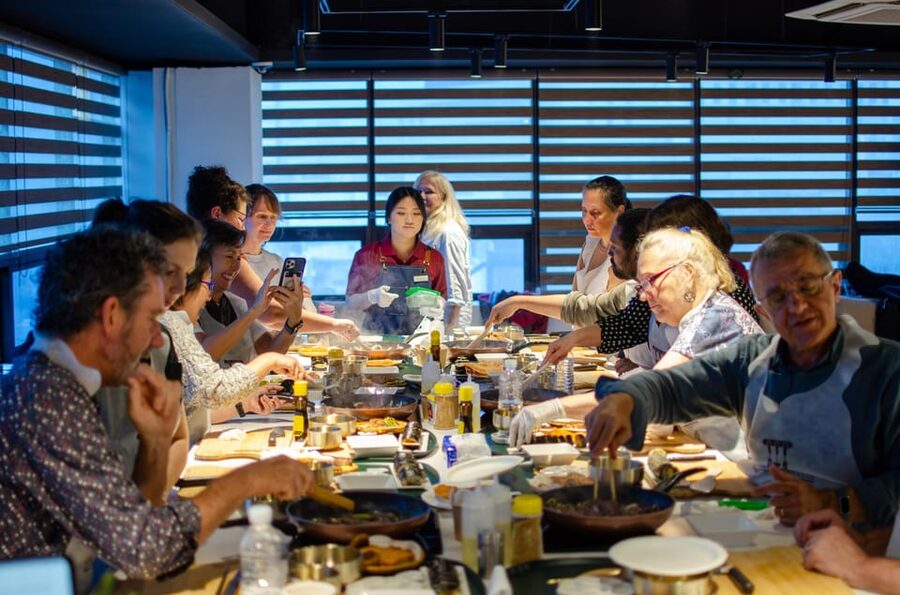
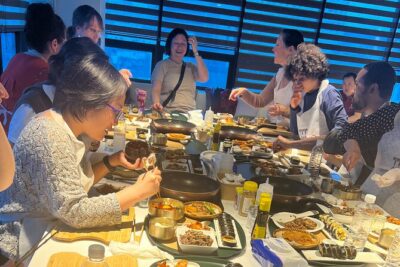
If you want Korean food you can actually recreate at home, this is the kind of class that makes sense. You spend your time at stations, cutting, mixing, frying, and assembling, then you eat what you made.
The vibe is practical. You are not just watching. You are cooking as you learn, and the schedule is tight enough that you stay busy, but not so frantic that you forget what you did.
The class is also in a very convenient part of town. Jongno and Jonggak put you close to the best “walk-between-neighborhoods” routes, and the metro directions are straightforward.
You can also read our reviews of more tours and experiences in Seoul.

Your Jeon Pancake Plan: Donggrangttaeng, Seafood, and More
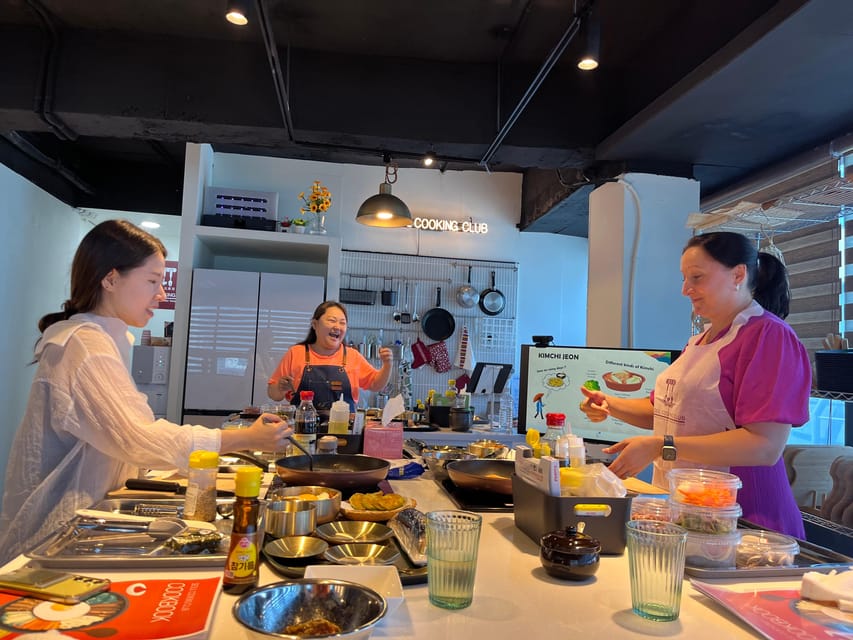
Jeon is where the class really shows its teaching style. You make small Korean pancakes, then compare how different fillings and batter choices change the taste and texture.
You will prepare 3 to 4 Jeon varieties from a menu of options such as Donggrangttaeng (pan-fried battered meatballs), pollack pancake, pajeon (seafood pancake), beef pancake, tofu pancake, and sesame leaf pancakes. That variety matters because it trains you to think beyond one dish and into the logic of Korean cooking.
One nice detail, the prep work helps you keep moving. In multiple sessions, the setup feels organized, with ingredients ready and stations prepared so you are cooking more than waiting. When you are learning, that matters, because you need repetition without a lot of downtime.
Main Dishes You Actually Build: Japchae, Bulgogi, and Jeonju Bibimbap
After the Jeon work, the class shifts into the dishes that most people think of when they picture Seoul food. You get collaborative cooking time, which is a good fit if you are traveling solo or want to meet people without awkwardness.
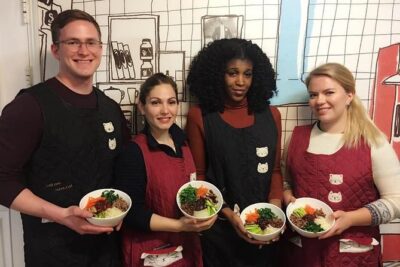
You cook Japchae, which is stir-fried vegetables and glass noodles. You cook Bulgogi, sliced beef seasoned with soy sauce. And you make Jeonju Bibimbap, which is part of the “assemble and balance” side of Korean cuisine.
Here is what I like about this part for your real-life dinner plans at home. These dishes teach foundations: sauces, heat control, seasoning, and how to combine soft noodles, crisp vegetables, and savory meat. Even if your ingredients are not exactly the same as what you get in Seoul, the method transfers.
Jeonju Bibimbap also gives you a lesson in balance, because the bowl needs contrast. Crunchy and soft elements, savory and bright, and the idea that banchan is not optional, it is part of the meal.
Banchan Tastings That Teach You What to Notice
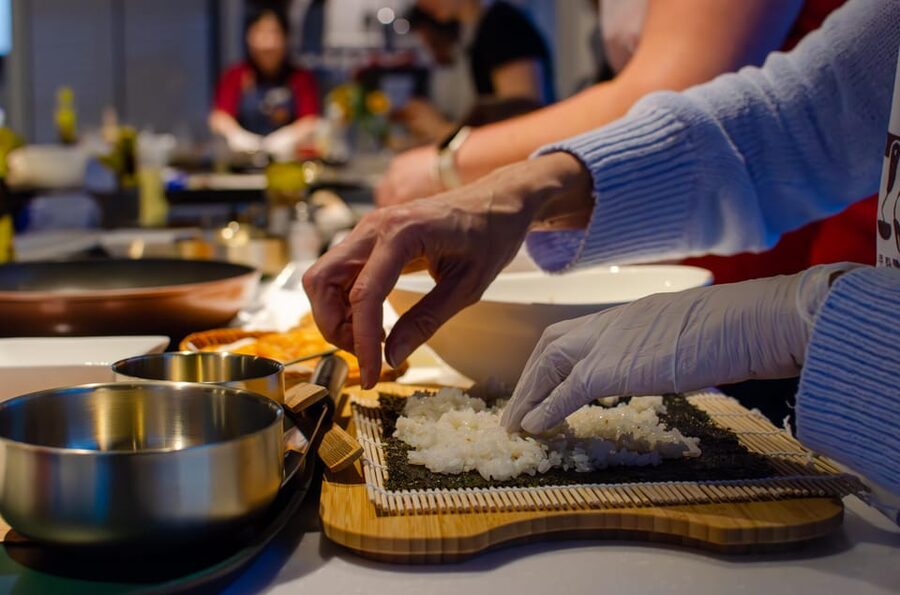
Cooking the mains is only part of the experience. The class also builds in a tasting portion designed to show you how Korean meals work in layers.
You get about ten tastings, including items such as kimchi, Korean egg-roll, stir-fried anchovy, radish kimchi, seasoned soybean sprouts, seasoned spinach, and spicy cucumber. This is where you learn what you like and why a bowl of rice with small sides can feel complete.
You also get a taste of Korean side dishes as part of the included meal. That matters because “banchan” is not just garnish. It is flavor variety, nutrition variety, and a way to keep eating interesting.
If you are the type who usually orders one signature dish in restaurants, this tasting portion is a good reset. It teaches you how Koreans actually pace a meal, with multiple bites that hit different notes.
Dessert and Drinks: Sikhye, Korean Tea, and Bing-su
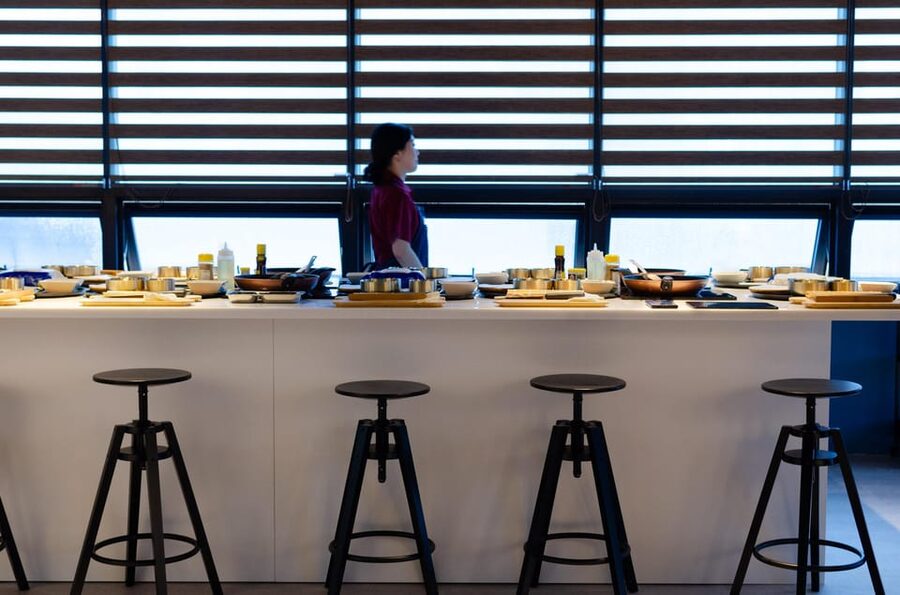
Korean desserts are simple but satisfying, and the class ends in a sweet way. Dessert options change daily, so you do not get the same thing every time.
Bing-su is a favorite option and can show up as the sweet finale. The included drinks cover water, Sikhye (sweet rice drink), and Korean tea, so you can cool down and reset after the frying and stirring.
This part is also useful if you are thinking about bringing skills home. Korean cooking is not just salty and spicy. Sweet rice drinks, tea, and cold dessert textures show how Korean meals often end gently, not with a heavy sugar overload.





English-First Cooking, With Chef Stories You Can Use
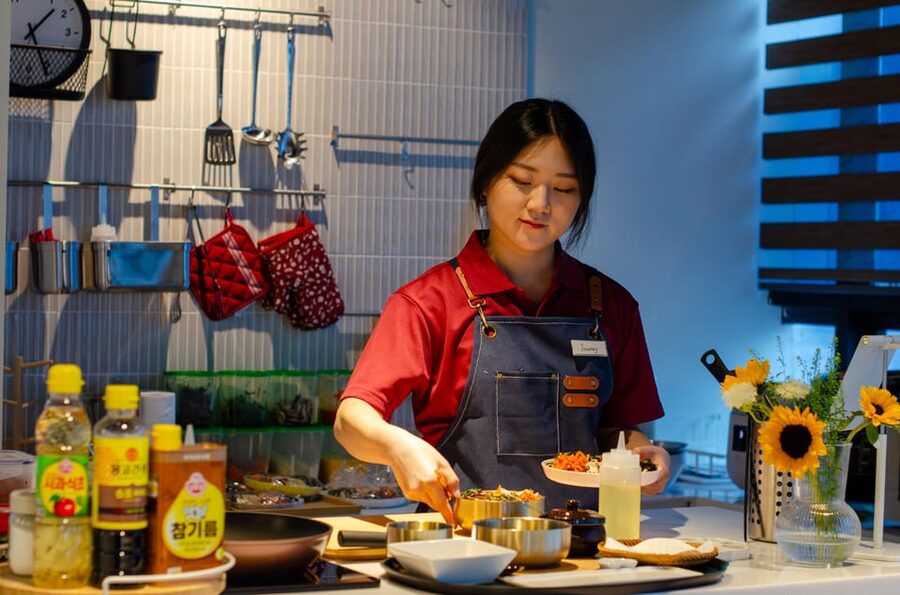
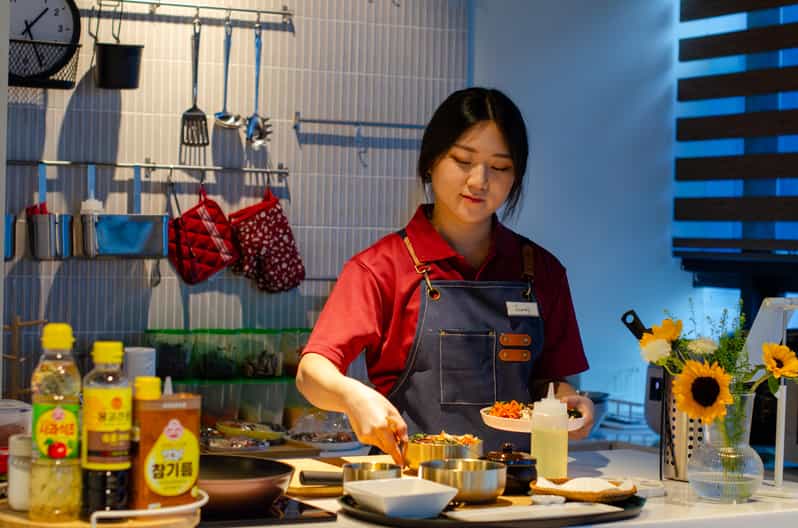
The instruction is in English, which changes the whole learning curve. You spend time on technique and reasoning, not guessing what step comes next.
You will hear origin stories and explanations while you cook. Different chefs run sessions, and names you may see referenced include Sally, Elly, Olivia, and Grace, all of whom are described as patient, clear, and warm. If you like learning the why behind food, you will probably enjoy this style.
The best teaching trick here is pacing. You are not dumped into full complexity at once. You get step-by-step guidance, and you can ask questions while you work.
One more practical point I value: the class feels safe to participate in. For example, one group noted a gluten-free request being handled well, including coeliac-friendly choices. If you have dietary needs, I would still message ahead, but this gives you a signal that the team can be careful.
Getting There From Jonggak Station, Exit 12, and What to Do After
Location is one of the quiet superpowers of this class. You meet in central Seoul, in Jongno, a minute walk from Jonggak Station, and it is only 15 meters from Jonggak Station line 1 exit 12.
The directions are simple. Walk straight ahead, take an immediate first right around Pascucci. Your entrance is in the same building on the 7th floor, next to the Good Game Zone with the orange facade.
After class, you are in walking range of a lot of classic Seoul stops. Within about 10 minutes on foot, you can reach Insadong, Ikseondong, Gwangjang Market, Myeongdong, and Gyeongbokgung Palace. That makes this a smart “do this first, then explore” activity.
If you prefer an itinerary that is mostly walking and metro, this fits perfectly. You do not waste half your day commuting to a faraway cooking studio.
Price and Value at $109 for a Hands-On Meal
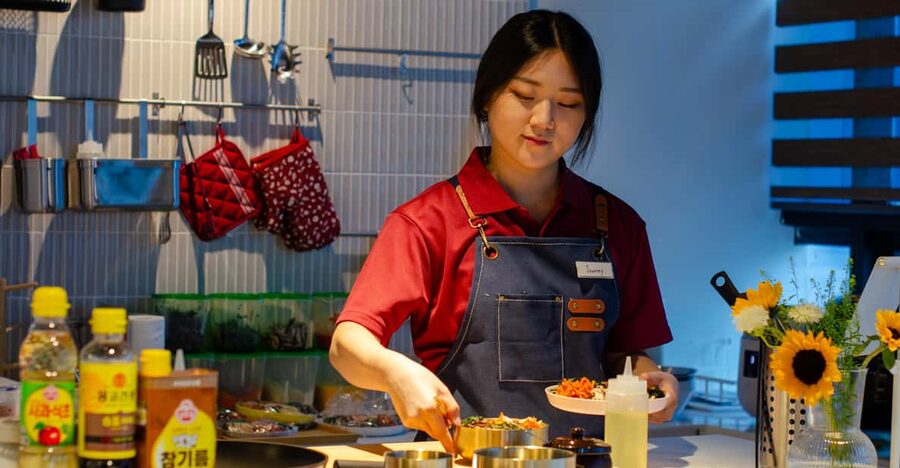
At $109 per person, you should think about value in terms of time, instruction, and how much food you get. This is 150 minutes, and it includes a full cooking experience plus a seated meal with tastings, dessert, and drinks.
You are not paying for one dish. You cook Jeon varieties, then you cook major mains like Japchae, Bulgogi, and Bibimbap. On top of that, you taste around ten side items and you end with dessert.
You also get a recipe book to take home, plus take-away support so you do not feel forced to finish everything at the table. Many people also note there is enough food to carry leftovers for later, which stretches the value of what you paid for.
Is it expensive? Yes, compared with street-food meals. But it is also the kind of experience where you leave with skills, not just a souvenir snack.
What to Bring, Who It Fits, and How to Set Expectations
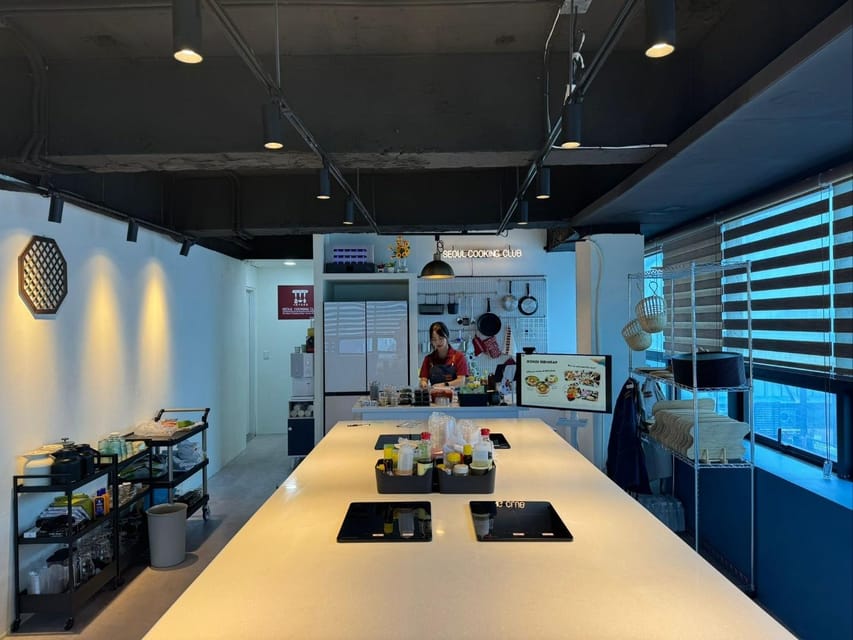
This class is for adults and teens. It is not suitable for children under 16, so plan accordingly if you are traveling with younger kids.
Bring closed-toe shoes. Korean kitchens can be busy and you will be standing and moving a bit during cooking and cleanup.
You should also come hungry and pace yourself. Even with the cooking support and organized prep, the class moves through multiple dishes and tastings. Plan to slow down once you sit for the meal, and take breaks if you need them.
Group size can be friendly. Some days can feel small, which is great if you want more question time and more attention from the instructor.
Should You Book Seoul Cooking Club?
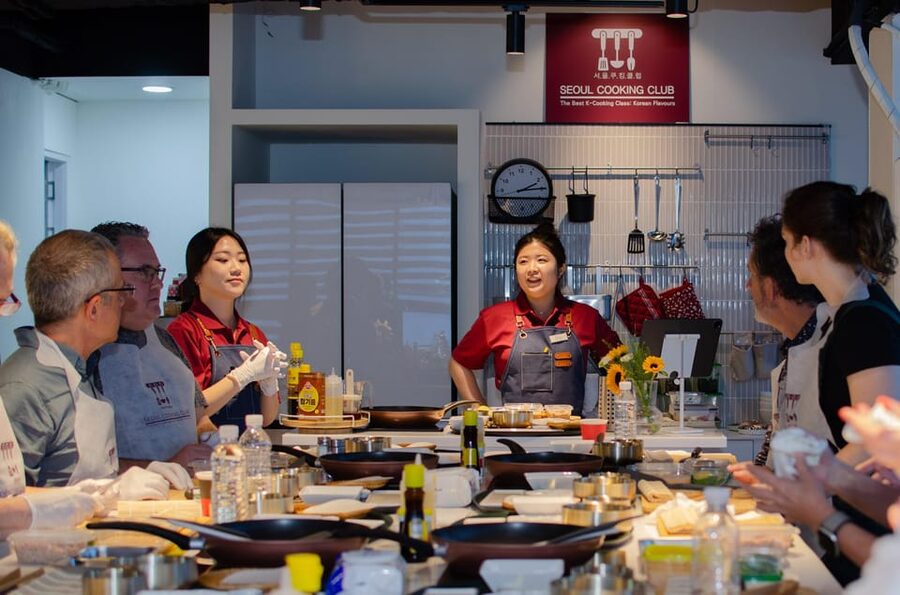
If you love food and you want Korean cooking skills you can repeat at home, I think you will like this. The mix of Jeon, Japchae, Bulgogi, and Bibimbap, plus side tastings, makes the learning feel complete rather than random.
Book it if you want an English-taught class in a convenient central location, and you like hands-on activities where you actually eat what you cook. Skip it only if you are looking for a light tasting tour or you are not interested in working in the kitchen for 150 minutes.
FAQ
How long is the Seoul Cooking Club class?
The class runs for 150 minutes.
What is included in the price?
The class includes a welcome drink, 3 to 4 starters, 3 main dishes, Jeonju Bibimbap, a taste of Korean side dishes, Korean dessert, and traditional Korean drinks. Hotel pickup and drop-off are not included.
Where do I meet for the class?
You meet near Jonggak Station, Line 1, Exit 12. Walk straight ahead, take the first right around Pascucci, then go to the entrance on the 7th floor next to the Good Game Zone with the orange facade.
Is the class taught in English?
Yes. The instructor teaches in English.
What dishes will I make during the class?
You will prepare Jeon options such as Donggrangttaeng, pollack pancake, pajeon, beef pancake, tofu pancake, and sesame leaf pancakes. You also collaboratively prepare Japchae, Bulgogi, and Jeonju Bibimbap.
What drinks and dessert are included?
You get drinks such as water, Sikhye, and Korean tea. Dessert options change daily, and Bing-su is mentioned as a favorite that participants can have.
Are there age limits?
Yes. The class is not suitable for children under 16.
What should I bring and wear?
Wear closed-toe shoes. That is the only specific item listed.
FAQ
Is there free cancellation?
Yes. You can cancel up to 24 hours in advance for a full refund.
Is the cooking club wheelchair accessible?
Yes. The activity is wheelchair accessible.
More Tour Reviews in Seoul
Not for you? Here's more nearby things to do in Seoul we have reviewed


Seoul Cooking & Kimchi Classes, compared.
 ★ 5.0Local Home Korean Cooking Class & Market Adventure in SeoulFrom $911,024 reviews
 ★ 5.0Master Korean traditional cooking with a Kimchi chefFrom $85385 reviews
 ★ 5.0Korean Cooking Class at a Local Home and Market TourFrom $98348 reviews
 ★ 5.0Cook 3 Authentic Korean Dishes with Local Market TourFrom $79231 reviews
 ★ 5.0Korean Cooking at Seoul Cooking ClubFrom $109220 reviews
Experience Korean Cooking in Modern Hanok KitchenFrom $87118 reviews
★ 5.0Korean Cooking at Seoul Cooking ClubFrom $109220 reviews
Experience Korean Cooking in Modern Hanok KitchenFrom $87118 reviews
 ★ 5.0Korean Cooking Class with Grocery Shopping at Seoul Local MarketFrom $91107 reviews
 ★ 5.0Korean Kimchi Making Day Experience with a Local Market TourFrom $8999 reviews
Browse the lists this tour appears in