
One small apron changes everything in Seoul. This Korean cooking class puts you in a modern, air-conditioned school kitchen in the Bukchon area, then walks you through Korean flavors step by step with professional English-speaking chefs. You get to cook (not just watch), and you finish by eating the lunch you made, plus a drink.
What I especially like is the hands-on pace. You’re set up with the ingredients and tools, then you chop, mix, and cook at a workstation while chefs float around to correct and guide. I also like the clear beginner focus, with lessons that include tips on how to choose ingredients and quick safety guidance before you start cooking.
The one drawback to consider is practical: the location can be hard to find, and it may involve stairs since one review noted the class is on a third floor with no elevator. Plan for a little walking and take water with you.
Key Points to Know Before You Go
- Modern, air-conditioned kitchen in the Bukchon area, built for real cooking instead of demo theater
- Beginner-friendly format that teaches ingredient choices and simple technique before the hot part
- Professional English-speaking chefs who give hands-on help, with examples like Ran and Yibben showing up in reviews
- Lunch included, plus one beverage, and you eat what you cook
- Small-group feel is common, with the class capped at 22, and sometimes running smaller
A Bukchon Morning That Feels Practical, Not Performative
Seoul is packed with food experiences. This one works because it is structured like a lesson, not a show. You start with guidance, then you take control of the cooking. For beginners, that matters. It turns Korean food from something you order into something you can actually recreate.
I also like the setting choice. You’re near the Bukchon hanok neighborhood, but the cooking happens in a fully air-conditioned modern kitchen. That means you get the cultural area outside, and comfortable cooking conditions inside.
You can also read our reviews of more tours and experiences in Seoul.

Modern Hanok Kitchen, Real Ingredients, Real Tools
The class is held in a professional cooking school environment with modern kitchen tools and equipment. That sounds basic, but it changes how the class feels. You are not fighting bad knives, improvised stations, or equipment that makes everything harder.
Another plus: everything is included. That usually means fewer headaches for you on travel days. You do not have to source specialty sauces, measure ingredients, or worry about bringing the right cookware. The experience gives you a clean setup, ingredients portioned for teaching, and stations designed so you can participate.
And you get the chef support in the room. Multiple reviews praise the clear step-by-step guidance and the way staff move around to help you adjust while cooking.
Getting Set Up at O’ngo Food Communications (10:30 Start)
Your meeting point is O’ngo Food Communications, 137-11 Bukchon-ro, Jongno District, Seoul. The class start time is 10:30 am, and the activity runs about 2 hours.
Two details matter for your day plan:
- Arrive early. The guidance says to show up about 10 minutes before start time, and several reviews recommend more like 30 minutes if you want time to get your bearings and enjoy a local market walk.
- Expect stairs. One review noted the location is on the third floor with no elevator. If stairs are not your thing, wear shoes that make stair steps easier, and bring water so you do not feel rushed.
Also, the tour uses a mobile ticket and is near public transportation, so you should not need a complicated route. Still, one review mentioned it was hard to find and that a taxi driver needed GPS. I recommend you have the address saved in maps before you leave.
The Morning Flow: From Market-Like Browsing to Kitchen Safety
Even if you are not a cooking person, you will likely recognize the rhythm. You start with orientation, then a short primer on Korean cooking flavors, and then you move into cooking mode.
What I find valuable here is the way the class frames ingredients. You get tips on how to choose good components, which is the part that makes recipes work later at home. Korean cooking depends on balance, and ingredient choice helps you get that balance right.
There is also a safety moment before you cook. You get basic safety instructions so the hands-on portion does not feel chaotic.
One extra perk worth knowing: in reviews, people repeatedly mention a market walk before cooking. That seems to be part of the morning experience when you arrive early. You get a local perspective on shopping and ingredients, and that makes the later lesson feel more grounded.
What You’ll Cook: Beginner Recipes With Real Payoff
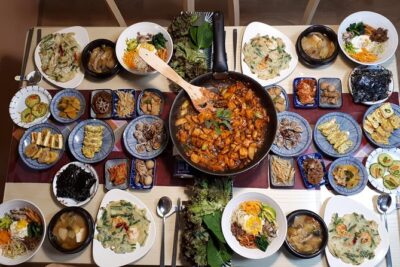
The menu is described as a diverse set of popular dishes for beginners, and the exact dishes can vary by session. What you can count on is that you will learn a few specialties and produce a meal worth eating, not just a couple of small bites.
From reviews and class examples, you may see dishes like:
- Japchae (often highlighted for being easy and delicious)
- Bulgogi (noted as straightforward to make)
- Kimchi and sometimes a related preparation like a kimchi pancake
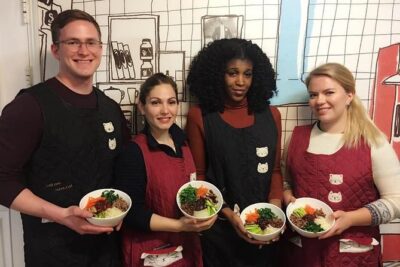
- Bibimbap (mentioned as a great result)
- A soup or chicken stew style dish (depending on the class)
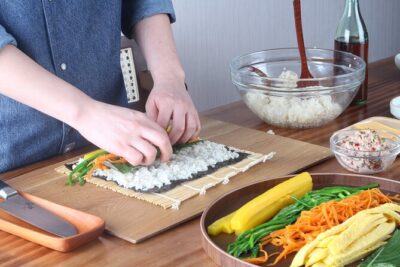
The key point is how you learn. Reviews mention a mix of instructor direction and participant work. You do the chopping, dicing, grinding, and mixing yourself, then you cook your portion. Chefs help before mistakes get too far, and you can adjust seasoning at the table as you eat.
If you have zero cooking experience, this is still doable because the class is designed for beginners. The step-by-step structure is repeatedly praised, including by people cooking alongside spouses, solo travelers, and a parent with an 11-year-old.




Chefs, English Support, and the Small-Group Advantage
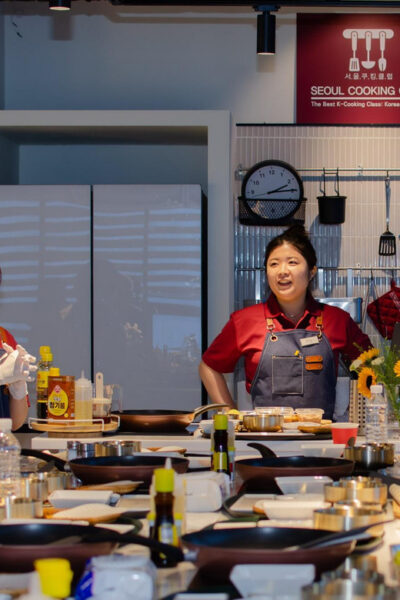
This class is guided by professional chefs trained both internationally and in Korea, and they speak English. That combination matters, especially when you are learning technique.
In particular, reviews name instructors such as Ran and Yibben, and people consistently mention patient teaching and excellent English. That is what you want when recipes are detailed and you are watching timing on a hot pan.
Group size also makes a difference. The class has a maximum of 22 travelers, and many reviews describe a cozy classroom with a small-group feel. Some people even got a very small class when others canceled. In practice, that usually means more direct help and faster feedback when you are cutting, stirring, or adjusting heat.
Lunch You Made: Rice, One Drink, and How to Make It Taste Right
After cooking, you sit down to a meal featuring your dishes, served with rice and one beverage. This is not just a finish. It is a feedback loop.
You taste what you made immediately, then you learn what to change next time. Reviews mention being able to adjust spices and that the meal is filling. Come hungry. Even if you expect a light class meal, you are preparing lunch in a cooking school setting, so it tends to leave you satisfied.
For anyone coming from Western cooking habits, the class nudges you toward Korean flavor logic: balance, seasoning timing, and the role of key ingredients. That is how you move from copying a recipe to understanding it.
Price and Value: What You Get for $87
At $87 per person for a roughly two-hour session, it is not a cheap impulse add-on. But the value is strong because the price bundles the hard parts:
- All ingredients and equipment included
- A professional kitchen setup
- Professional English-speaking chef guidance
- Lunch plus one beverage
When you compare this to buying groceries plus dealing with unfamiliar ingredients and recipes alone, the class starts to look like a practical shortcut. You pay to learn technique with coaching, and you take home the recipe skills as something you can reuse.
Also, the timing is useful. A morning class is a great match for travel days when you want a planned activity and an included meal without eating in another random spot.
Who This Class Suits Best (And Who Might Want a Different Option)
This is best for:
- Beginners who want step-by-step structure
- People who learn by doing, not watching
- Food travelers who want a Korean flavor lesson they can repeat later
- Families where the kids are at least 11 years old (reviews include an 11-year-old who had a great time)
It may be less ideal if:
- You need an elevator or step-free access. Reviews mention stairs and no elevator.
- You do not want any market-style browsing or early arrival. Some people feel the market segment is lighter than bigger markets they visited, and the best version seems to come from arriving early.
Small Logistics That Can Save Your Morning
A few practical tips can make the day smoother:
- Arrive a bit early. Ten minutes might be enough for the kitchen start, but early arrival gives you time to settle in and possibly enjoy a nearby market look.
- Save the address. One review noted taxi drivers struggled without GPS.
- Bring water for stairs. A reviewer warned about the third floor with no elevator.
- If you have allergy concerns, ask questions. One review specifically mentioned the chef helped alter food due to an allergy, so the staff can sometimes accommodate, but you should communicate clearly.
Should You Book This Korean Cooking in Modern Hanok Kitchen Class?
If you want a Seoul activity that is both cultural and genuinely useful, I think this class is an easy yes. You cook real dishes, learn ingredient logic, and eat a satisfying lunch you helped create. The consistent praise is for the friendly, clear instruction and the fact that the kitchen is clean, modern, and set up for beginners.
Book it if you match the style: hands-on learning, an included meal, and a structured morning plan near Bukchon. Skip it if stairs are a deal-breaker, or if you are only looking for a long, deep market immersion and not a cooking-first lesson.
Overall, this is the kind of experience that leaves you with more than photos. It leaves you with recipes, technique, and the confidence to make Korean food at home.
FAQ
How long is the cooking class?
The class runs for about 2 hours.
What time does it start, and where do I meet?
It starts at 10:30 am. You meet at O’ngo Food Communications, 137-11 Bukchon-ro, Jongno District, Seoul, South Korea.
Is this class beginner-friendly?
Yes. It is a morning cooking class for beginners, with safety instructions before you start cooking and guidance on Korean flavors and ingredient choice.
What is included in the price?
The price includes the beginner cooking class, all ingredients and equipment, lunch, a fully air conditioned kitchen, and 1 beverage. Professional English-speaking chefs are also included.
What is the minimum age to participate?
The minimum age required is 11. Children younger than 11 may be welcome, but they may not participate in the class.
Can I cancel for a full refund?
Yes. You can cancel up to 24 hours in advance for a full refund. If you cancel less than 24 hours before the start time, the amount paid will not be refunded.
More Tour Reviews in Seoul
Not for you? Here's more nearby things to do in Seoul we have reviewed


Seoul Cooking & Kimchi Classes, compared.
 ★ 5.0Local Home Korean Cooking Class & Market Adventure in SeoulFrom $911,024 reviews
 ★ 5.0Master Korean traditional cooking with a Kimchi chefFrom $85385 reviews
 ★ 5.0Korean Cooking Class at a Local Home and Market TourFrom $98348 reviews
 ★ 5.0Korean Cooking at Seoul Cooking Club!From $109311 reviews
 ★ 5.0Cook 3 Authentic Korean Dishes with Local Market TourFrom $79231 reviews
 ★ 5.0Korean Cooking at Seoul Cooking ClubFrom $109220 reviews
 ★ 5.0Korean Cooking Class with Grocery Shopping at Seoul Local MarketFrom $91107 reviews
 ★ 5.0Korean Kimchi Making Day Experience with a Local Market TourFrom $8999 reviews
Browse the lists this tour appears in