
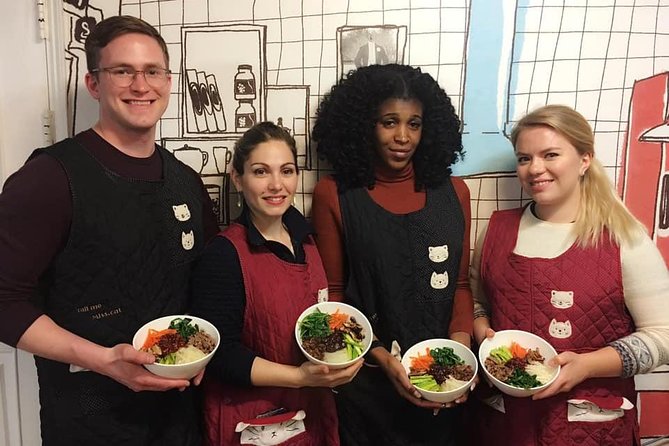
Reviewed · SEOUL FOOD & MARKET TOURS
Cook 3 Authentic Korean Dishes with Local Market Tour
Cooking in Seoul starts at a subway exit.
This hands-on Mangwon Market + cooking class is a smart way to understand Korean food culture fast, with small-group instruction led by Jomin. I like that the day has two parts that actually connect, you shop with local ingredients first, then you cook them right away in a clean studio.
One thing to plan around is that the class can be rescheduled or canceled if it does not meet the minimum guest count, so keep a little flexibility in your Seoul schedule.
Key highlights worth your time
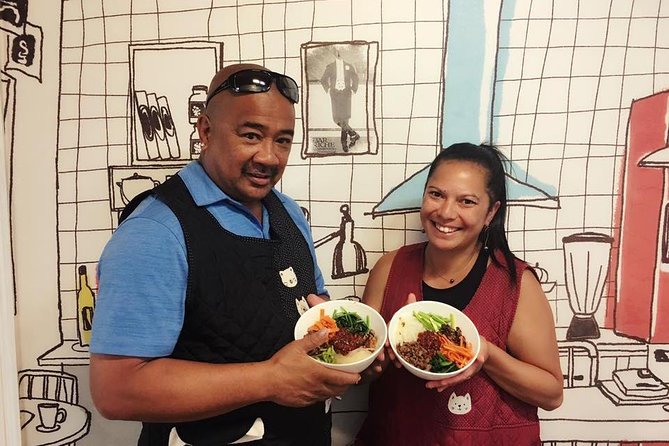
- Mangwon Market walk with ingredient focus so you understand what you buy and why
- Jomin leads everything with clear, step-by-step guidance at your table
- Hands-on cooking at a personal station (not a demo, not a show)
- Cook 3 dishes, then eat what you made with leftovers to take home
- Professionally designed cookbook plus extra favorites recommended by your host
- Vegetarian and vegan options available, if you request them
Mangwon Market to Studio, Why the order matters
The best cooking classes do one thing well. They connect ingredients to technique. Here, you start at Mangwon Market with Jomin, then you return to the studio and cook what you selected and what she teaches you to use.
You should expect a very practical market experience, not a random stroll. Jomin points out ingredients that show up in the dishes you will make, and you get chances to taste street food along the way. That tasting time helps you learn flavors before you touch the knife.
This format also saves you from the most common Seoul cooking-class problem, buying the wrong ingredients because you do not know what matters yet. Here, the shopping happens with context, so the cooking stage feels logical.
You can also read our reviews of more shopping tours in Seoul

Where to meet Jomin at Mangwon Station
You meet at Mangwon Metro Station (Line 6), entrance 2. It is an easy start point because you can anchor your trip to a real transit location, then follow your guide to the market and studio.
From there, the group heads toward Mangwon Market on the way to cooking. You get time for orientation, learning what you will be cooking, and picking up key ingredients for the class. If you arrive early, you can use the time to get your bearings near the station.
Because the meeting point is specific, I strongly recommend you look it up before you go. Seoul stations can be huge, and entrance numbers help you move confidently.
Your small-group cooking setup inside the studio
The class is designed for small groups, with a maximum of four people. That matters because you cook with your own station setup and you get real attention when you need it.
Once you arrive at the studio, there is a quick chat about the menu and what you will cook. Then you roll up your sleeves and start cooking using easy-to-follow instructions from Jomin, plus personal assistance when you hit a tricky step.
In the studio, you are not stuck watching someone else work. You cut, mix, cook, and taste. In at least some sessions, the kitchen is set up so each person can use their own cooking burners and dining area, which makes it easier to stay involved instead of waiting for turns.
Also, the studio itself has a reputation for being clean and organized. That is not a small detail in a hands-on class. It keeps your cooking time calmer and your learning more effective.
The 3-course menu, and what you will learn through it
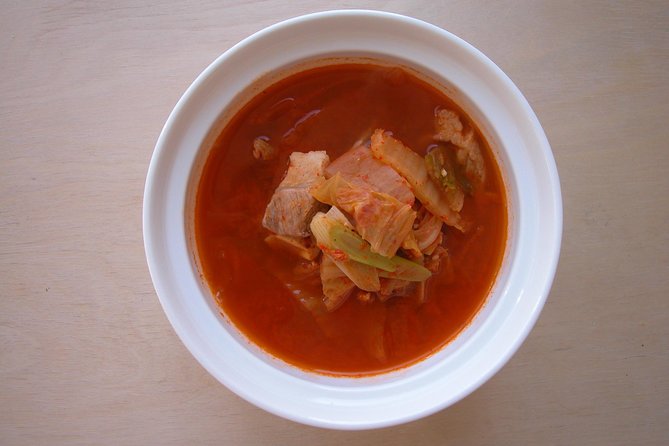
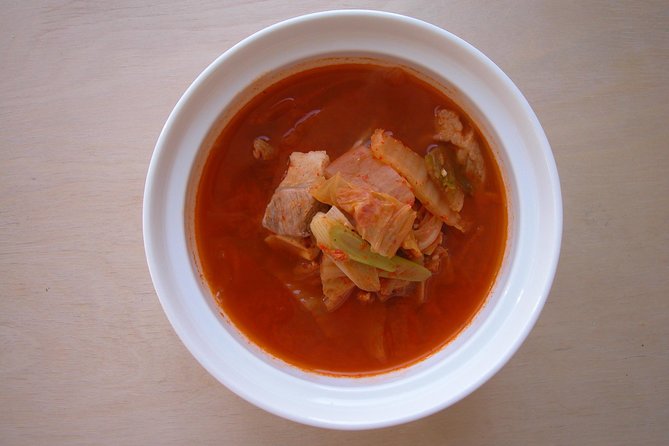
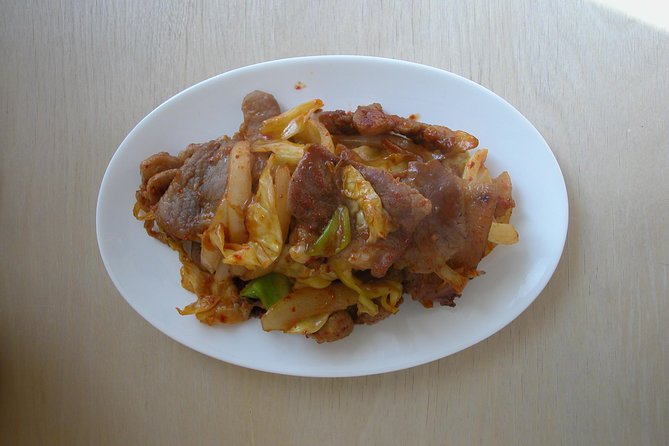
The menu changes based on your class and what you select for lunch or dinner, but it is built around Korean comfort staples. Common dish options include soft tofu stew, bibimbap, bulgogi, kimchi stew, japchae, and stir-fried pork.
Here is what makes these dishes a strong learning set.
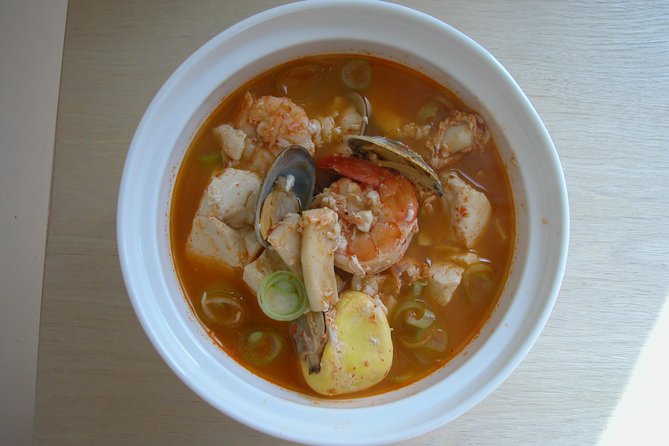
Soft tofu stew (sundubu jjigae-style)
Soft tofu stew is all about balance. You learn how to build a savory base, how to treat tofu so it stays silky, and how to time add-ins so everything finishes together.
In some classes, Jomin has picked ingredients like clams and soft tofu for the stew. That gives you a taste of how Korean kitchens build depth, using seafood flavors even when the texture stays gentle.
You also learn that stew is not only about heat. It is about layering salty, spicy, and savory notes until it tastes complete.
A few more Seoul tours and experiences worth a look



Bibimbap (the build-your-own skill)
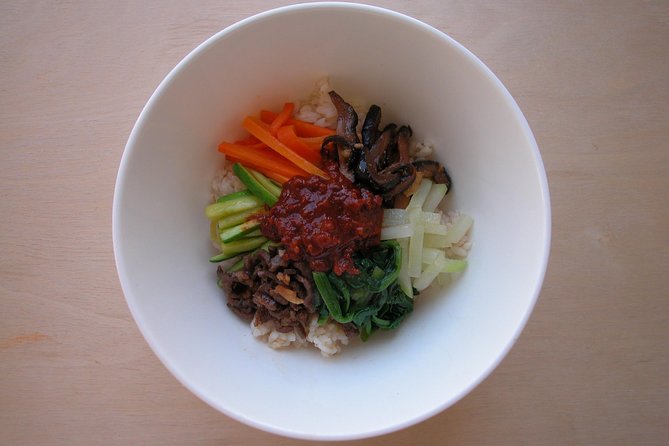
Bibimbap looks simple, but it teaches real skills. You get practice in cutting vegetables consistently, seasoning components, and understanding how all the parts work together when served with rice.
In at least one class, you learn how to cut the vegetables for bibimbap, then cook with guidance on your own burner setup. That step is huge because bibimbap is one of the first Korean meals people try at home, and getting the technique right makes it much more successful.
If you want to bring something home you can repeat, bibimbap is a strong choice.
Bulgogi (marinade and fire control)
Bulgogi is where Korean home cooking gets practical fast. You learn to make the marinade, then cook meat so it stays juicy instead of turning chewy.
One of the most helpful parts here is that you do not just watch the marinade. You are taught how to mix it, then you use it. That turns a restaurant flavor into a kitchen process you can redo later.
Bulgogi also helps you understand why Korean cooking often tastes so layered. It is not just seasoning, it is sweet, salty, and aromatic components working together.
Other possible dishes: kimchi stew and japchae
Kimchi stew is another great “why it works” dish. You see how fermented flavors change with heat and how they pair with tofu, meat, or stock.
Japchae adds noodles to the mix and teaches stir-fry timing. Some people finish the class and still talk about japchae later, especially if you like slippery noodles and savory-sweet seasoning.
And for a deeper technical moment, in some sessions you might learn about making stock from scratch, with ingredients like anchovies, plus you may get to taste rice wine. If that part interests you, it is worth paying attention when Jomin mentions what she is preparing behind the scenes.
Market tastings, banchan, and food culture that sticks
The market portion does more than provide ingredients. It teaches you how Koreans think about daily eating.
Jomin highlights ingredients used in class, and you get street-food tasting along the way. That kind of tasting is useful because it teaches you to recognize flavors quickly, instead of guessing later at home.
You also get food culture explanations along the way. In particular, you may learn about banchan, kimchi, and how these side dishes fit into meals. One of the best outcomes of a class like this is that your next Korean meal in Seoul becomes easier to read. You stop thinking of it as random plates, and you start noticing patterns.
This is also where you learn how markets influence flavor. Many Korean ingredients are sold in ways that make cooking easier, and seeing that in person helps you shop smarter later.
Lunch vs dinner classes, and how to plan your day
You can choose either a lunch or dinner class. That is helpful because it means you can plug this into your trip when it best matches your energy.
If you take the lunch class, you are likely to finish with a full meal, then have the afternoon free. If you take dinner, it can take the pressure off finding an evening food plan. Either way, you get to eat what you make in the studio, so you can count on calories.
One practical note. The class is about 3 hours 30 minutes, so treat it like a true activity block, not a quick side quest between attractions. If you stack it with something far away, you will feel rushed.
Dietary needs and where options show up
Vegetarian and vegan options are available. That is important because Korean menus often rely on meat stock or seafood flavors in ways that can surprise people.
If you choose vegetarian or vegan, you should expect your menu to adapt. Jomin is known for working with dietary restrictions and keeping the experience enjoyable without turning it into a substitute meal.
The only caution I would give is to be clear about what you can and cannot eat. Korean cooking can involve ingredients like anchovies, prawns, or other animal-based flavor bases in some dishes. The more specific you are up front, the smoother your class will run.
What you actually get for the $79 price
At $79 per person for about 3 hours 30 minutes, this class is not just paying for cooking. You are paying for an experience with a shopping component, a teaching component, and a meal component.
Here is what that price typically covers:
- A market ingredient walk with tasting time
- Hands-on cooking instruction for three dishes
- Eating the meal you cooked in the studio
- Take-home leftovers in take-home bowls
- A professionally designed cookbook to use later
The big value is the combination. A cookbook alone is nice, but shopping plus cooking turns recipes into repeatable technique. A market walk alone is also nice, but it is not teaching you how to execute flavor at home.
Also, the small class size matters here. You are not paying for a crowded experience where your questions get lost.
Who should book this class (and who might skip)
This is ideal if you:
- Want an authentic Korean food experience that includes real market context
- Like hands-on cooking and learning techniques you can repeat
- Enjoy getting food culture explanations while you cook
- Want a small group setting instead of a large tour crowd
I would consider skipping it if you:
- Want a pure sightseeing tour and do not care about cooking
- Have very tight scheduling with no room for a 3.5-hour activity block
- Are looking for something that is only tasting, not cooking
Should you book this Korean market tour and cooking class?
I think you should book this if you want Seoul food learning that actually lands on your plate. The market walk plus studio class is a clean, efficient way to understand Korean ingredients and cooking methods, and you leave with a cookbook plus leftovers.
If you are a beginner cook, you still have a good shot at enjoying it because you get step-by-step guidance at your station. If you already cook, you may still appreciate how organized the process is and how the class turns Korean flavors into clear actions you can repeat.
Book it sooner if you can, especially for lunch slots, because the format depends on meeting minimum guest counts. And if you have dietary restrictions, message your request clearly when you book, so Jomin can tailor the menu from the start.
FAQ
Where is the meeting point for the class?
You meet at Mangwon Station in Seoul, South Korea, at entrance 2.
How long is the cooking experience?
It lasts about 3 hours 30 minutes.
How many people are in the cooking class?
The class is described as having a maximum of four people. The overall activity has a maximum of 11 travelers.
What dishes will I cook?
You will cook three Korean dishes. Options can include soft tofu stew, bibimbap, bulgogi, kimchi stew, japchae, or stir-fried pork.
Can I choose vegetarian or vegan?
Yes. Vegetarian and vegan options are available.
Do I get to eat what I cook and take food home?
Yes. After cooking, you eat what you make, and you can take home leftovers.
What happens if the class is canceled due to minimum guests?
The class can be rescheduled or canceled if it does not meet the minimum number of guests. If it is canceled, you will be offered a different date or a full refund.
More Shopping Tours in Seoul
More Tours in Seoul



More Tour Reviews in Seoul
Not for you? Here's more nearby things to do in Seoul we have reviewed


Seoul Food & Market Tours, compared.
 ★ 4.9Gyeongbok Palace, Bukchon Village, and Gwangjang TourFrom $322,321 reviews
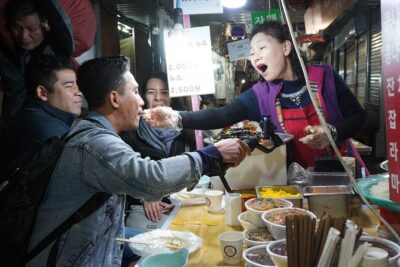 ★ 5.0Seoul Street Food Market TourFrom $731,226 reviews
★ 5.0Gyeongbok Palace, Bukchon Village, and Gwangjang TourFrom $321,044 reviews
★ 5.0Seoul Street Food Market TourFrom $731,226 reviews
★ 5.0Gyeongbok Palace, Bukchon Village, and Gwangjang TourFrom $321,044 reviews
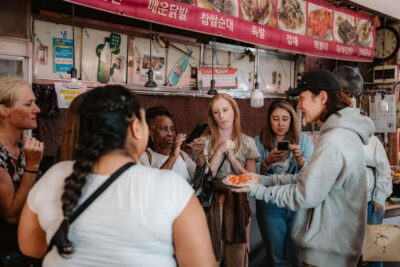 ★ 4.9Night Market Food Tour with Local GuideFrom $73943 reviews
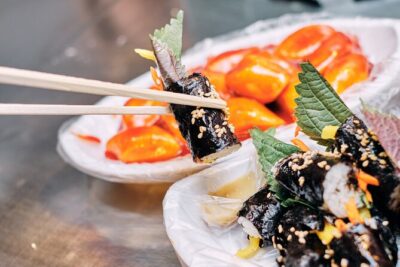 ★ 5.0Downtown Seoul Guided Food & Market Tour with 8+ Local TastingsFrom $98580 reviews
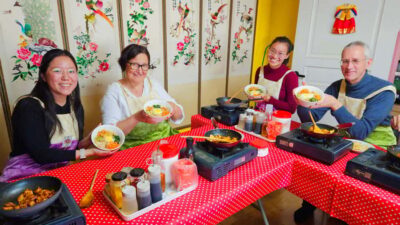 ★ 5.0Korean Cooking Class at a Local Home and Market TourFrom $98348 reviews
Small-Group Night Food Tour in Seoul with Korean BBQFrom $110304 reviews
★ 5.0Korean Cooking Class at a Local Home and Market TourFrom $98348 reviews
Small-Group Night Food Tour in Seoul with Korean BBQFrom $110304 reviews
 ★ 5.0Seoul Night Palace & Market Food Tour with VehicleFrom $79275 reviews
Browse the lists this tour appears in