
Reviewed · SEOUL COOKING & KIMCHI CLASSES
Korean Cooking Class Full Meal with BBQ on an All in One Table
Your table gets cooked by you. This Seoul class builds a full Korean meal inside a Hanok-inspired kitchen, with hands-on banchan and bibimbap plus chef-served BBQ.
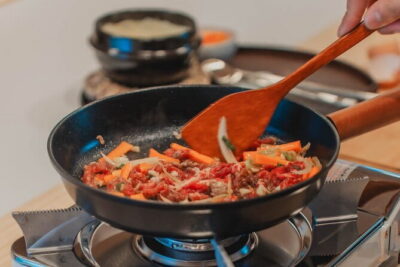
You’ll make four side dishes, then choose a main and soup or stew based on your taste. You also get plating practice, because in Korea the way food lands on the table matters as much as flavor.
I love that the instruction stays practical, you learn by doing, not by watching. I also like the small-group feel, max 8 people, so the chef can coach without rushing.
One consideration: the BBQ is served by the chef, not cooked by you, and the experience requires good weather, so there is a chance of a date change.
Key things that make this Korean cooking class worth it
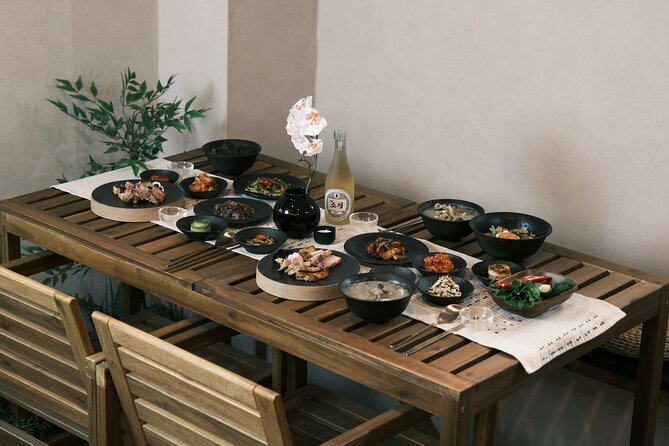
- Hanok-inspired studio kitchen that makes cooking feel like a cultural sit-down, not a classroom drill
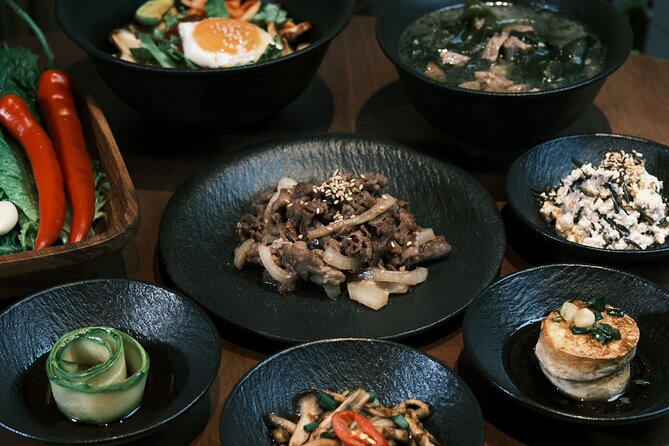
- Four banchan dishes made with seasonal vegetables, built as part of a real Korean table
- Cook-your-own Bibimbap plating where you get to style your finished bowl
- All-in-one table BBQ with grilled pork belly plus a taste of traditional liquor
- Fermented staples in context like doenjang and gochujang, some brought from the chef’s hometown
- Small group size (max 8) for steadier attention while you cook
Inside the Hanok-style space where your meal starts
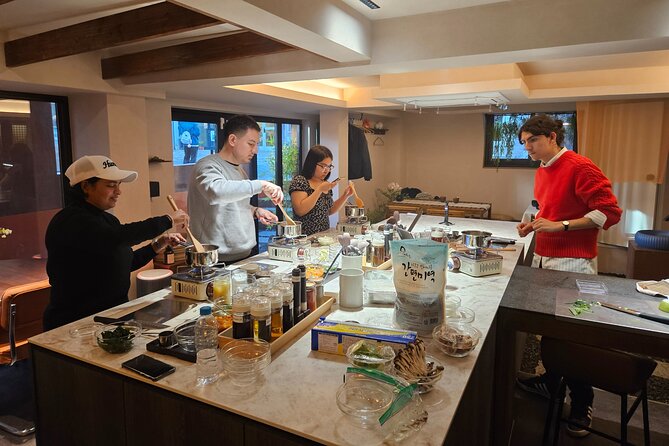
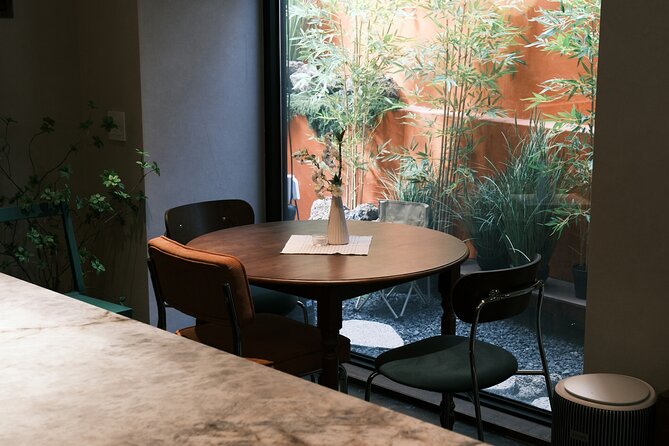
If you want more than a quick recipe lesson, the setting here is a big part of the appeal. The kitchen is inspired by traditional Hanok architecture, so the whole experience feels calmer and more grounded than most cooking classes. Instead of feeling like you are being herded through stations, you settle into a proper studio where the meal has room to breathe.
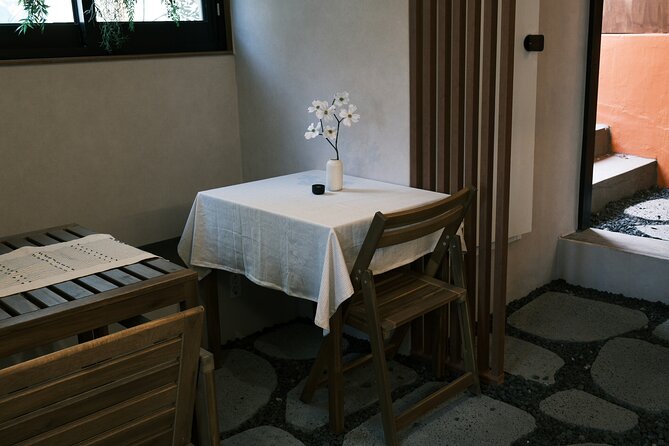
One review detail I really liked: the space has a lava and slate walkway, which makes the arrival feel intentional. Even before you cook, you get that sense that this is built for dining, not just cooking. And since the class focuses on making and eating together, that tone carries through to the table.
The cooking area is described as well equipped and built for hands-on work. That matters because Korean home cooking is very texture and timing focused. If the tools and layout are off, you end up stressed. Here, the vibe is designed so you can focus on technique, seasoning, and plating.
A few more Seoul tours and experiences worth a look


Getting to Soop Table in Mapo-gu, with an easy meetup
The meeting point is at Soop Table: Korean Cooking Class, 34 1층, Donggyo-ro 46-gil, Mapo-gu, Seoul. It is stated as near public transportation, and you get a mobile ticket.
Why I care about that: Korean neighborhoods can be easier than you expect, but studio addresses are still worth double-checking. A near-transit location helps you avoid the “where is this exact floor?” scramble that can happen in Seoul. And a mobile ticket reduces friction on arrival.
Also, because this is a 3-hour experience, arriving a little early helps you get settled before the first course starts. Plan to show up with time to spare, not with a Seoul sprint in your legs.
The 3-hour schedule: welcome tea, then a full table at once
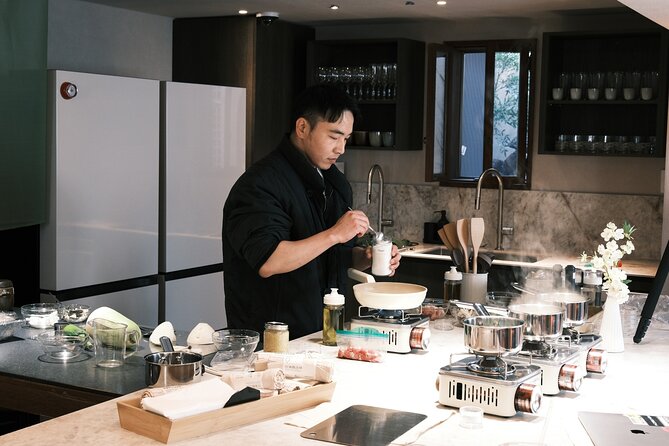
The class is about 3 hours, and the flow is designed around Korean dining style. You start with a seasonal Korean welcome tea. Then the cooking ramps up in a structured way that keeps you moving from side dishes to your main and soup or stew.
Here is the key difference from many Western-style cooking courses: Korean meals are often served all at once. This class is designed for that rhythm, meaning you cook with the expectation that everything will land on the table together. For you, that changes how you think about timing and plating. You are not just finishing one dish and waiting. You are building a complete experience.
A typical sequence you can expect:
- Cook four types of side dishes (banchan)
- Choose one main dish and one soup or stew
- Plate your own bibimbap
- Eat the meal with a grilled pork belly BBQ portion served by the chef
- Join in making a popular Korean dessert after the meal
By the end, you are not leaving with only recipes. You are leaving with a sense of how the meal is meant to be shared and eaten.
Banchan: four side dishes using seasonal vegetables
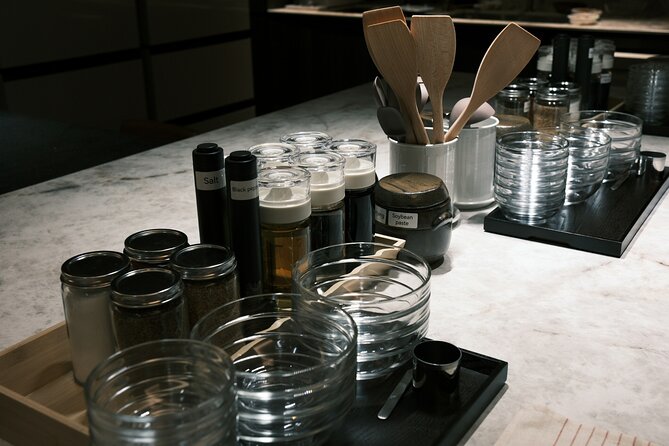
The banchan part is where the class earns its keep. You will make four kinds of Korean side dishes using fresh vegetables, and they are positioned as part of a balanced table rather than random “samples.”
Korean side dishes are not side quests. They are often there to provide contrast, crunch, saltiness, and color alongside the main dish. When you cook them yourself, you learn why Korean food tastes layered. Even if you never memorize every measurement, you remember how the flavors behave.
The class also ties ingredients to seasonality. You are not just using vegetables because they exist. You are cooking seasonal produce, which helps you understand why Korean kitchens change through the year. That matters if you plan to cook at home later. Seasonal logic is more useful than a fixed shopping list.
Practical benefit: side dishes teach you core Korean flavor building. Chopping and seasoning vegetables properly also sets you up for bibimbap later. If you get the banchan seasoning right, the whole table tastes more cohesive.
Choosing your main and soup or stew based on taste
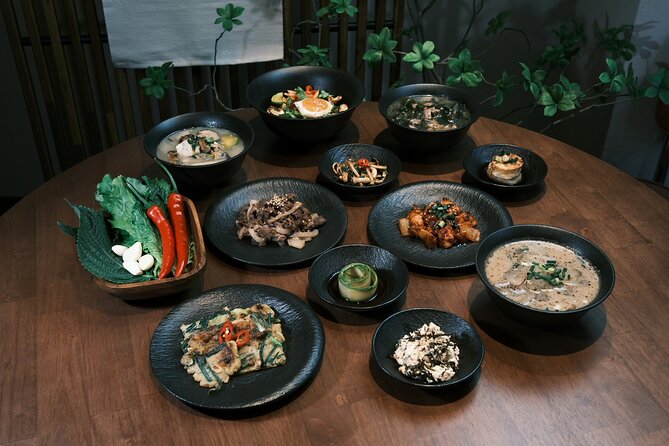
After the banchan, you choose a main dish and one soup or stew to cook. The choice is based on your taste, and the point is not to force you into a single template. This flexibility helps if you are picky about spice, prefer more comforting soups, or want to steer toward familiar flavors.
Once you decide, you cook your selected main alongside your soup or stew. This is valuable because Korean meals often rely on pairing. Even without naming specific recipes, the structure teaches you the logic: the soup balances the heaviness, the main brings depth, and the side dishes create contrast.
This also affects your meal enjoyment. You are not just watching food appear. You are invested in what is on your plate, and it shows.
One small thing to keep in mind: because the class is hands-on and time is limited, the process is paced. You will want to stay engaged and follow instructions closely, especially during seasoning and plating.
A few more Seoul tours and experiences worth a look

Bibimbap plating: your bowl, your style
Then comes the fun part: you plate your own bibimbap beautifully. The class specifically calls out that it is your dish, your style. That is more than a gimmick. Bibimbap is built around a visual pattern, and plating is part of the flavor experience.
In a lot of classes, you learn “how to cook.” Here you also learn “how it lands on the table.” That includes building a bowl in a way that makes sense together, not just piling ingredients. You will feel this when you eat, because the balance is baked into the construction.
If you are the type who cares about presentation, this will feel satisfying. If you are less confident, you will still get a chance to practice. The overall vibe is not perfectionism. It is learning by doing and ending with something you are proud to serve yourself.
Also, because the meal is meant to be served all at once, you will not experience that weird food-class problem where only one dish is ready while everything else is waiting.
BBQ on the all-in-one table: what you get and what you do not
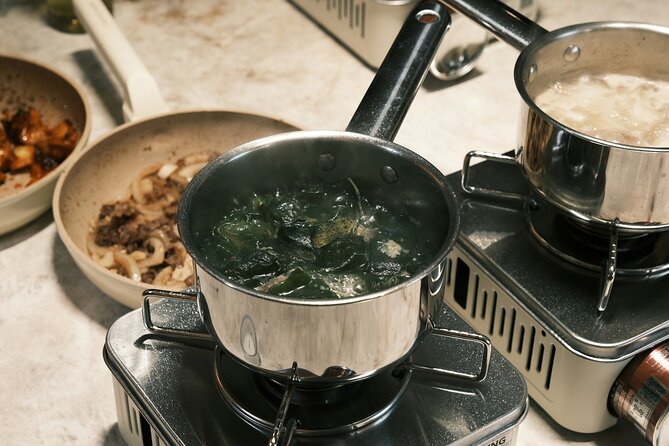
During the meal, the chef serves grilled pork belly (BBQ) and a taste of traditional liquor. Importantly, the class description says you cook everything hands-on except for the BBQ, which is served by the chef.
So, you should go in knowing where your hands are expected. You will be actively cooking banchan, your chosen main and soup or stew, and you will plate bibimbap. The BBQ is part of the meal, but you are not responsible for grilling it.
For some people, that is perfect. You get to enjoy the BBQ without the pressure of mastering a grill while also managing other dishes. For others, it might feel like a partial experience if you hoped to fully control every cooking step.
Either way, the class still delivers a complete Korean table. The BBQ and the liquor taste add an extra layer of Korean dining culture, and they also make the meal feel more “real” than a class that ends right after plating.
Fermented pastes and sauces: learning the flavor engine
Korean cooking often turns on a few key flavor drivers, and this class is designed to teach you that logic. You will learn about essential Korean sauces and ingredients, and how they connect to nature and season.
Two fermented staples are specifically mentioned: doenjang and gochujang. These are not just background ingredients. They help create the depth in Korean flavors, especially in soups, stews, and banchan seasoning.
There is a detail I think matters for you as a home cook: some ingredients are brought directly from the chef’s hometown. That suggests you are using components the chef trusts, not generic substitutions. Even if your kitchen cannot replicate everything exactly, you can take away what the flavor is supposed to taste like and how it behaves in a dish.
The way I interpret this: this class is not only teaching recipes. It is teaching a foundation. If you understand what fermented paste does in a dish, you can adapt later.
Dessert making after eating: a Korean finish, not a quick exit
After the meal, you enjoy making a popular Korean dessert together. The dessert name is not provided in the details you gave me, so I cannot promise which one you will make. But the structure is clear: you cook, you eat, then you shift gears and create something sweet.
Why that is a smart class design: dessert at the end turns the experience into a full arc. You get to see how Korean dining culture stretches beyond savory. It also keeps the energy up after the main cooking phase, so the class ends feeling complete instead of abruptly stopping.
If you have ever done a cooking class where you leave with a notebook and a headache, you will appreciate that this one builds in a social finish.
Price and value: $89 for a real table, not just a lesson
At $89 per person for about 3 hours, this class is priced like a full experience, not like a “watch me cook” workshop. And in this case, your money covers a lot of edible content.
From the information provided, the cost value includes:
- Welcome tea to start
- Hands-on cooking of multiple side dishes (four kinds)
- Cooking one main dish and one soup or stew
- Bibimbap plating by you
- Chef-served grilled pork belly BBQ
- A taste of traditional liquor
- Making dessert together
That combination is the key. If you priced out those elements separately in Seoul, you would likely spend far more than $89 across multiple meals and add-ons. You are paying for instruction, a structured menu, and the convenience of doing it in a studio setting with a plan.
Also, the class has a maximum of 8 people, which usually means you are not stuck waiting for help. In a small group, the chef’s coaching is more likely to reach you when you need it.
This is why I consider it good value even if you are not obsessed with cooking. It is a plated dinner experience with a skill-building component.
Who this Korean cooking class suits best, and who should think twice
This experience is a strong match if:
- You want to eat Korean food you helped make, not just sample
- You like hands-on activities and can enjoy cooking while talking to people
- You are interested in fermented flavor, sauces, and why Korean tables are built as a set
- You want a calmer indoor activity instead of rushing around Seoul’s streets
It may not be the best fit if:
- You expected a market tour or lots of outdoor wandering, because this is explicitly not run as a commercial market tour
- You want to grill the BBQ yourself, since that portion is served by the chef
- You are sensitive to weather-related rescheduling, since the experience requires good weather
A detail that can surprise people: the class says you can learn about trusted local markets if you are curious, but the cooking class itself is the priority. So treat it like cooking time that happens to come with cultural context.
Should you book this Korean cooking class in Seoul?
Yes, if you want a Seoul activity that ends with a full Korean meal and practical know-how. The combination of banchan, bibimbap plating, soup or stew, and chef-served BBQ makes it feel like you actually participated in Korean dining culture, not just in a recipe demo.
I would also book it if you appreciate thoughtful structure. This class seems designed for pacing and shared table timing, and the small group size helps.
If you only want a food tasting with no cooking involved, you might be happier elsewhere. But if you are game to cook, plate, and sit down together, this is the kind of experience you remember.
FAQ
How long is the Korean cooking class?
It runs for about 3 hours.
What will I cook during the class?
You will make four kinds of Korean side dishes, then choose one main dish and one soup or stew to cook. You will also plate your own bibimbap and make a popular Korean dessert together. The BBQ is served by the chef.
Is this a food tour or a market tour?
It is not a commercial market tour. The focus is on a genuine Korean cooking journey and building a full table, though the host may share a few trusted local markets if you are curious.
Where does the class meet?
The meeting point is Soop Table: Korean Cooking Class at South Korea, Seoul, Mapo-gu, Donggyo-ro 46-gil, 34 1층. The activity ends back at the meeting point.
How big are the groups?
The class has a maximum of 8 travelers.
Do I get to choose what I cook for the main and soup?
Yes. You choose one main dish and one soup or stew based on your taste.
Can I cancel for a full refund?
Yes, free cancellation is available. You can cancel up to 24 hours in advance for a full refund. The experience also requires good weather, and if it is canceled due to poor weather, you will be offered a different date or a full refund.
More Workshops & Classes in Seoul
More BBQ Experiences in Seoul


More Tour Reviews in Seoul



Not for you? Here's more nearby things to do in Seoul we have reviewed


Seoul Cooking & Kimchi Classes, compared.
 ★ 5.0Local Home Korean Cooking Class & Market Adventure in SeoulFrom $911,024 reviews
 ★ 5.0Master Korean traditional cooking with a Kimchi chefFrom $85385 reviews
 ★ 5.0Korean Cooking Class at a Local Home and Market TourFrom $98348 reviews
 ★ 5.0Korean Cooking at Seoul Cooking Club!From $109311 reviews
 ★ 5.0Cook 3 Authentic Korean Dishes with Local Market TourFrom $79231 reviews
 ★ 5.0Korean Cooking at Seoul Cooking ClubFrom $109220 reviews
Experience Korean Cooking in Modern Hanok KitchenFrom $87118 reviews
 ★ 5.0Korean Cooking Class with Grocery Shopping at Seoul Local MarketFrom $91107 reviews
Browse the lists this tour appears in