
Reviewed · SEOUL FOOD & MARKET TOURS
Korean Kimchi Making Day Experience with a Local Market Tour
Kimchi starts with a market stop. I love the Mangwon Market walk for ingredient tips and street-food samples, and I love the up to four people class size led by Jomin. One thing to plan for: you will take home a lot of kimchi, so pack with space in mind.
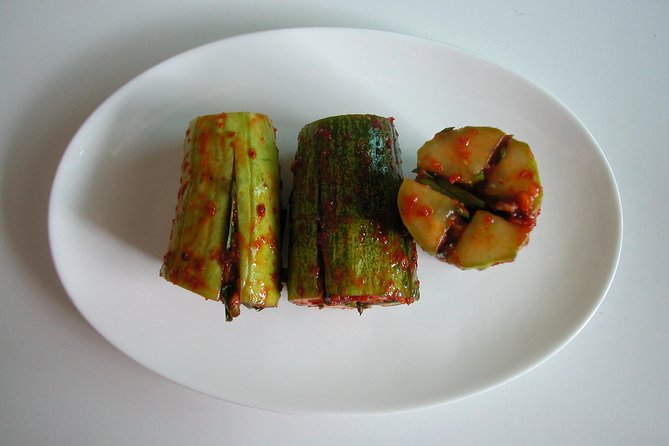
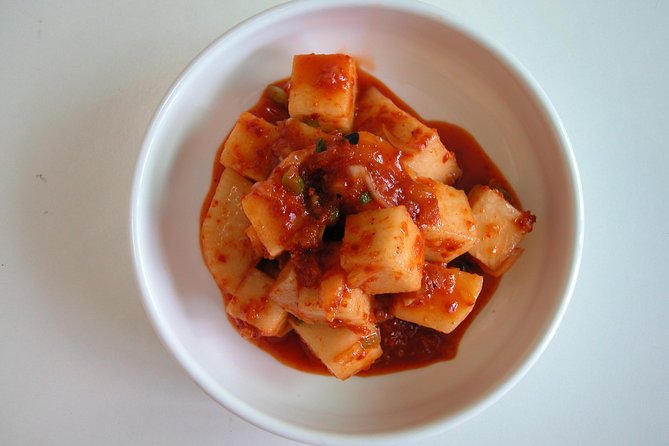
You’ll spend about 3 hours 30 minutes learning to make four types of kimchi using fresh Korean cabbage, radish, and cucumber. After the hands-on cooking, you sit down to eat your kimchi with boiled pork and fried tofu, just like a simple family meal in Korea, with vegetarian and vegan options available.
Quick hits before you book
- Small-group cooking capped at four people for real hands-on coaching
- Mangwon Market ingredient walk with tastes along the way and Jomin’s guidance
- Four kimchi styles made step by step using cabbage, radish, and cucumber
- Cook, eat, and take home leftovers with a container provided
- One class, many outcomes: you leave knowing how to build kimchi you can make again
Mangwon Market to the kitchen, the best part is the flow
This is one of those Seoul food experiences that makes sense right away. You start by seeing what people actually buy at Mangwon Market, then you move into the kitchen and turn those ingredients into kimchi in a very direct, practical way.
What makes it work is the pace and structure. You get a guided walk at the start, not just a random stroll, and you get real instruction after. The result is that the cooking does not feel like a demo. It feels like learning a skill.
I also like the small class feel. With a max of four people in the cooking portion, you get attention, not just a bunch of standing around.
You can also read our reviews of more shopping tours in Seoul
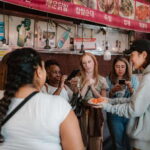

Finding Jomin at Mangwon Station, Line 6, Entrance 2
Plan to meet at Mangwon Metro Station (Line 6), Entrance 2. It’s easy to reach by public transport, and the tour ends back at the same meeting point, so you are not stuck navigating Seoul after a cooking session.
Give yourself a little extra time the first morning you do it. Seoul subway exits can be confusing if you are rushing. Once you locate Entrance 2, the rest of the flow is straightforward: you head out, shop and taste, then go to the cooking studio.
If you are the type who likes a plan before you walk into a market, this works. The meeting point is clear, and the guide is expecting you.
The Mangwon Market walk: where kimchi ingredients make sense
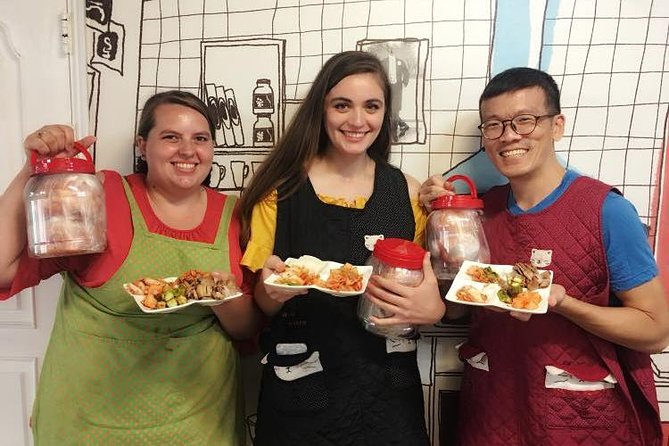
Mangwon Market is not just a backdrop. It is part of the lesson. Jomin walks you through what you will use later and how to choose ingredients with confidence.
You’ll also get chances to taste street food during the market portion. That matters, because it trains your palate before you start salting, mixing, and packing. It also turns the walk into something fun, not just educational.
A few practical things I think you should watch for during the market part:
- Pay attention to freshness cues the guide points out, especially for items like cabbage, radish, and cucumber.
- Ask what will be used in class so you understand why the ingredient selection matters.
- Grab only small tastes if you have a sensitive stomach. You still have a cooking session ahead.
One more detail worth knowing: Mangwon Market includes lots of activity, including seafood stalls. If you like markets and want Seoul beyond famous tourist zones, this part delivers.
At the cooking studio: hands-on kimchi with real coaching
Once you arrive at the studio, the class shifts from shopping and tasting to full hands-on cooking. Jomin leads you through making four authentic types of kimchi, using fresh cabbage, radish, and cucumber.
The biggest value here is the coaching. This is not a sit-and-watch activity. You learn the process step by step, and you can ask questions while you are working. That is where the small class size really pays off.
You also get guidance that helps you understand the logic of kimchi, not just copy a recipe once. Reviews repeatedly highlight that the instructor makes people feel confident and that the pace stays organized.
The four kimchi types, in plain terms
The class focuses on variations beyond the basic Napa-style kimchi most people try first. While the specific names are not listed in the information I have, you do learn four styles using different combinations and approaches, including a fresh cabbage version and other types that help you understand how timing and texture can differ.
Think of it as learning a foundation, then applying it multiple ways.
A few more Seoul tours and experiences worth a look
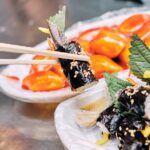
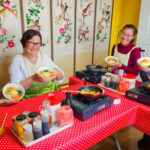



What you will be using
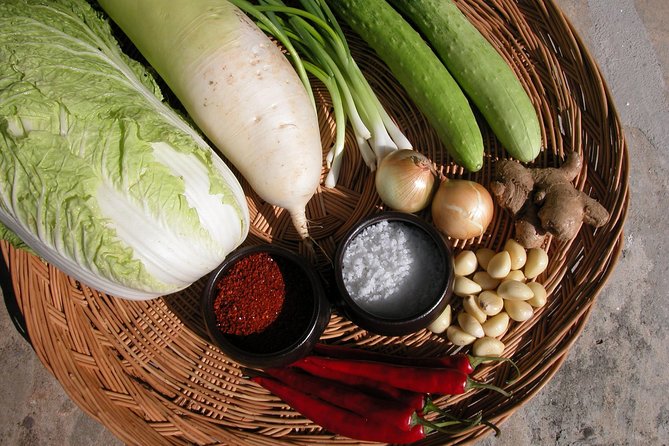
From the details provided, you will work with fresh Korean cabbage, radish, and cucumber. Those three alone give you different textures and flavors, and they are the core vegetables for this class.
If you love produce and want to understand how vegetables behave after seasoning and mixing, this part is satisfying. You see and handle the ingredients, then taste the results.
The meal after cooking: kimchi plus pork and tofu
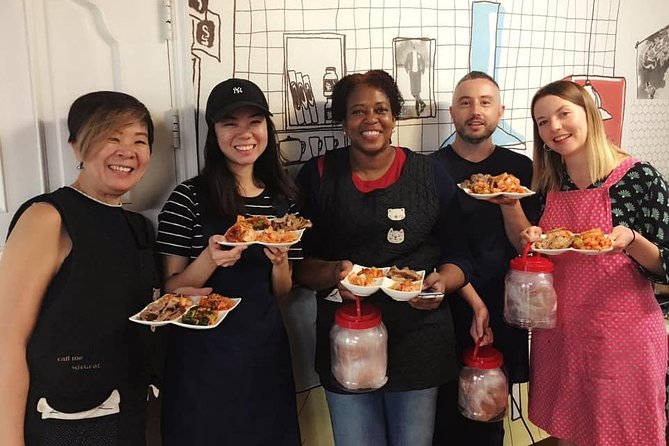
After you finish cooking, you sit down and eat what you made. The meal is described as a family-style spread, with kimchi paired with boiled pork and fried tofu.
That combination is a big reason this class feels complete. You do not just make food and run. You taste it while it is still fresh from the process and you see how kimchi fits into a Korean meal.
If you choose a vegetarian or vegan option, the experience is set up to accommodate dietary needs. The details say options are available, so you are not expected to force through something that does not fit your diet.
Also, a few reviews mention enjoying it alongside makgeolli. Whether that is part of your exact meal depends on how the class is run that day, but it lines up with the Korean context of the food.
What you take home: leftovers, container, and luggage reality
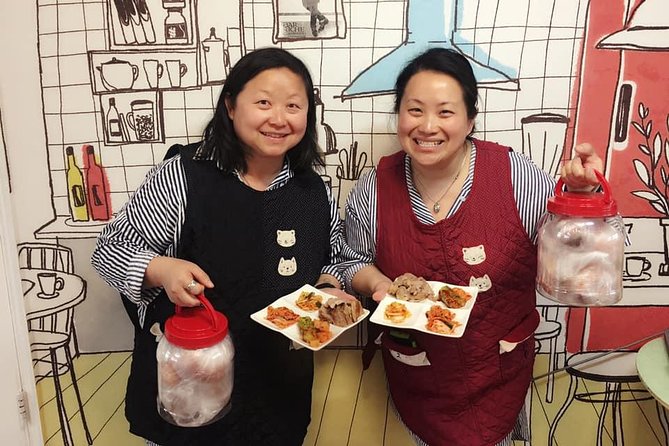
This is one of the clearest perks. You can take home any leftovers after the class. You are not just learning. You are leaving with food you made.
You get a container to store your homemade kimchi. Reviews note you can end up with a lot, so plan for it. This is the one practical concern that comes up again and again: don’t book this if your suitcase space is already maxed.
My advice:
- Pack one extra bag in your luggage that can handle wet or strong-smelling food.
- If flying, consider checked luggage for the container. Reviews highlight putting the container in checked luggage for international travel.
- Tell the people you’re traveling with you might need a few extra fridge nights at your next stop.
The plus side is huge. Many classes give you a recipe sheet and a memory. This one gives you actual kimchi you can eat at home for days.
Price check: why $89 can make sense for Seoul
At $89 per person, this is not a budget cooking class. But it also is not just a cooking lesson where you leave with nothing. The price includes multiple parts that cost money and time if you did them separately.
Here’s what you are paying for in value terms:
- Small group learning (up to four people) with one-on-one attention
- A market tour with guidance on ingredients, plus street-food tasting
- A hands-on class where you make four types of kimchi
- A sit-down meal with kimchi plus boiled pork and fried tofu
- Take-home kimchi and a container
- A recipe booklet/cookbook so you can repeat what you learned
If you are visiting Seoul for only a few days, this can be an efficient way to get both culture and cooking in one block. Also, the take-home leftovers can offset the cost of buying ingredients for multiple future batches.
That said, if you are only looking for a quick snack activity, this is longer than a street-food stop and you will carry food afterward. Consider your schedule and luggage first.
Who should book this kimchi making day
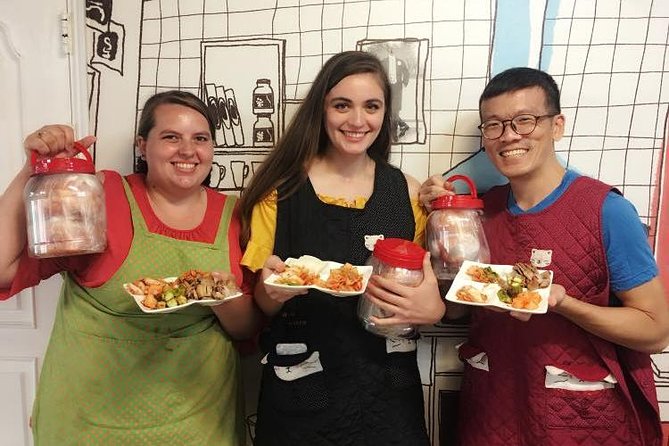
This fits best if you fall into one of these groups:
- You are a food lover who wants to learn a real Korean cooking skill, not just eat out.
- You like markets and want a market-to-kitchen story with guidance.
- You want confidence to buy ingredients later and repeat the recipe at home.
- You travel with a partner or small group and enjoy hands-on classes.
It is also a good pick for beginners. Reviews mention that people leave feeling more confident, and the process is framed as learnable, not mysterious.
Who might want to choose something else
Skip it if:
- You cannot carry extra items or you hate the idea of transporting a lot of food.
- You want a purely sightseeing itinerary with no cooking.
- You are very time-crunched and cannot spare roughly 3 hours 30 minutes.
The small-group size and what it means for your experience
This class is designed so you can actually work. The cooking class portion is capped at four people, and the overall activity can have a larger max number of travelers. Practically, that means you still get a close, guided feel in the kitchen, even if the broader group size varies.
In other words, you should expect a structured lesson where you can ask questions while you cook. That is the difference between learning kimchi and just watching someone else do it.
FAQ
FAQ
Where do I meet for the kimchi making day?
You meet at Mangwon Station (Line 6), Entrance 2. The experience ends back at the same meeting point.
How long does the class take?
Plan for about 3 hours 30 minutes total.
How many people are in the cooking class?
The class is described as a small-group experience with a maximum of four people. The overall activity can include a maximum of 11 travelers.
What exactly will I learn to make?
You will learn how to prepare four types of kimchi using fresh ingredients like Korean cabbage, radish, and cucumber.
Is there a vegetarian or vegan option?
Yes. Vegetarian and vegan options are available.
Do I get to take home the kimchi I make?
Yes. You can take home any leftovers, and you are provided with a container to store your homemade kimchi.
What do we eat after the cooking?
After cooking, you sit down to enjoy the kimchi you made paired with boiled pork and fried tofu, like a family meal in Korea. Vegetarian and vegan options are available.
What if the minimum number of guests is not met?
The class can be rescheduled or canceled if it does not meet the minimum number of guests, listed as 4. If canceled, you are offered a different date/experience or a full refund.
Can I cancel for free?
Yes. You can cancel up to 24 hours in advance for a full refund.
Should you book this Korean kimchi making day in Seoul?
If you want a Seoul experience that teaches a real skill and gives you dinner plus leftovers, I think this is a strong yes. The market-to-kitchen setup makes the ingredients feel meaningful, and the small class size led by Jomin helps you actually learn, not just snack.
Only think twice if you are traveling ultra-light or you cannot handle carrying food. If you plan for luggage space, this turns into one of those trips where you leave with both a memory and something edible you can keep cooking back home.
More Shopping Tours in Seoul
More Tours in Seoul





More Tour Reviews in Seoul
Not for you? Here's more nearby things to do in Seoul we have reviewed


Seoul Food & Market Tours, compared.
 ★ 4.9Gyeongbok Palace, Bukchon Village, and Gwangjang TourFrom $322,321 reviews
 ★ 5.0Seoul Street Food Market TourFrom $731,226 reviews
★ 5.0Gyeongbok Palace, Bukchon Village, and Gwangjang TourFrom $321,044 reviews
★ 5.0Seoul Street Food Market TourFrom $731,226 reviews
★ 5.0Gyeongbok Palace, Bukchon Village, and Gwangjang TourFrom $321,044 reviews
 ★ 4.9Night Market Food Tour with Local GuideFrom $73943 reviews
 ★ 5.0Downtown Seoul Guided Food & Market Tour with 8+ Local TastingsFrom $98580 reviews
 ★ 5.0Korean Cooking Class at a Local Home and Market TourFrom $98348 reviews
Small-Group Night Food Tour in Seoul with Korean BBQFrom $110304 reviews
★ 5.0Korean Cooking Class at a Local Home and Market TourFrom $98348 reviews
Small-Group Night Food Tour in Seoul with Korean BBQFrom $110304 reviews
 ★ 5.0Seoul Night Palace & Market Food Tour with VehicleFrom $79275 reviews
Browse the lists this tour appears in