
Reviewed · BUSAN DAY TRIPS FROM SEOUL
3-Day Korea Western course by K-shuttle Tour from Seoul to Busan
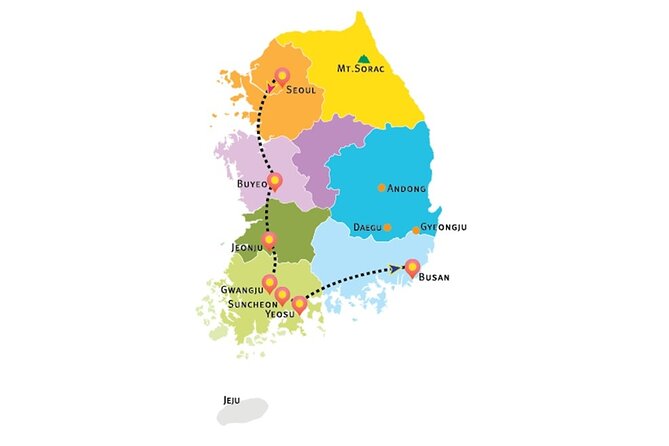
That first bus ride sets the tone. This 3-day Seoul to Busan route packs a lot of western Korea into one guided flow, from Baekje-era tombs to Jeonju’s hanok streets, then on to Suncheon Bay gardens and a final fortress in Jinju.
I like that you get comfortable coach travel with a professional guide doing the hard parts, like keeping check-ins and transfers running smoothly. I also like the mix of big-name culture stops plus scenic garden time, so the days do not feel like a checklist. One possible drawback: early-day coordination can be chaotic if you do not double-check you are on the correct bus at the meeting point, so arrive a little early and verify before you board.
You will pay $749 per person for the package, and that price only makes sense if you value guided logistics. Lunch and dinner are on you, so budget for meals out during the day.
Key things that make this tour a strong pick
- Coach comfort for a west-coast route: You cover long distances without bouncing between public transport.
- Real cultural anchors: Baekje tombs, Jeonju hanok streets, May 18 memory history, and Jinjuseong Fortress.
- Garden time that is actually worth slowing down for: Suncheon Bay Garden’s seasonal flower fields.
- 4-star lodging plus breakfast: You get a predictable base each night.
- Guides who focus on practical travel help: Tips for food and evening plans, plus smoother hotel check-in.
- A small-ish group cap: Up to 40 people, so it still feels managed rather than chaotic.
Coach travel from Seoul to Busan: why this beats DIY for west Korea
Korea’s west side is a good place to travel, but it can be fiddly when you do not speak Korean well. This tour leans into the fix: you ride a coach, with a guide handling the timing and the movement from stop to stop.
For you, that means less time staring at transit apps and more time at the actual places. The route also stitches together several regions that would take a lot more planning to connect efficiently on your own.
I also think the tour is a good match for the “I want highlights, but not rushed” traveler. The stops are spaced so you get real time at each site, not just a quick photo stop and back on the bus.
A few more Seoul tours and experiences worth a look
Day 1 timing and meeting point at Donghwa Duty Free near Gwanghwamun
Day 1 starts early. You meet at the parking lot next to Dongwha Duty Free Shop, at Exit 6 of Gwanghwamun subway station, at 8:00 am.
That meeting detail matters. One of the recurring cautions from prior groups is that getting on the correct bus can be confusing if you assume everything will sort itself out. So do this: arrive a bit before 8:00, confirm your group and bus with staff, then board confidently. If you travel with luggage, keep it to the amount the operator expects, since the vehicle compartment has specific space limits.
Once you are on the move, Day 1 turns into a history-and-culture sampler that feels like Korea at multiple time scales: ancient royal burial sites, then mountain fortress views, then a living neighborhood in Jeonju.
Baekje royal tombs at Songsan-ri: the most special history stop on Day 1
The day’s first major attraction is the Songsan-ri Tombs and the Royal Tomb of King Muryeong. This is Baekje period history (reign of King Muryeong dates to 462 to 523), and the site is designed to show you royal burial traditions rather than generic “old stones.”
Here is what makes it more than a background stop:
- The tombs are tied to the Baekje era when the capital was in Gongju.
- The Tomb of King Muryeong is the most famous one in the set, and it is known for how it was built and what was found inside.
- It was reportedly discovered accidentally during work to prevent flooding for other tombs, which adds that real-world twist to the story.
You get about 2 hours, with free admission for this stop. That time window is good. You can read the explanations, not just sprint between markers.
If you care about how archaeology connects to the bigger national story, this stop is the one I would prioritize if you had to pick just one on Day 1.
Gongju Gongsanseong Fortress: castle trails plus Geumgang Riverside views
After the tombs, the tour climbs into Gongju Gongsanseong Fortress, a mountain castle established during Baekje. This is one of those places where the history is in the structure, but the payoff is also the view.
You follow the trail a bit up, and the route brings you to Imnyugak Pavilion, noted as the largest of its kind within the fortress. The walking is not described as extreme, but you should still expect uneven ground on a hillside.
The tour gives you about 1 hour here, with free admission. For me, that is the right amount. You get a chance to look around and take photos without it turning into a hike-day.
Jeonju Hanok Village: the cultural payoff at meal time
Jeonju Hanok Village is where the tour shifts from ancient history to everyday tradition. While the rest of the city modernized, this area is designed to keep the hanok feel: traditional Korean houses and the rooflines you will recognize instantly.
Two practical reasons to like this stop:
- It is a place where you can slow down without feeling like you are waiting for the next segment.
- You can connect the history to food. The tour includes traditional food options like bibimbap associated with Jeonju.
You have about 2 hours and the admission ticket is listed as free. There is also a Hanok Life Experience Hall area mentioned, where part of the village is set aside for traditional life experiences.
If you want the most “Korea-in-your-life” moment of Day 1, this is likely it.

Day 2 May 18th National Cemetery: history you do not rush
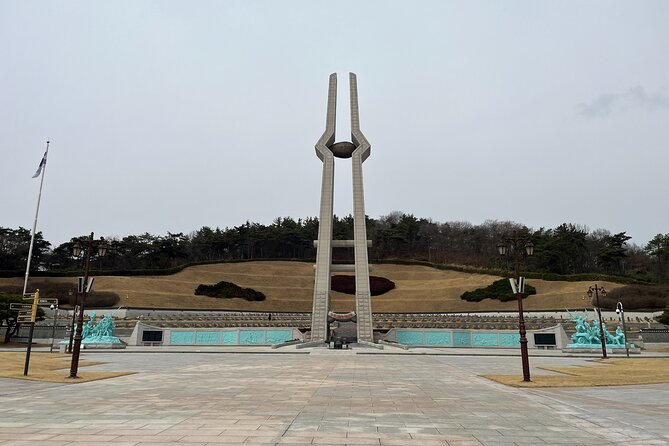
Day 2 starts with the May 18th National Cemetery, located in front of Mudeungsan Mountain. This is a memorial site tied to the struggle for democracy in May 1980. The cemetery holds the graves of victims, and it includes a careful story of how the victims were buried and later exhumed and reburied.
The emotional tone here is serious. That is a good reason to take your time and not treat it as a quick photo stop.
You get about 2 hours, with the admission ticket included. Based on the way this tour packages time, it is long enough for you to read the explanations and absorb the context.
If you like learning how Korea’s modern civic identity was shaped, this stop will land well.
Suncheon Bay Garden: flower seasons and a big space for breathing room
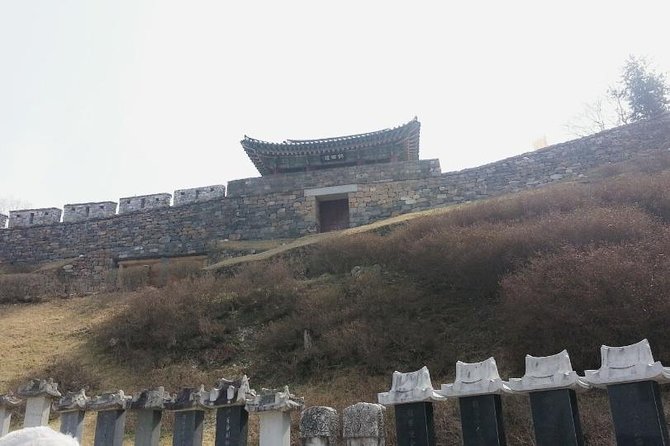
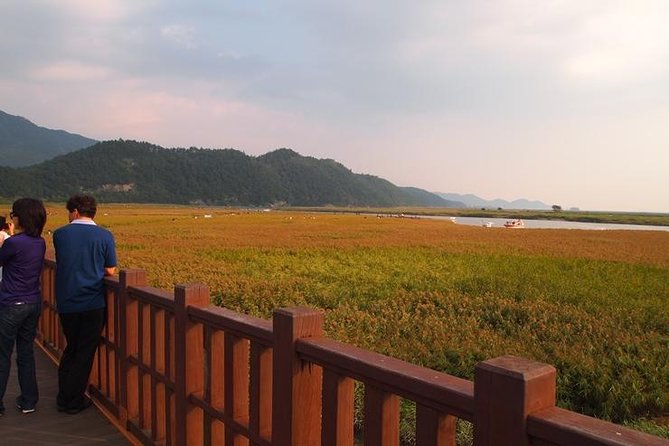
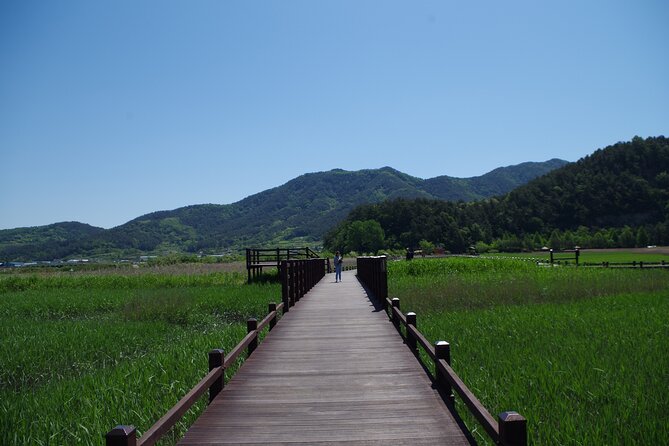
Next up is Suncheon Bay Garden. This stop is described as turning 1.12 square kilometers of natural habitat into a conservation area with a wide mix of trees and flowers. It also mentions a strong seasonal feel, especially in May.
What I think you should look for:
- Tulips and royal azaleas are called out as standout blooms.
- A nearby canola flower field (listed as 30,000 square meters) is described as producing a yellow “wave” effect in May.
- There are also shaded areas from trees, so it is not all exposed walking in the sun.
You get about 2 hours, with admission included. This time length is ideal. Gardens are one of those places where you either enjoy them slowly or you miss the point entirely.
Even if you are not a flower person, the garden is a welcome shift from the previous day’s memorial intensity.
Admiral Yi Sun-sin site: why this headquarters story matters
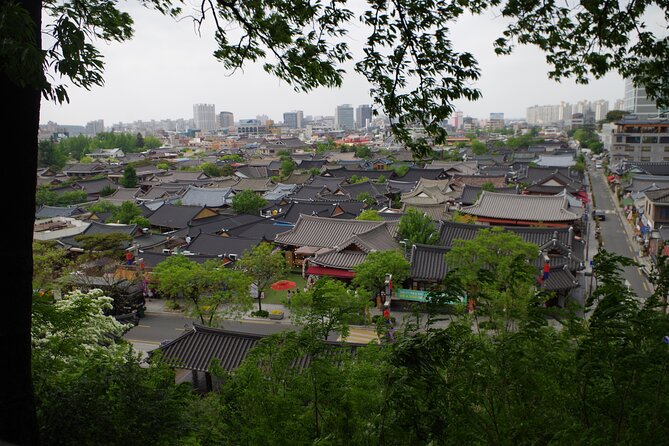
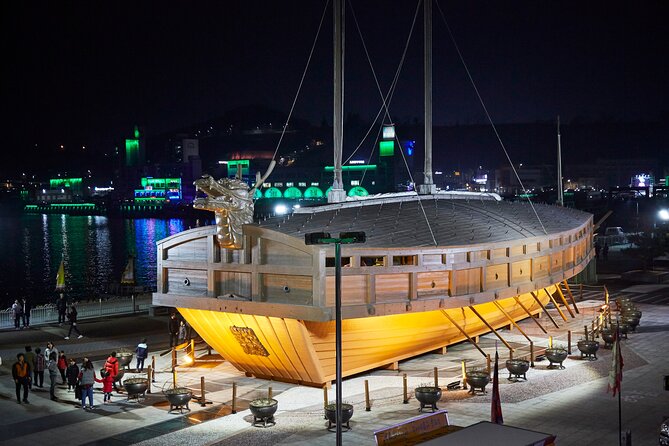
The final Day 2 stop is the Statue of Admiral Yi Sun-sin. The tour frames it around the Japanese invasion period (1592 to 1598) and explains that Admiral Yi used this site as his headquarters.
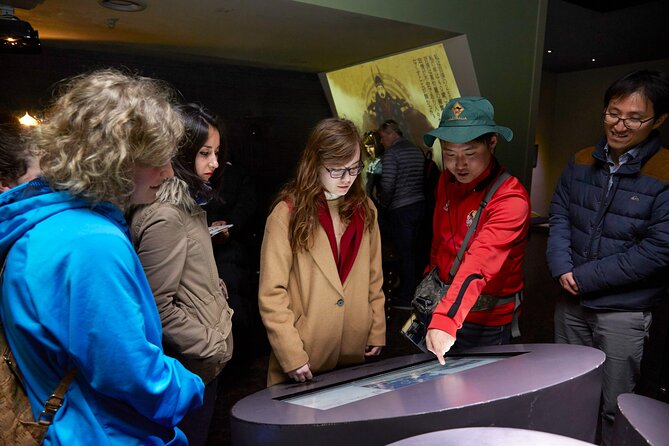
The indoor hall is also part of the experience, with artifacts honoring his efforts. The hall is designated as National Treasure No. 304 in 2011.
You have about 2 hours and admission is free for this stop. This is a good reminder that Korea’s history is not only ancient empires and memorials. It also includes military leadership and national defense narratives that still shape cultural pride today.
Day 3 Jinjuseong Fortress: views plus layers of name changes
Day 3 closes with Jinjuseong Fortress in Jinju, tied historically to the Japanese invasion in 1592.
One detail I like from the tour framing is the way the fortress’s name changes through dynasties:
- It was originally named Geoyeolseong Fortress in the Three Kingdom period.
- Later renamed Chokseokseong Fortress in the Goryeo dynasty.
- Then it became Jinjuseong Fortress in the Joseon dynasty.
That kind of naming timeline helps you “read” the site as history layered on history, rather than one single era.
You get about 1 hour here, with free admission. For a final day, that is a good balance. You still get a meaningful stop without ending the tour with a long, tiring climb.
Finishing in Busan Station Plaza: how your departure day works
The tour ends with a drop point at Busan Train Station Plaza around 1:00 pm. This matters because it gives you a clear target for onward plans. You are not left guessing whether you will arrive early or late.
If you like to continue exploring immediately, Busan Station is a practical hub. You can plan your next activity based on a predictable finishing time.
Price and value: what $749 really buys you, and what it does not
At $749 per person, you are paying for more than sightseeing. You are buying logistics, time, and reduced language stress.
From what is included, here is what you should count in the value math:
- 2 nights in 4-star accommodation
- Transfer by coach plus movement between stops
- A professional guide
- Breakfast each day as per the itinerary
- Some entrance fees (certain sites list included admission, others are free)
What you do not get:
- Lunch and dinner
- Hotel pickup and drop-off outside the main meeting point
This is a fair model for a short, high-mobility tour. You get the big-ticket items handled, and then you choose where and what to eat. For your planning, I suggest budgeting for at least two meals a day on your own. It also helps you avoid feeling stuck with whatever restaurant the day’s schedule forces on the group.
Room setup is also part of the real value. If you book as an odd group and share a room, a pullout bed is available for the third person at no extra charge. If you prefer a single room, a single traveler surcharge applies.
Practical tips that will save you hassle
A few small, practical things can make the biggest difference on a short tour like this:
- Use the mobile ticket. It is listed as part of the experience, so have it ready on your phone.
- Plan for luggage limits. You are advised to bring only one luggage item per person, since vehicle space is controlled.
- Request bed preferences early. Double rooms default to two separate twin beds, but you can note a preference for a queen bed in special requirements.
- Choose this tour if you want guided flow. Most travelers can participate, and the stops are organized for a mix of sites rather than one long day of only walking.
- If you book solo, confirm the minimum operating requirement. The tour requires at least two people to operate, so there is a possibility of cancellation after confirmation if it does not meet that threshold.
Should you book this 3-day west Korea course?
Book it if you want a structured west Korea introduction without the planning burden. This is a strong fit for first-time Korea visitors, history and culture lovers, and anyone who prefers guided pacing across multiple regions.
Skip it or consider a different style if you hate group logistics. The schedule is tight enough that you do not get to freelance much, and you do not control lunch and dinner. Also, if you get anxious about finding the right bus at the start of a day, come early and verify on the ground.
If your goal is to see key places like Songsan-ri Tombs, Jeonju Hanok Village, Suncheon Bay Garden, and end with Jinjuseong Fortress, this tour gives you the easiest path to connect them in just 3 days.
FAQ
Where do I meet for the tour on Day 1?
You meet at the parking lot next to Dongwha Duty Free Shop on Sejong-daero in Jongno District, Seoul, at Exit 6 of Gwanghwamun subway station. The start time is 8:00 am.
What time and where does the tour end in Busan?
The tour drop-off is at Busan Train Station Plaza around 1:00 pm on Day 3.
What meals are included?
Breakfast is included as per the itinerary. Lunch and dinner are not included.
Are entrance fees included?
Some entrance fees are included, while other stops are listed as free admission.
What kind of hotel is included?
The tour includes 2 nights of accommodations in 4-star hotels.
What info do I need to provide when booking?
You need the passport name, number, expiry, and country for all participants at the time of booking.
Is there a group size limit?
Yes. The tour has a maximum of 40 travelers, and it requires a minimum of 2 people to operate.
More 3-Day Experiences in Seoul
More Tours in Seoul
More Tour Reviews in Seoul
Not for you? Here's more nearby things to do in Seoul we have reviewed


Busan Day Trips from Seoul, compared.
 ★ 5.0Busan city tour from Seoul by KTX bullet trainFrom $41539 reviews
 ★ 4.55-Day Korea Golden route by K-shuttle Tour from Seoul Including Busan, YeosuFrom $99937 reviews
 ★ 4.5Small Group 7D Korea package Tour with Seoul Gyeongju Busan JejuFrom $1,98813 reviews
 ★ 4.53-Days 2-Nights Gyeongju UNESCO Sites & Busan City [Private Tour from Seoul]From $1,10411 reviews
 ★ 5.0Busan Day Trip from Seoul by KTX – Private Tour with Local GuideFrom $3989 reviews
 ★ 5.07 days Flexible Tour for Major Cities(Seoul,Busan,Gyeongju etc)From $2,0005 reviews
 ★ 4.5Jinhae Cherry Blossom + Busan Sunrise from SeoulFrom $1085 reviews
 ★ 5.0Busan day trip including Gamcheon culture village from Seoul by KTX trainFrom $4543 reviews
Browse the lists this tour appears in