
Reviewed · SEOUL PALACE & ROYAL HERITAGE TOURS
Seoul: Gyeongbok Palace, Bukchon Village, and Gwangjang Tour
Palaces and city views in four hours.
This tour strings together classic Seoul and modern street life in a tight route, with a dedicated professional guide and air-conditioned transport. I like how it ends with Gwangjang Market, so your last stop naturally turns into a snack-and-stroll finish instead of another rigid landmark.
My favorite part is the pacing with real “see it, then understand it” commentary, especially around Gyeongbokgung Palace and the royal guard changing ceremony. I also love that the guides are consistently praised for practical help, like getting strong group photos and sharing local food and photo tips on the fly, with names like Chloe and Shin popping up often in recent feedback.
One consideration: at four hours and five-plus stops, it can feel rushed if you like to linger. And the Cheongha Korea Ginseng Museum stop can include time in a shop room, so if you hate sales pressure, go in with a calm mindset.
Key things I found most useful about this Seoul highlights tour
- A guide who works the details, including picture help and clear stop-by-stop explanations
- Gyeongbokgung Palace first, timed around the royal guard changing ceremony
- Bukchon Hanok Village photo time with short walking and quick context
- Bugak Skyway panoramic views as a breather from street traffic
- Cheongha Ginseng Museum learning stop, with some retail time built in
- Finish at Gwangjang Market, a convenient place to eat on your own
A smart way to see Seoul’s “old to new” story in one half-day
Seoul is big, and it’s easy to burn half a day just moving between places. This tour is built to reduce that friction. You get a focused route that begins at a top royal site, then moves through traditional neighborhoods, a mountain viewpoint, a learning stop tied to a famous medicinal plant, and finally lands in one of the city’s best-known markets.
The biggest value for you is how much of it is handled for you. Admissions are included where they matter, and you have a guide to keep the day moving while adding context you’d otherwise have to research.
The group size can be up to 100, so think of it as a guided group experience, not a private family bubble. Still, the guide presence is strong, and many stops are short enough that you won’t feel trapped for hours in one place.
You can also read our reviews of more tours and experiences in Seoul.
Gyeongbokgung Palace and the royal guard changing ceremony
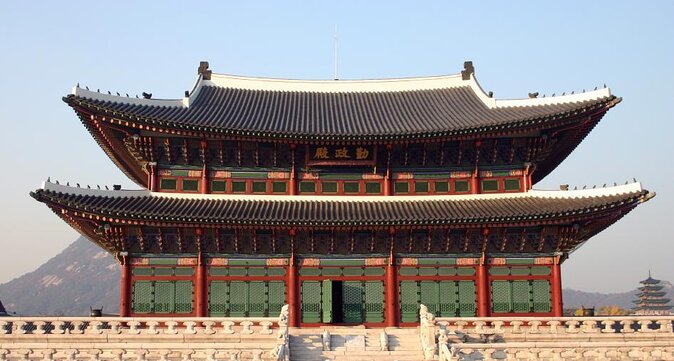
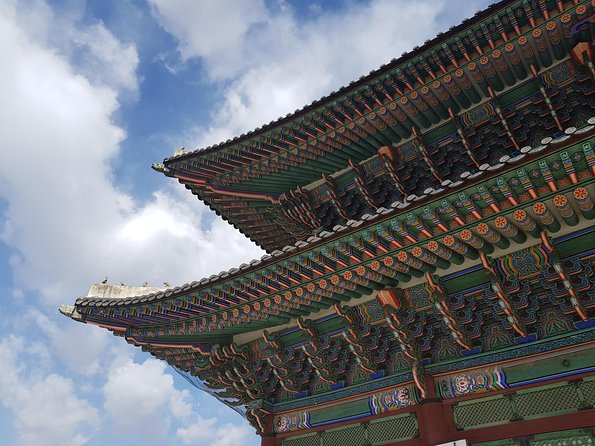
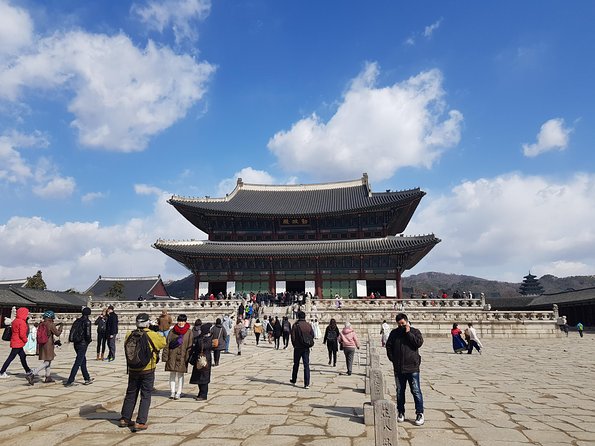
Gyeongbokgung Palace is the headline, and it deserves it. It’s one of the largest and most beautiful palaces in Seoul, and you get about 30 minutes there with admission included. The standout moment is the Royal Guard Changing Ceremony, which is a visual, structured piece of living tradition, not just static history.
What makes this stop work in a half-day tour is the way your guide frames it. You’ll hear what to look for while you’re already there, so you can connect the ceremony to the palace setting instead of treating it like a random performance. If you’re someone who learns best by seeing first, then listening, this is a good match.
Practical tip: plan for standing around during the ceremony, plus some walking on uneven palace grounds. Wear shoes you trust. If you’re cold or the weather turns, bring a light layer you can manage without slowing the group too much.
Bukchon Hanok Village: quick hanok photos without the hassle
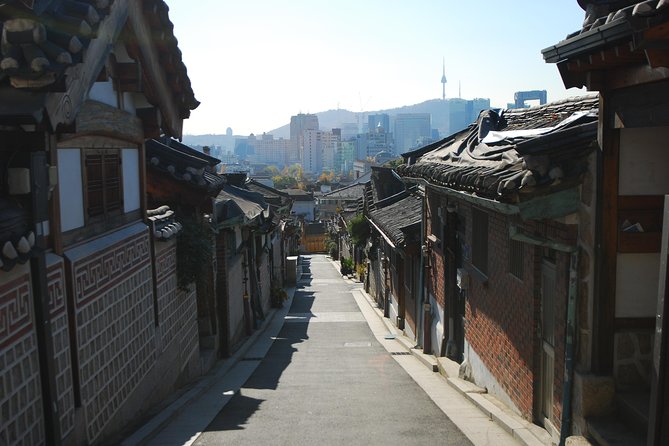
After the palace, you shift into a very different Seoul mood at Bukchon Hanok Village. You get about 20 minutes, and the goal is straightforward: see hanok, the traditional Korean houses, and grab photos in one of the area’s best visual zones.
This is where you’ll feel the tradeoff of a short tour. You won’t wander for a long time, and you can’t expect deep exploration of every side street. But if you’re a first-timer, the value is getting oriented fast: where the hanok clusters are, what the architecture looks like up close, and how the neighborhood blends into modern streets.
Also note the detail that matters for your planning: hanbok rental time is not offered. If you want to wear traditional clothing for photos, you’ll need to arrange that on your own outside this tour. For most people, plain comfortable clothes are easiest since you’ll be moving through a compact area.
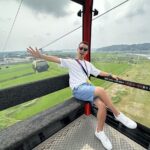
Bugak Skyway and the Bugak Palgakjeong viewpoint break
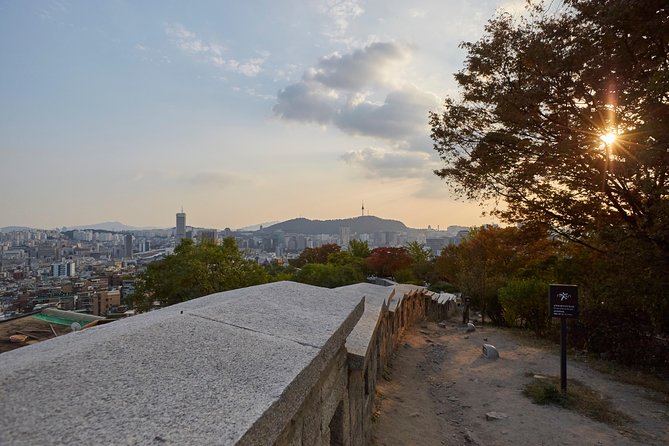
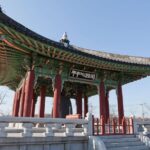
Then comes the nature pause. At Bugak Skyway, you visit Bugak Palgakjeong, a pavilion on the slopes of Bugaksan Mountain. You’ll spend about 40 minutes here, and admission is included.
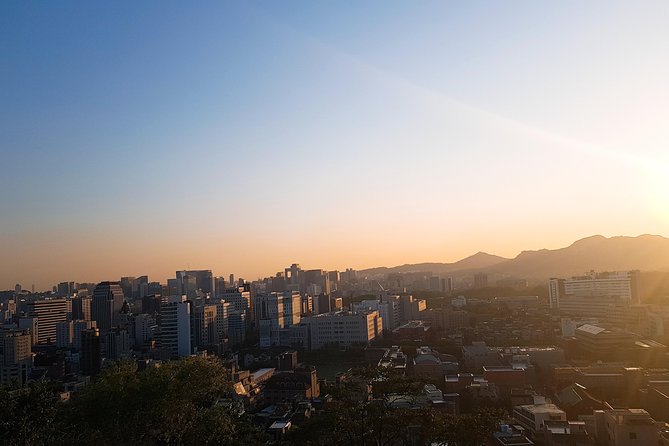
This is the stop that feels like a reset button. Instead of dense streets and stone walls, you get panoramic views over Seoul, plus a calmer rhythm than the city center. Even if the weather is not perfect, viewpoints still deliver something: you get a sense of how Seoul stacks layers of neighborhoods and buildings across the terrain.
Be realistic about the effort. It’s still a walk, and it’s on a mountain slope. The tour asks for moderate physical fitness, so if you have mobility issues, take that seriously. Good shoes matter even more here than at flat attractions.
Cheongha Korea Ginseng Museum: useful context, plus retail time
Ginseng is one of those Korean cultural anchors that shows up in food, products, and wellness marketing. Here, you spend about 30 minutes at the Cheongha Korea Ginseng Museum. Entry is free during the stop, and you also get learning content about why ginseng is so famous.
The museum’s background message is clear: ginseng was mentioned in Ji Jiu Zhang during the Han dynasty of China as an herb used across the East for ailments, and it was regarded as a panacea or cure-all. That gives you cultural context for why ginseng shows up in so many shops.
Now for the part you should plan around. Some past guests felt the museum experience spent a similar amount of time in the sales room, with a push to buy products. My advice is simple: treat this stop like a guided culture-and-shopping showcase. If you buy nothing, you can still get something out of the explanation and the way the museum frames ginseng.
If you’re sensitive to sales pressure, decide in advance what you’ll do. For example, you can browse quickly, then focus on finishing the stop with no “debate energy” at the counter. That keeps the day on track and preserves your mood.

Ihwha Mural Village and the modern street-art contrast
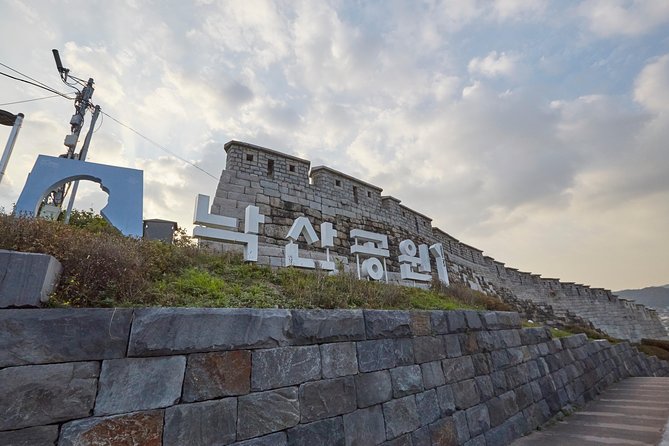
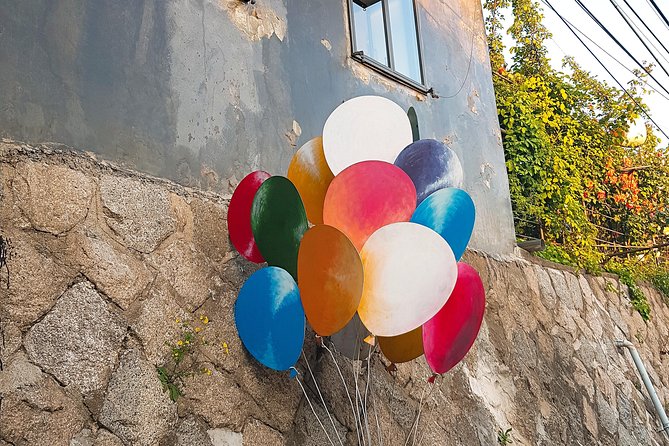
This tour is designed to connect old Seoul with a newer side of the city. The route is described as reaching the street art scene at Ihwha Mural Village, which matters because it gives your day a clear visual contrast.
Even if you’re not an art person, street murals change how you see a neighborhood. Instead of only thinking about palaces and tradition, you also notice creativity, self-expression, and how Seoul repaints its walls and identity over time.
Since the day is time-boxed, you won’t treat this as a museum-grade art tour. You’ll likely see it as a photo-and-walk stop, the kind that adds variety and keeps your energy from flattening after palace and viewpoint segments.
Finishing at Gwangjang Market, where you actually eat like a local
The tour ends at Gwangjang Market. You get about 15 minutes there, and entry is free for the stop. The real point is that you can taste various foods at your own pace.
Here’s why this ending works: market food is Seoul in plain sight. You don’t need to translate signage perfectly to get the idea, and you can pick what looks good rather than committing to one fixed tasting plan. It’s also a smart logistics choice. Instead of being dropped far from transit, you end at a central, well-known food area.
Budget note: food and drinks are not included in the tour price, so you should carry cash or a card and expect to spend a bit if you want to snack. The good news is that Gwangjang Market makes it easy to sample small bites rather than ordering a full meal.
Price and value for about four hours with guide, admissions, and transport
At $32 per person for roughly 4 hours, the value is all about what’s bundled. You’re paying for a professional guide, air-conditioned transport, and admission fees at key places. That matters in Seoul, where individual tickets and entrance fees can add up quickly if you’re stitching sites together on your own.
You also get the time-saving part. With a guide, you’re not figuring out the order, the best links between locations, or what to prioritize first. Your money buys focus and context.
What you should watch is the “time per stop” equation. Some stops are short by design (Bukchon and Gwangjang Market), so the tour’s value is best if you’re okay with seeing the highlights rather than going deep. If you’re the type who needs 60 to 90 minutes per neighborhood, you might prefer picking fewer places and exploring them more slowly.
Timing, meeting point, and how to avoid losing minutes
This is the type of tour where being on time really matters. The meeting point is at Myeongdong Station, Exit 1061-7 Chungmuro 2(i)-ga, Jung District, Seoul. The day is set up so you join at the start, and you are not allowed to join once the tour has started.
There’s also a straightforward rule: you should not count on contacting the guide mid-tour to catch up. So if your subway exit is confusing that morning, give yourself extra buffer.
The good news is the tour is near public transportation, and the recommendation is to use the subway for convenient access. That’s usually the fastest way to get yourself to Myeongdong without wrestling with traffic.
Dress for walking and weather. The tour runs rain or shine, and comfortable walking shoes are recommended. Bring layers, especially if you’re visiting in colder months. A mountain viewpoint can feel much colder than the city streets.
Group size reality and what it means for your experience
This tour caps at 100 travelers, and it is not currently run as a private tour. That’s not necessarily bad. With a strong guide, bigger groups can still move smoothly, and you’ll often see the best “camera angles” because your guide knows where to stand.
Still, you should expect a bit of shared pacing. If someone in your group needs extra time for photos, you might not get long delays at each stop. That’s why I suggest treating the day like a curated highlight reel.
The flip side is that you’ll likely avoid the worst chaos because the schedule is built to hit places in a planned sequence. Many guides are praised for keeping everyone moving and for arranging time for pictures.
Who this tour is best for, and who should adjust expectations
This tour is a great fit if:
- it’s your first day or first trip to Seoul and you want a quick orientation
- you like guided history explanations tied to real places, not just a lecture
- you want a viewpoint moment and a market finish in one day
You might want to skip or modify your plan if:
- you hate shopping stops, because the ginseng museum can include time in a product-selling area
- you strongly prefer to linger long at every site
- you have trouble with walking on slopes, since Bugak Skyway is on a mountain approach
I think it’s also ideal for solo travelers who don’t want to overthink transfers. The guide can be the calm middle point between you and the city.
Should you book this Seoul Gyeongbok Palace, Bukchon, and Gwangjang tour?
I’d book it if you want a high-return day with major Seoul landmarks, practical guidance, and a market ending that makes the tour feel useful, not just scenic. The $32 price works best when you treat it as an organized introduction and use the free time at Gwangjang Market to taste what you actually crave.
I would not book it if your #1 priority is slow travel. This is a schedule. You get your highlights, then you keep moving.
If you’re unsure, choose this tour when you want momentum on day one and you’re happy to let a guide handle the sequencing. It’s one of the easiest ways to get your bearings fast and still leave Seoul thinking about both the palaces and the street art.
FAQ
How long is the tour?
The tour is approximately 4 hours.
Where does the tour start and where does it end?
It starts at Myeongdong Station, Exit 1061-7 Chungmuro 2(i)-ga, Jung District, Seoul, South Korea. It ends at Gwangjang Market, and the activity ends in a different location.
What is included in the ticket price?
A professional guide, transport by air-conditioned minivan or coach, and admission fees are included. Food and drinks are not included.
Is there a mobile ticket?
Yes, the tour uses a mobile ticket.
Does the tour run rain or shine?
Yes, it runs rain or shine.
Is it private?
This tour is not managed as a private tour. It has a minimum of 2 people to book and a maximum of 100 travelers.
Can I cancel for a full refund?
You can cancel for a full refund if you cancel at least 24 hours in advance of the experience’s start time. If you cancel less than 24 hours before, the amount you paid will not be refunded.
More Tours in Seoul
More Tour Reviews in Seoul
Not for you? Here's more nearby things to do in Seoul we have reviewed


Seoul Palace & Royal Heritage Tours, compared.
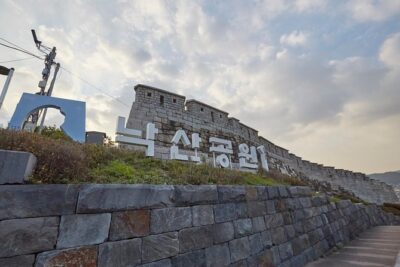 ★ 4.9Gyeongbok Palace, Bukchon Village, and Gwangjang TourFrom $322,321 reviews
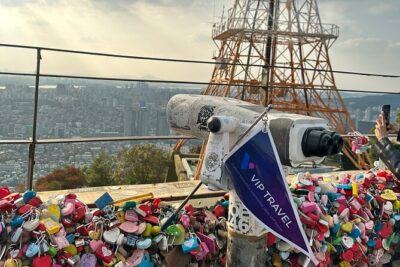 ★ 5.0Best Seoul City Tour (Gyeongbokgung Palace,Insadong,Namsan Tower)From $581,647 reviews
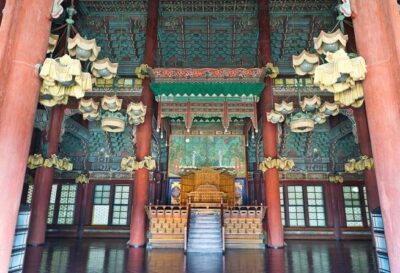 ★ 5.0Small-Group Royal Palace and Seoul City Tour (hotel pick-up)From $561,474 reviews
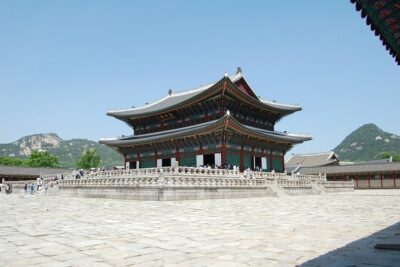 ★ 5.0Seoul City Sightseeing Tour Including Gyeongbokgung Palace, N Seoul Tower, and Namsangol Hanok VillageFrom $801,423 reviews
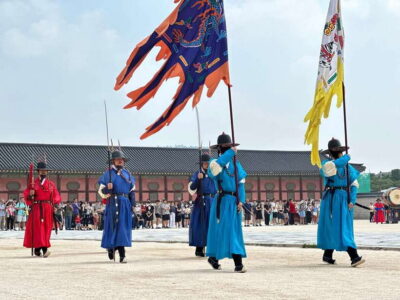 ★ 4.7Seoul Highlights: Gyeongbok Palace, Insadong & N Seoul TowerFrom $26726 reviews
 ★ 4.6Hanbok Rental with Gyeongbokgung Palace EntryFrom $6611 reviews
 ★ 4.5Seoul City Half Day Tour-Gyeongbok Palace Guard Changing CeremonyFrom $38357 reviews
 ★ 4.5Gyeongbok Palace with Gigibebe Hanbok RentalFrom $9289 reviews
Browse the lists this tour appears in