
Reviewed · DMZ DAY TOURS FROM SEOUL
Half-Day South Korea DMZ Small-Group Tour from Seoul
War has a front row seat. This small-group DMZ day from Seoul brings you to places that symbolize war and separation, including a North Korea village look and a walk through a tunnel. It is intense, fast-paced, and very structured, like the Korean peninsula in miniature.
What I like most is the small-group feel (up to 10 people) with an English-speaking guide who keeps the day moving and answers questions clearly. I also like how the stops each add a different layer, from Imjingak Pyeonghoa-Nuri Park monuments to Dora Observatory viewpoints, so you do not just check boxes.
One thing to consider is logistics around entry. You need an original passport for DMZ access (no copy, no photo), and the DMZ entrance tickets are limited and handled first come, first served.
Key highlights to know before you go
- Original passport required for DMZ entry, no copies or phone photos
- Small-group size, with a maximum of 10 travelers
- 3rd Tunnel details like 1,635m length and tight 2m height, plus a North-facing feel
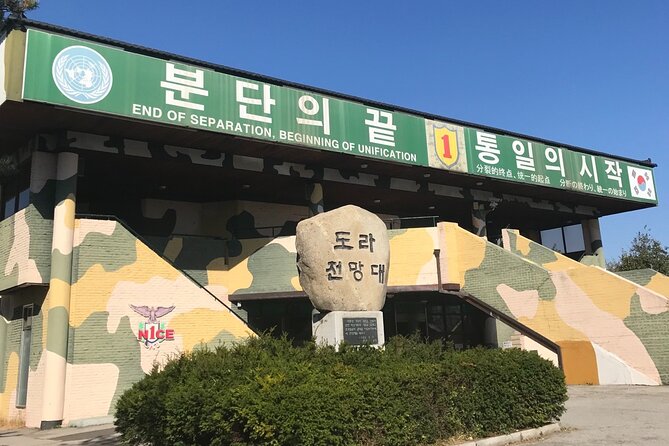
- Dora Observatory views over North Korea, including Gaeseong and Songaksan
- Imjingak Pyeonghoa-Nuri Park with monuments tied to 1972 hopes for unification
- A practical Seoul wrap-up with a ginseng museum stop and a duty free shop
A Half-Day DMZ Reality Check from Seoul City Hall
This is one of those rare tours where the format matters. Meeting at Seoul City Hall at 8:00 am means you get the full day’s work done without turning it into a full marathon. The total time is about 6 hours 30 minutes, which is just long enough to hit the key DMZ-facing stops and still return to Seoul.
The day is built around heavy symbolism, not just sightseeing. You go to memorial spaces like Imjingak Pyeonghoa-Nuri Park, then move into borderland locations where the “line” between two Koreas is felt more than explained. If you like meaningful travel that still runs on a timetable, this pace works.
Also, the tour is designed for comfort and language help. You get an English-speaking guide with commentary and all transportation included. For a day that can feel emotionally intense, that structure is a gift.
A few more Seoul tours and experiences worth a look
Getting In: Passports, Mobile Tickets, and the DMZ Ticket Rules
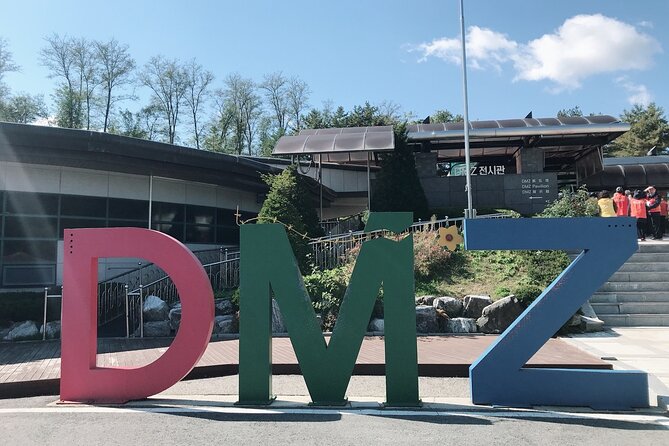
If you take only one thing from this review, make it this: bring your original passport. DMZ entry requires the original passport. Copies do not work, and photos do not work either. So if you travel with a passport wallet or keep your passport in a safe, get used to that habit before DMZ morning.
The next thing is tickets. The DMZ entrance tickets are limited, sold on a first come, first served basis. That does not mean your tour is chaos, but it does mean you should not treat DMZ entry as a guaranteed wish. The supplier suggests booking about a month ahead, which makes sense given the daily limitation.
Here is how I think about it practically. You can plan your day around the sites you hope to see, but keep your mindset flexible. If your schedule is tight and you do not want any risk, you may feel better booking early, then having a backup plan for your Seoul time.
Weather matters too. This experience requires good weather. If it gets canceled due to poor weather, you are offered a different date or a full refund. In other words, the operator is not trying to take your money and run if conditions are unsafe.
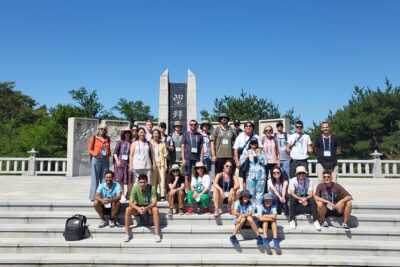
Imjingak Pyeonghoa-Nuri Park, Monuments That Set the Tone
Imjingak Pyeonghoa-Nuri Park is where the mood starts. It sits about 7 km from the military demarcation line, so it is close enough to feel like you are already in the DMZ world, just without going right into the most restricted viewing areas.
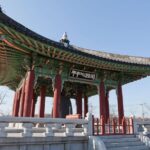
The park has statues and monuments about the Korean War. It was built in 1972 with the hope that unification might someday happen. That detail matters because it frames the park as more than a historical stop. You are walking through a public space meant to keep a future idea alive, even while the present remains frozen.
Expect a calm place with a lot of visual messaging. If you have ever visited a memorial, you know the difference between learning and feeling. Here, you get both, because the guide’s commentary helps connect what you see to why it is there.
Time-wise, you get about 45 minutes. That is enough to look, read, and pause, but not enough to treat it like a museum day. If you care about photos, go early in the visit window so you can slow down later.
Paju Stops: Freedom Bridge and the Borderland Feeling
After Imjingak, the tour moves into Paju area stops. The first is Freedom Bridge, a bridge built for temporary use. The point here is not architecture. The point is the name, which comes from the story of South Koreans returning to South Korea through this route.
That makes the stop surprisingly human. You see how infrastructure becomes part of people’s lives, then part of national memory. Even if you only spend about 20 minutes here, you can get the message quickly.
The practical benefit of this stop is pacing. It breaks up the heavier moments so you are not rushing from one high-emotion location straight to another. It also gives your guide a chance to set expectations for what comes next, especially the tunnel visit.
One thing to remember: this is still a structured half day. Even for free-admission stops, you are there to move with the group and stay on schedule. If you are the type who wants to wander for an hour on your own, this tour may feel tight.
The 3rd Tunnel Walk: Tight Spaces and Real-World Scale
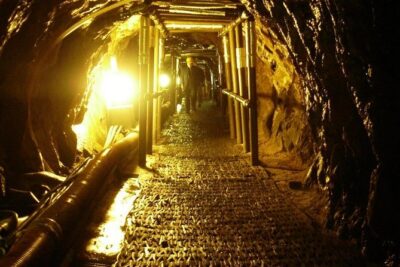
The highlight for many people is the tunnel. The 3rd Tunnel was discovered in 1978 by South Korean forces. It runs about 1,635m long, and the tunnel is tight: about 2m wide and 2m high. It is located 52 km from Seoul.
Those numbers are not trivia. They change how the tunnel feels. A 2m height means you will likely be bending or watching your posture, especially if you are taller. The narrow width means you feel the walls more than you would in a larger passage. And because it is long, the experience becomes less about a single photo and more about walking through a space that has constraints.
You are there for about 45 minutes total, which is long enough for the tunnel segment plus time around it. Admission for this stop is free as part of the schedule, but the real value is the walking itself. It turns an abstract conflict into a physical experience.
A quick expectation check: tunnels can be physically uncomfortable, even when the staff runs things safely. Wear comfortable shoes and keep your bag light. If you feel claustrophobic, be honest with yourself before you go. You might still see the views outside, but the tunnel walk is one of the core parts of the experience.


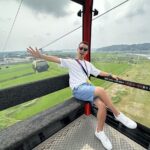

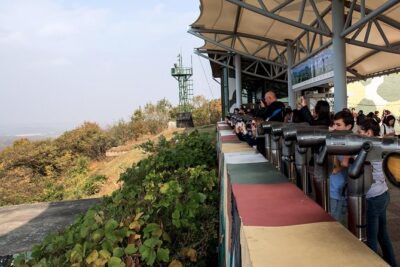
Dora Observatory: Looking North from a Public Viewpoint
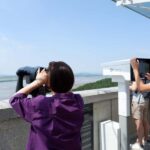
Near the 3rd Tunnel is Dora Observatory, first opened to the public in 1987. This is where you get the signature “look across” feeling. From here, you can overlook North Korea and specific locations such as Gaeseong and Songaksan.
Dora Observatory works well because it pairs view with explanation. Without commentary, you can end up staring across distance and guessing what you are seeing. With the guide’s commentary, the sightlines make more sense, and the names you hear turn into something concrete.
You get about 45 minutes at Dora. That is enough to find a viewing spot, take photos if you want, and still have time to absorb the guide’s context. It is also close enough to the tunnel area that you are not changing into a whole new day.
The best approach here is to split your time in your head. First, look. Then, listen. If you try to do both at full intensity the whole time, you will miss something.
Ginseng Museum and Duty Free Time: The Soft Landing Back in Seoul
Not every minute of a DMZ day is meant to feel intense. Toward the end, you shift back into Seoul with a ginseng museum stop and a duty free shop.
At the ginseng museum, you can learn about the history of ginseng, different types, and the positive effects described in the exhibition. Even if you are not a supplement person, it is an easy, low-effort cultural add-on. It also gives you a place to sit briefly and reset your brain after the tunnel.
Then you get a duty free shop stop, described as a chance to buy boutiques of luxury fashion brands. This part is practical if you want to handle shopping while you are already in a scheduled stop. It is also not essential, so if shopping is not your goal, use the time for browsing and people-watching without pressure.
This part of the day is about 30 minutes. It is not a long market visit, so think of it as a quick add-on rather than a shopping mission.
Price and Value: $500 Per Group, Up to 4
The price is listed as $500.00 per group, up to 4 people. That matters because this tour is built around access and logistics, not just transportation. DMZ days involve tight rules, limited entry tickets, and guided movement across borderland sites.
Here is the value math in real terms. If you go as a group of 4, your share can be about $125 per person. If you go with 2 people, it is about $250 each. And if you are solo and the group cap still holds at 4, the effective cost can get closer to the full $500. That is why I think this tour is often best when you split costs with friends or family.
The inclusions help justify the price. You get all fees and taxes, an English-speaking guide with commentary, and all transportation. Plus, admission tickets are included where listed for the park and Dora Observatory. On a half-day trip, you do not want to track parking, transit passes, or entry tickets on your own. This package keeps the day simple.
If you are traveling solo and worried about cost, treat this as a “pay for certainty and access” purchase. The DMZ ticket limits and passport rules are exactly the kind of thing that a guided day handles for you.
The Guide Factor: Henry Park and the Skill of Staying on Time
A name that pops up in praised guidance is Henry Park. In the feedback I saw, he gets credit for being friendly, asking and answering questions with Korean cultural context, and keeping the day organized with good time management. That last part matters more than people think on an intense day.
A DMZ day involves multiple short stops, each with its own atmosphere and rules. If your guide is unorganized, you either rush the emotional sites or miss parts of the route. When the guide drives well, manages timing, and communicates clearly, you feel like you got a complete experience rather than a series of hurried glimpses.
Even beyond the DMZ, the guide support seems strong in general Seoul add-ons. There are mentions of food recommendations and overall cultural knowledge. That can help the ginseng and duty free stops feel less like an obligation and more like a well-handled transition back to normal travel.
The bottom line: on a trip like this, a good guide turns a hard day into a coherent day. I would choose this operator partly for that human factor, not just the route.
Who Should Book This DMZ Tour from Seoul
I think this tour suits people who want one focused DMZ day without planning every step. You get a compact schedule, English commentary, and an easy meeting point at Seoul City Hall.
It also fits travelers who like structure. You get defined time at each stop, and you do not have to worry about how to connect transportation between far-off sites. Since the total duration is about 6 hours 30 minutes, it is also good for shorter trips in Seoul where you still want the headline experience.
Who might not love it is the person who wants total freedom. This is not a slow, do-it-your-own-way day. You have stop-by-stop pacing and tight overall timing. You also need to commit to the passport requirement for DMZ entry, which can be stressful if your documents are not ready.
If you are traveling with a friend or family member, it becomes a smart value option because the $500 group price supports up to 4 people.
Should You Book This DMZ Tour?
I would book if you meet three conditions. First, you have your original passport ready and you plan to bring it safely on tour day. Second, you can handle a tight schedule and short viewing windows, especially in the tunnel and at Dora Observatory. Third, you want guided context that helps names and places make sense.
I would think twice if any of these apply. If you dislike confined spaces, the 3rd Tunnel might feel rough due to its reported size of about 2m high and 2m wide. If you want a long, unstructured day with lots of wandering time, this half-day format may feel limiting.
If you do book, my practical advice is simple. Pack light for the tunnel, wear comfortable shoes, and go in with the mindset that this is about access and meaning, not just photos.
FAQ
Where do we meet for the tour?
You meet at Seoul City Hall, 110 Sejong-daero, Jung District, Seoul. The listed start point is connected to Subway Line 1, and the start time is 8:00 am.
How long is the DMZ tour?
The tour runs for about 6 hours 30 minutes.
How many people are on the tour?
This is a small-group tour with a maximum of 10 travelers.
Do I need my passport to enter the DMZ?
Yes. An original passport is mandatory for DMZ entry. No copy and no photo are allowed.
Are DMZ entrance tickets guaranteed?
DMZ entrance tickets are limited and sold first come, first served. The tour suggests booking about one month before, and last-minute bookings can be available but only at random schedule availability.
What is included in the price?
The price includes all fees and taxes, an English-speaking guide with commentary, and all transportation.
Is lunch included?
No. Lunch is not included, and personal expenses are also not included.
More Half-Day in Seoul
More Tours in Seoul
More Tour Reviews in Seoul
Not for you? Here's more nearby things to do in Seoul we have reviewed


DMZ Day Tours from Seoul, compared.
 ★ 5.0Best DMZ Tour Korea from Seoul (Red Suspension Bridge Optional)From $2941,422 reviews
 ★ 5.0DMZ Tour: 3rd Tunnel, Option(Suspension Bridge, Boat) from SeoulFrom $3521,373 reviews
 ★ 5.0DMZ tour south Korea from Seoul (NK experience hall, defector)From $2620,599 reviews
 ★ 4.9DMZ Insider Tour: 3rd Tunnel, NK Defector Meet & Red BridgeFrom $5015,214 reviews
 ★ 4.8DMZ Tour with Optional Suspension BridgeFrom $455,277 reviews
 ★ 5.0Signature DMZ Tour: Exclusive Defector Talk & Suspension BridgeFrom $274,459 reviews
 ★ 5.0Thrilling Korean DMZ 3rd Tunnel Tour from Seoul + Red Bridge RushFrom $353,097 reviews
 ★ 5.0DMZ Past and Present: Korean Demilitarized Zone Tour from SeoulFrom $372,481 reviews
Browse the lists this tour appears in