
Reviewed · MUSEUMS
Gyeongju UNESCO Sites Tour by KTX train; The Museum Without walls
Gyeongju by KTX beats a full day in Seoul. This tour lines up a smooth KTX train ride plus an English-speaking guide who explains Silla-era sites in a way that clicks fast. I like that the schedule hits the big UNESCO-style stops without making you wrestle with directions, though it is an early, long day and most of the sights are outdoors, so heavy rain can change your experience.
Second, the structure is practical. Hotel pickup in Seoul areas happens by private car, and the day stays organized from the station onward. In the past, guides on this route have helped people get through the station step by step, including getting you seated for the KTX, and that kind of calm really matters when you are starting at 7:00 am.
Finally, you get the feel of Gyeongju as a Museum Without walls. You will move through palace grounds, observatory stones, and Buddhist sculptures with enough time at each place to understand what you are looking at, not just take photos and leave. Just plan for walking, and pack for cool mornings and wind if the coast is in play.
Key takeaways before you go
- KTX + private transfers make the trip from Seoul feel controlled instead of chaotic
- Silla-focused stops stack the day from tombs to observatories to temples
- Gyeongju National Museum gives you context so the ruins mean more
- Seokguram at 750 meters is the high point, literally, and worth smart footwear
- Group discounts and a private group can make the per-person cost feel more fair
KTX logistics that keep your brain switched on, not fried
The biggest win here is the rhythm. You leave Seoul early, you take the fast train, and you spend your daylight in Gyeongju rather than trading hours for slow buses. The tour runs about 8 to 9 hours, starting at 7:00 am, so you are not doing a half-day sampler. You are doing a full-day arc.
Because this is a private tour for your group only, you are not stuck waiting for a herd to catch up at every stop. You also get a mobile ticket, plus round-trip KTX economic class fare is included. That matters because train tickets plus seat selection plus station navigation can eat energy, especially if you are traveling without much Korean.
One more practical detail: the tour includes hotel pickup in Seoul areas, but hotel drop-off in Seoul is not included. You may need to arrange your own ride back after the tour ends, so it is smart to plan where you will be at the end of the day.
You can also read our reviews of more museum experiences in Seoul

What the day feels like, hour by hour
At a glance, the plan is straightforward: arrive in Gyeongju, then rotate through six main stops, each with about an hour on site. Admissions are included for the stops where tickets are required, and Gyeongju National Museum includes a free admission window in the schedule.
Expect a pace that is active but not frantic. You are not trying to sprint between far-flung neighborhoods on your own, because you are in a private vehicle for the transfers between locations. Still, you should assume you will walk uneven paths at temple and grotto sites.
A final reality check: it is a history day, but it is also a walking day. One stop in particular sits above the sea at high elevation, and others are temple complexes and tomb grounds. If you know you get cold fast, bring a layer even when Seoul feels warm earlier in the year.
Cheonmachong Tomb: Silla power you can almost feel
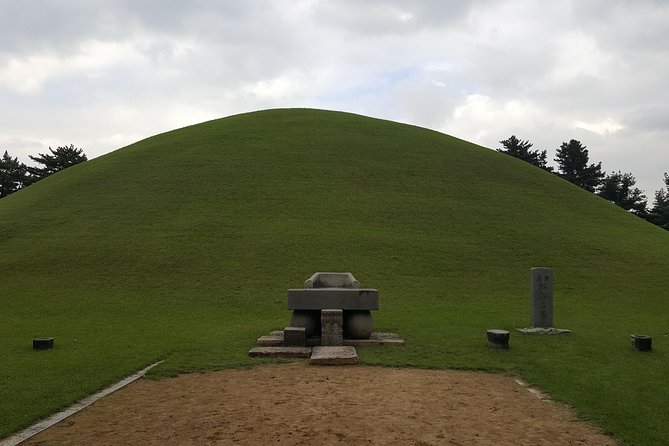
The morning anchor is the Cheonmachong Tomb area, part of a spread of Silla burial mounds. You will be looking at a cluster with more than 20 tombs, ranging from large to small. Many are earthen and mound-shaped, which is a big part of why this site feels so grounded, almost like the earth is holding the story.
What makes it more than a pretty hillside is the implied social rank. These tombs are presumed to be linked to kings and court officials. That context changes how you look at the shape of each mound, because you can start thinking in terms of status and administration, not just archaeology.
One of the more distinctive features is the existence of a double gourd-shaped tomb. If you like details, this is a good place to slow down and compare forms, because the stone and earth textures can look similar at first glance.
The possible drawback is simple: you are outside here. In rain, dirt paths can get slick, so wear shoes with grip and expect slower movement.
Gyeongju National Museum: your quick Silla decoder ring
After burial mounds, you get a place where things are explained in a clean, indoor way: Gyeongju National Museum. This is where the day starts making more sense. You walk in seeing artifacts and displays that connect the sites you just visited to a broader picture of the Silla kingdom.
The key value is that the museum gives you “one fell swoop” understanding, especially through the main archaeological hall. Without this step, temple stones and tomb shapes can feel like disconnected stops. With it, you start noticing themes: power, belief, craft, and the way art and daily life tie back to the political era.
Time on museum floors is limited here, about an hour. That is actually a good thing, as long as you go in ready to focus. If you tend to wander, you might want to pick a few displays to prioritize, then move on.
Also, the schedule notes admission is free for this stop. So you are not paying extra on top of what is already included, and you get a high return on time spent.
Cheomseongdae Observatory: why the Silla built for the sky
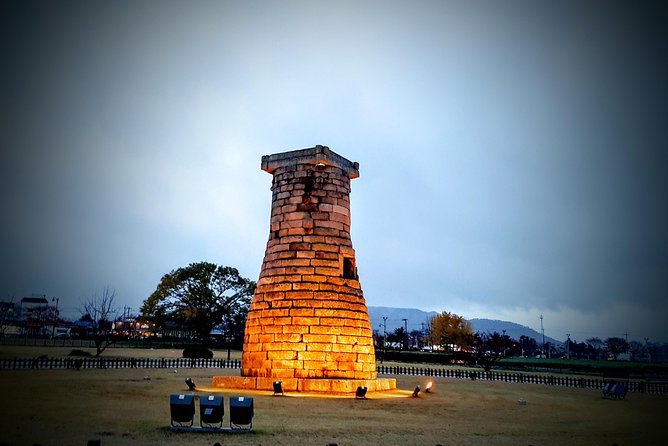
Next comes Cheomseongdae, the Star Gazing Tower. It is one of those places that sounds poetic until you realize it is stone technology. Built during the reign of Queen Seonduk, it dates to 634, and it is described as the oldest existing observatory in the Far East.
You will see it as a tower built from stacked stone, and the schedule highlights that it has 27 levels of stones. Even if you do not go deep on astronomy, this helps you understand that the Silla kingdom treated sky observation as something formal. It was not casual. It was built.
This stop also breaks the day emotionally. After tombs and museum halls, an observatory gives you a different kind of attention, more about time, measurement, and long-term planning. If you are the type who likes how civilizations read the sky, you will enjoy the shift.
Because it is outdoors, check the weather. In strong sun, the stone can heat up. In rain, visibility can drop. Either way, you can still learn from the structure, just pace yourself.



Donggung Palace and Wolji Pond at Anapji: palace grounds with a story
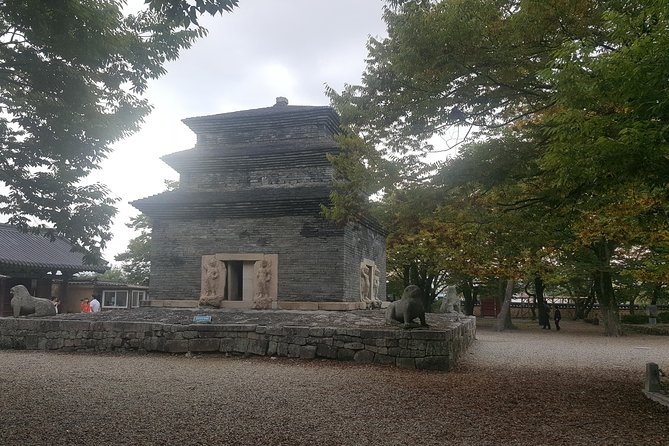
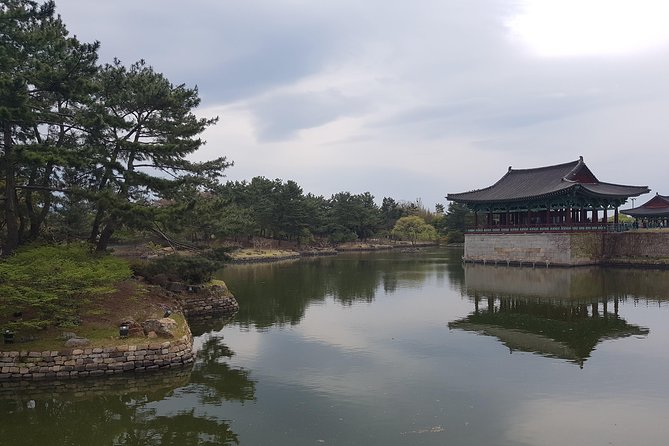
Then you head to Donggung Palace and Wolji Pond, also known as Anapji. This is where Gyeongju turns scenic. The pond is tied to construction after the unification of the Korean Peninsula, and the schedule says it was built in 674.
What makes the place interesting is how the palace grounds were shaped beyond simple architecture. The schedule notes that small mountains were created inside the palace walls. It also describes adding beautiful trees and flowers, along with rare birds and animals. That detail points to the palace as a controlled natural experience, not just buildings.
You get about an hour here, which is enough to walk the area and read the overall layout without rushing. If you are photographing, timing matters. Midday light can be bright, while late afternoon can make reflections look more dramatic. The tour timing is fixed by the day plan, so you cannot tailor it, but you can still get great angles.
In bad weather, pond-side areas can be damp and windy, so a water-resistant layer helps.
Bulguksa Temple: the stone pagodas that define an era
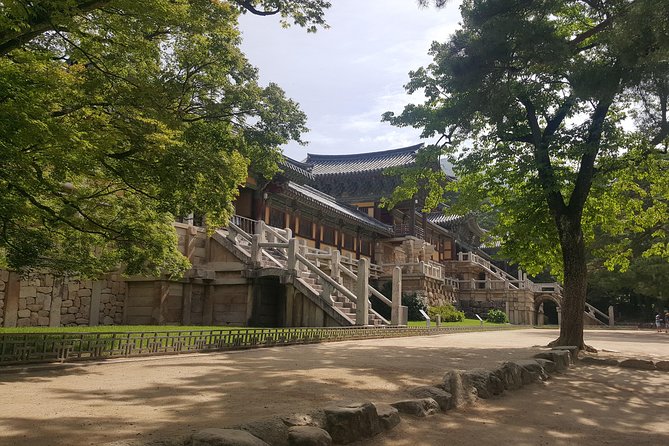
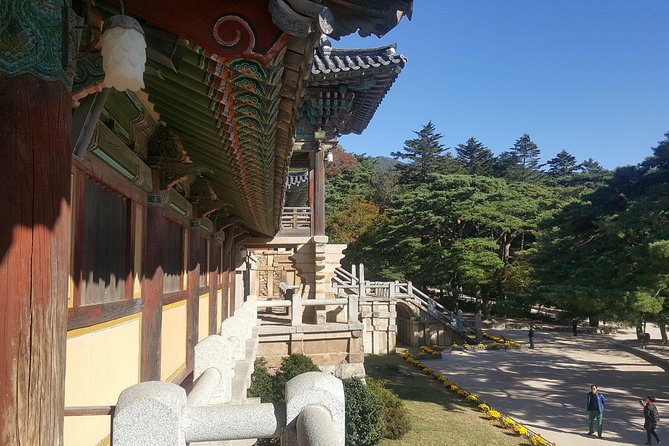
For many people, Bulguksa Temple is the “main temple” day. It is described as the most famous Buddhist temple in Korea, and it is known for Silla-period relics. Two names you will hear here are the stone pagodas Dabotap and Seokgatap.
The way to enjoy Bulguksa is to think of it as architecture that acts like storytelling. You are seeing an old visual language: scale, symmetry, and stone craftsmanship meant to communicate devotion and authority.
One practical tip from this kind of stop: stay aware of footing. Temple complexes often have steps and changes in terrain. Go slow, keep your shoes practical, and give yourself a minute before starting each climb.
The schedule also links Seokguram to Bulguksa as part of the same complex. That makes it a strong pairing. You see the broader temple setting first, then you get the grotto sculptures next.
Seokguram Grotto: a high-altitude stop with world-famous sculptures
Seokguram is the reason many people book a Gyeongju day. It is a hermitage part of the Bulguksa complex, and it overlooks the East Sea. The schedule also gives a key fact that affects your body and your photos: it sits about 750 meters above sea level.
You will see Buddhist sculptures described as among the best in the world. Even if you are not a sculpture expert, what tends to impress people is how the figures are framed by the space. A grotto setting changes scale and mood. It feels enclosed, formal, and old.
In a rainy day, this is the stop where the day can feel harder. Indoor grotto access depends on conditions, and approaches can be slick. If you know rain hits you hard, bring a light waterproof outer layer and expect extra time at entrances.
This is also a stop where your guide can make the visit better. English explanations can turn “cool statues” into “this is why they were made and how it fits Silla belief.”
Value check: does $470 buy real convenience here?
At $470 per person, this is not a bargain-basement tour. But it is also not just sightseeing. You are paying for a package that includes hotel pickup, round-trip KTX fare in economic class, a local English-speaking guide, a private vehicle for transfers, and admission fees to the included sites.
Meals are not included, and hotel drop-off service in Seoul is not included. Those are the two clear “extra” costs or planning items you should budget for. Plan for lunch on your own, and plan your end-of-day ride.
The value logic is this: if you were trying to DIY the same day, you would have to manage KTX tickets, transfers, guide-grade context at multiple sites, and time pressure. The tour removes most of the coordination work. When your day starts at 7:00 am, that convenience turns into real value.
Also, booking tends to happen about 52 days in advance on average. That usually means limited spots or high demand on the KTX time slots, so waiting can narrow your choices.
Making the most of the day without getting worn out
This is a long day by design, and your comfort is part of the experience.
- Wear grippy shoes. You will handle stairs and uneven outdoor terrain, especially around temples and tomb grounds.
- Bring a layer. Even when it is warm in Seoul, mornings and high-elevation areas can feel cooler.
- Plan for weather changes. Rain does not erase the value of these sites, but it can slow walking and reduce how long you linger outdoors.
- Use the mobile ticket right away. This helps you keep the day smooth when meeting points involve quick transitions.
One more smart move: take advantage of the guide’s storytelling. On past departures, guides such as Jay, John, Dylan, and Andrew have been credited with clear explanations and station help. If you are the type who likes to ask questions, you will get more out of the stops when you do.
Who this UNESCO-style Silla route suits best
I think this tour fits best if you want guided context and a low-stress plan. If you love ancient kingdoms, Buddhist art, and the way architecture reveals politics, you will likely enjoy stacking Silla sites in one day.
It also works well if you are short on time in Seoul. The KTX makes the excursion realistic, and the private transfers keep you from burning hours on local transit.
It may be less ideal if you dislike early starts or you prefer very slow travel. Even at a good pace, this is still a full day. If you want a relaxed, late-morning start, you might find it demanding.
Should you book the Museum Without walls Gyeongju tour?
Book it if you check these boxes: you like structured days, you want English interpretation at major Silla landmarks, and you are glad someone else handled KTX logistics, admissions, and transfers. The combination of Cheonmachong Tomb, the Gyeongju National Museum, Cheomseongdae, Donggung and Wolji, Bulguksa, and Seokguram is a strong “Silla to faith to art” route in one package.
Skip it or consider a different format if you need a lighter day, you hate rain and outdoor walking, or you would rather pay less and DIY with public transit. Because meals are not included and there is no Seoul drop-off, you should also confirm where you will eat and how you will get home after the tour ends.
If you want a day that turns Gyeongju from an abstract UNESCO name into a set of places you can actually explain back to yourself, this tour is a solid way to do it.
FAQ
What time does the tour start?
The start time is listed as 7:00 am.
How long is the tour?
It runs about 8 to 9 hours.
Is hotel pickup included?
Yes. Hotel pickup is included for Seoul areas.
Is hotel drop-off included in Seoul?
No. Hotel drop-off service in Seoul is not included.
Does the price include KTX train tickets?
Yes. Round-trip KTX fare (economic class) is included.
Is there an English-speaking guide?
Yes. The tour includes a local English-speaking guide.
Are admission fees included?
Yes. All admission fees to the listed tourist sites are included.
Are meals included?
No. Every meal is not included.
Is the tour private?
Yes. It is a private tour for your group only.
How does ticket delivery work?
The tour offers mobile tickets.
Can I cancel for free?
Yes. You can cancel for a full refund if you cancel at least 24 hours before the experience’s start time.
More Museum Experiences in Seoul
More Tours in Seoul
More Tour Reviews in Seoul
Not for you? Here's more nearby things to do in Seoul we have reviewed


Museums, compared.
 ★ 4.9War Memorial of Korea Private Guided Museum TourFrom $10029 reviews
 ★ 5.0DMZ Tour + The War Memorial of Korea MuseumFrom $6528 reviews
 ★ 4.0Color Pool MuseumFrom $1322 reviews
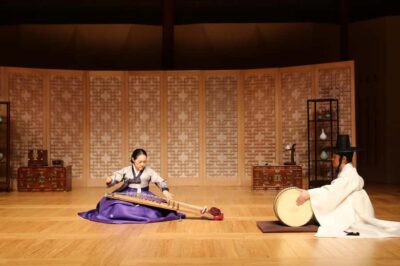 ★ 4.7SEOUL: Gugak – Korean Traditional Music Museum&Concert TourFrom $4917 reviews
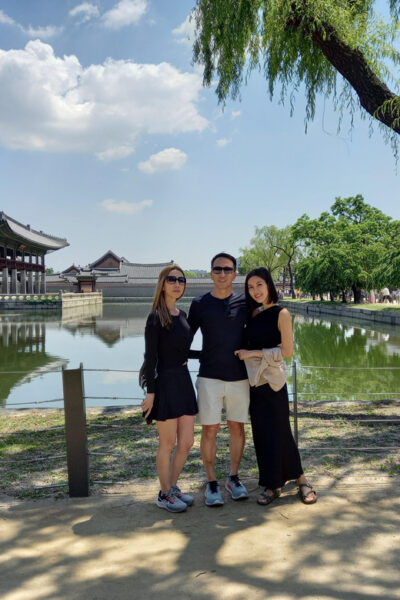 ★ 4.8Layover tour to Gyeongbokgung-Folk Museum-Bukchon-InsadongFrom $2546 reviews
 ★ 5.0Time Travel in Seoul: Gyeongbokgung Palace, Folk Museum & BukchonFrom $576 reviews
 ★ 4.0National Art Gallery Tour and Taste of Korean Cuisine in SeoulFrom $1304 reviews
Browse the lists this tour appears in