
Reviewed · SEOUL
Traditional Korean Bookbinding Experience in Seoul, Hongdae
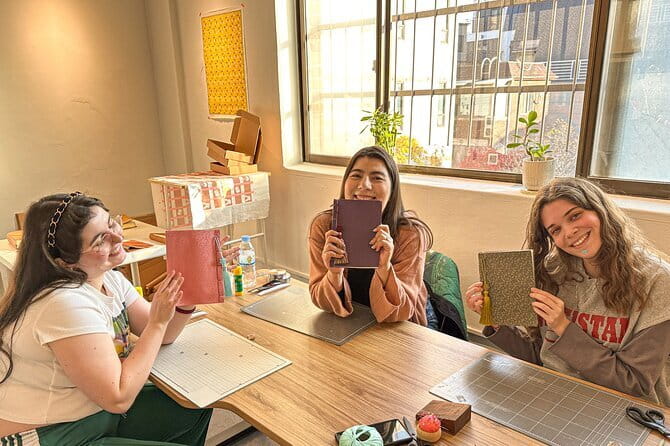
A notebook you can feel history in. This traditional Korean bookbinding class in Seoul’s Hongdae area is all about hands-on craft, starting with Hanji paper and ending with a Norigae knot you’ll tie yourself.
Two things I really liked: the step-by-step guidance with real binding technique, and the design freedom to choose from 22 silk cover patterns plus different norigae and thread colors. You get something pretty and personal, not just a one-off souvenir.
One possible drawback: it’s a 2-hour studio session focused on making, so if you want lots of walking, views, and photo stops, you’ll still need to plan the rest of your day around crafting time.
Quick hits
- Hanji with UNESCO connection: Joseon-era uses, linked to UNESCO Memory of the World
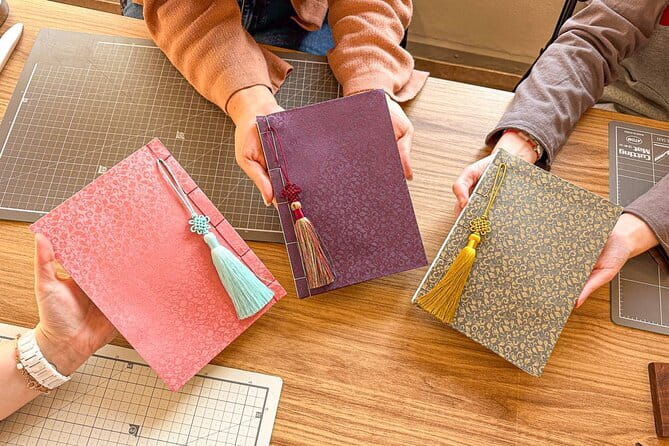
- Silk cover variety: pick from 22 traditional patterned silk options
- Norigae knot finishing step: a signature Korean decorative knot you tie yourself
- Small group feel: maximum 12 travelers, and only reserved spots enter
- Practical keepsake: take home a gift-ready notebook you can use and show
Why Hanji and Joseon-Style Binding Belong in Hongdae
Hongdae is great for nightlife and street energy, but this class gives you something quieter and more meaningful. You’ll be working with traditional Korean materials, not just decorating a generic notebook. The whole point is making a small object the way Korean scholars and the Joseon royal court recorded notes, diaries, and thoughts.
What makes it feel authentic is the focus on Hanji and traditional construction. Hanji is the handmade paper associated with Joseon-era writing, including documents tied to the Annals of the Joseon Dynasty, and it’s listed under UNESCO Memory of the World. That UNESCO detail sounds official, but in practice it helps explain why the paper matters and why Korean bookbinding traditions developed the way they did.
I also like that the craft isn’t treated like a quick “do it and forget it” activity. You learn the logic behind the steps, then you do them. When you finish your notebook, you’re not just holding a pretty cover, you’re holding a piece of process.
You can also read our reviews of more tours and experiences in Seoul.



Price, Time, and Group Size: What $49 Really Gets You
At $49 per person for about 2 hours, this is priced like a true workshop, not a casual demo. You’ll have binding tools and materials provided, plus a licensed guide. That matters, because bookbinding is the kind of craft where the right tools and instruction prevent frustration and mistakes.
The class also caps at 12 travelers, which usually means more time from the guide and less waiting around. You’re not going to get lost in a big crowd or rushed through the steps.
One extra practical note: only the number of people who made a reservation can enter the studio. So if you’re deciding last minute, don’t assume you can “tag along.” Plan to book ahead so you’re actually in the room when it starts.
Arriving at danchoodan, Then Getting to Work
Your class starts at 10:30 am at danchoodan in Mapo-gu, Daeheung-dong. The meeting address is Daeheung-ro 100, 3층 (floor 3). Your session ends back at the same meeting point, so you’re not forced into a long, split schedule across multiple stops.
You should also note this is a studio class where the “work” is the experience. That’s good news, because it makes your time predictable. You’ll know you’re there to create, not to chase directions or squeeze in one more attraction.
If you’re the type who likes to understand what you’re doing as you do it, you’ll appreciate the pacing. The guide introduces Hanji, explains the binding approach, and then you move through the steps with materials in front of you.
Your Workshop Flow: From Silk Choices to Norigae Knot

This class is structured like a recipe, but in a good way. Each step builds on the last, and by the end you’ll see how your choices affect the final look.
Step 1: Choose your silk cover
First you’ll pick from 22 silk covers with Korean traditional patterns. This is one of the most fun parts because you can quickly shape the style of your notebook. If you’re a visual decision-maker, you’ll feel right at home here.
A practical tip: when you choose, think about contrast. A silk pattern that’s busy can look stunning, but pairing it with a norigae and thread color that’s too similarly busy might make the details harder to see.






Step 2: Select Norigae and thread colors
Next you’ll choose your Norigae ornament and thread color. Norigae are traditional Korean decorative elements, often tied to cultural symbolism and festival style details. Here, the choices affect the final “personality” of your notebook.
This is also where you learn to treat the notebook like a designed object, not just a craft project. You’re building a small composition.
Step 3: Learn about Hanji paper
Then the guide brings in Hanji background. You’ll learn why Korean handmade paper is special, and why it’s historically linked to writing and records. Hanji is associated with the Joseon royal family and Korean Confucian scholars for diaries, notes, and daily documentation.
Even if you’re not a paper nerd, this part helps you feel the purpose of the materials. You’re not just making something decorative. You’re making something meant to last.
Step 4: Bind your notebook with Korean traditional technique
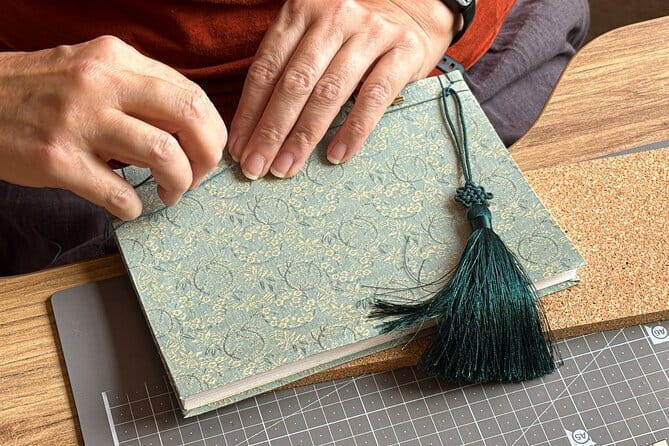
After the background, it’s hands-on time. You’ll bind the silk and Hanji using traditional Korean binding methods. This is the core craft segment, and it’s where instruction matters most.
In this kind of workshop, you’re learning how to handle materials carefully so the notebook holds together. The guide is the difference between a project that looks good and one that actually works as a notebook.
Step 5: Decorate with a Norigae knot
Now comes the signature finishing touch. You’ll add a traditional Norigae knot to your notebook. The key is that it’s not just attached. You’re involved in the knot-tying step, which gives the notebook a personal touch you can point to later and explain.
This step often feels like the moment the project starts to look “Korean” in a very specific, ceremonial way, not just like a craft with generic decoration.
Step 6: Pack it in a gift-ready package
Finally, your notebook is packed for you in a gift-ready package. That’s a big deal if you don’t want to deal with wrapping later or you’re bringing it home for someone.
Picking Silk Patterns and Thread Colors Like a Pro
It’s easy to walk in and say, I want something pretty. Then you stand there looking at options and freeze.
Instead of trying to match everything perfectly, I recommend choosing based on two things:
1) how visible the silk pattern will be once the Norigae knot is tied
2) whether your thread color helps the knot pop
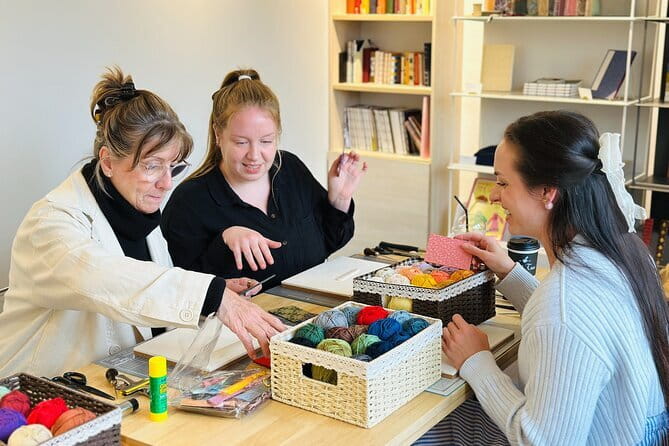
The class gives you a wide menu to work with: 22 silk covers, plus a variety of colorful threads and Norigae ornaments. That variety is part of the value. You’re not stuck with a single design or forced into someone else’s aesthetic.
If you’re traveling with friends, you can also use the experience as a way to compare styles. One person might choose a bold pattern and darker thread, while another might go for a gentler look. Either way, you’ll end up with something you can tell apart at a glance, which is ideal when you’re carrying your notebook home.
Hanji Paper 101: Why It’s More Than a Buzzword
Hanji shows up in the class because it’s central to the tradition, not because it’s trendy. Hanji is described as the traditional Korean paper used in connection with the Annals of the Joseon Dynasty, and it’s tied to UNESCO Memory of the World. That UNESCO listing matters because it reinforces that this isn’t just decorative paper, it’s part of cultural record-keeping.
Hanji is also linked to how the Joseon royal family and Korean Confucian scholars recorded information. Diaries and notes were daily life. People needed paper that fit their writing and documentation routines.
One of the most memorable lines from the class theme is the longevity saying: silk lasts 500 years, while Hanji lasts 1,000 years. You might not be able to verify that timeline at home, but it tells you what the tradition values: long-term durability and material respect.
In practical terms, it also frames your notebook as a keepsake. You’re making something you can use, not something you have to treat like fragile museum glass.
The Binding Moment: Where the Craft Gets Real

The binding step is where you see the difference between “paper craft” and real bookbinding. You’ll be binding silk and Hanji using Korean traditional methods. That means you’ll handle the structure, not just glue down decor.
This is also where patient instruction really matters. In a good workshop like this, the guide keeps the pace moving but doesn’t throw you in the deep end. You learn enough to do the next step correctly, then you continue.
What I like about this style of class is that it keeps you from feeling lost. You’re given small tasks in order, and the result becomes logical. By the time you tie the Norigae knot, you understand how it fits into the overall design and structure.
Taking Home a Gift-Ready Notebook You’ll Actually Want to Use
The final product is a unique notebook that you can take home right away. You finish with:
- a silk cover you chose from traditional patterns
- a Hanji-based notebook made through traditional binding
- a Norigae knot decoration tied as a final touch
- a gift-ready package, so you do not need extra wrapping
That gift-ready packaging is underrated value. If you’ve ever bought a handmade item while traveling and then had to figure out how to protect it on the ride home, you’ll appreciate this.
Also, because you chose the silk and thread, your notebook feels like yours. It’s the kind of souvenir that you can show later and remember why you picked each detail.
Who This Seoul Class Is Best For
This experience is best if you want more than photos. You’ll like it if you:
- enjoy crafts and want a guided project with a real outcome
- like cultural specifics, not just general Korean culture talk
- want a practical souvenir that can live on your desk
- are traveling with a friend or partner who enjoys hands-on activities
It’s also a great option for people who love books, paper, or stationery. You’re not just making something aesthetic, you’re making something tied to writing culture.
If you’re mainly planning big sightseeing days, this still works, but treat it like a dedicated block. It’s not a quick stop between landmarks. The payoff comes from focusing for the full session.
Should You Book This Hanji Bookbinding Class in Hongdae?
I’d book it if you want an authentic Korean craft you can explain and use later. The combination of Hanji, silk pattern choices, and the Norigae knot finishing step makes it feel intentional from start to finish. You get a guide, tools, materials, and a notebook that looks great and feels thoughtfully made.
Skip it only if you want a tour that’s mostly about walking around and sightseeing. This is a studio experience with a 2-hour craft focus. You’ll likely love it if you’re in the mood to slow down, make something with your hands, and take home a real keep.
If you’re the kind of traveler who remembers trips by the objects you kept, this is the kind of souvenir that sticks.
FAQ
How long is the Korean bookbinding experience?
The class is about 2 hours.
How much does it cost?
It costs $49.00 per person.
What do I make and take home?
You create a traditional Korean notebook using Hanji and a silk cover, and you finish by tying a Norigae knot. You take the notebook home in a gift-ready package.
What’s included in the price?
The price includes binding tools and materials, plus a licensed guide.
Where is the meeting point, and when does it start?
It starts at 10:30 am at danchoodan, Daeheung-ro 100, 3층, Mapo-gu, Daeheung-dong, Seoul. The experience ends back at the meeting point.
Are there age limits to join?
Yes. Reservation entry is only possible if you are 17 years old or older.
Can I cancel for a full refund?
Yes. You can cancel for free up to 24 hours in advance for a full refund. If you cancel less than 24 hours before the start time, the paid amount is not refunded.


