
Reviewed · SEOUL
(Small Group) Palace & Seoul Old Town Highlights
A palace tour that fits in half a day. This small-group Palace and Seoul Old Town Highlights walk strings together Seoul’s Joseon-era landmarks with a quick hit of today’s popular neighborhoods, so you get your bearings fast. I like the max 10-person group size, which makes it easy to ask questions and actually hear the details. I also love the way the guide connects the sites to how Seoul works now, not just what happened centuries ago. One consideration: you’ll be moving on foot for most of the 3 hours, so wear comfortable shoes and expect a steady pace.
This is led by Honey Trail, and the guide behind the best experiences is often named Lee (she’s listed with the handle @honeytrailkorea). Stops are tightly timed, with Gyeongbokgung Palace taking the biggest chunk at about 1 hour 30 minutes, and everything else staying focused rather than dragging. If your idea of a palace day is slow and leisurely, you might prefer something longer, but if you want an efficient old-town sampler with context, this format is hard to beat.
Key things I’d plan around (before you go)
- Max 10 travelers keeps the tour from turning into a crowded shuffle
- Insadong, Jogyesa, Gwanghwamun Square, Gyeongbokgung, Bukchon hits classic Seoul “first timers” stops in one loop
- Gyeongbokgung ticket is included, while most other listed sights are free to enter
- Guide-led pacing works well because each stop has a clear time block, about 10 to 90 minutes
- Lee’s style includes history plus modern culture facts, plus mini quizzes and traditional games
A Half-Day Route That Shows You Seoul’s Joseon Core
This tour is built for people who have limited time in Seoul but still want a real sense of place. In about 3 hours, you’ll move from street life to palace grounds to the quiet rhythm of a Buddhist temple, then finish in a residential old neighborhood.
The Joseon-era story is the backbone. You’ll see how Seoul’s power centers were laid out, and you’ll also get a feel for how those spaces connect to the tourist-friendly zones you’ll likely explore later on your own. I like that the route doesn’t just point at buildings, it tries to explain why they were arranged the way they were.
You can also read our reviews of more tours and experiences in Seoul.
Anguk Station Meeting Point and How the 3-Hour Walk Flows
You start at Anguk Station, Exit 6, and the tour ends back at the same meeting point. That matters because it keeps the day simple, especially if you’re juggling other plans after the tour.
The timing is also clear enough to plan your schedule. The day is roughly a 10-minute walk into Insadong, about 30 minutes at Jogyesa Temple, 20 minutes around Gwanghwamun Square, 1 hour 30 minutes at Gyeongbokgung Palace, and about 30 minutes in Bukchon Hanok Village. Most of the “3 hours” is walk time plus these set stop windows, so you’ll want to show up on time and stay close to the group.
Insadong Stroll: Tea Houses, Craft Shops, and Street-Level History
Insadong is where old and everyday mix in a way that’s easy to understand. It’s known for traditional goods, restaurants, and tea houses, so even if you don’t buy anything, you’ll see the kind of commerce that helps keep Korean craft culture visible.
You’ll only get about 10 minutes here, so treat it like a quick orientation stop. I’d use it to look, point, and decide what you want to revisit later. If you’re planning to return to Insadong on your own, this is the kind of first pass that helps you know which streets feel like your style.
Potential drawback: because it’s short, you won’t have time for heavy browsing or long snack breaks. If you’re hoping to shop for gifts during the tour, you may need to plan extra time outside of this 3-hour window.
Jogyesa Temple Calm: A Buddhist Center in the Middle of the City
Next comes Jogyesa Temple, the head temple of the Jogye Order of Korean Buddhism. It was founded in 1910, and it’s described as a peaceful sanctuary right in the center of Seoul.
You get about 30 minutes here, which is enough time to slow down and actually notice the atmosphere, not just snap photos and rush. I like that this stop balances the palace portions, because temples have a different pace and a different kind of attention needed. If you’re the type who likes to stand back, observe people, and read the mood rather than chase sights, this is a strong mid-tour reset.
Gwanghwamun Square to Gyeongbokgung Palace: Royal Power in Plain Sight
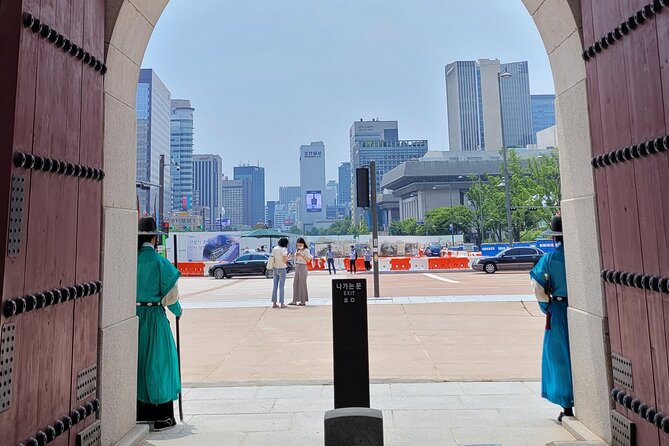
You’ll pass through Gwanghwamun Square, a major public plaza in front of Gyeongbokgung Palace. The square features statues of King Sejong the Great and Admiral Yi Sun-sin, so you get a clear link between national leadership and the palace area.
This stop is about 20 minutes, which is ideal if you want context without burning time. It also sets you up for what comes next, because you’ll see how the palace feels like the physical center of the story the square is hinting at.
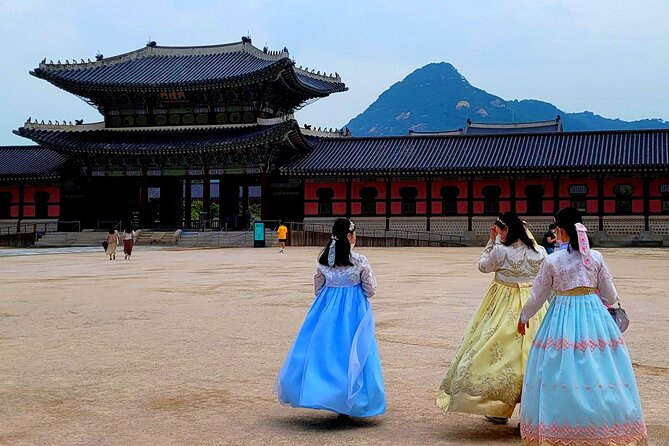
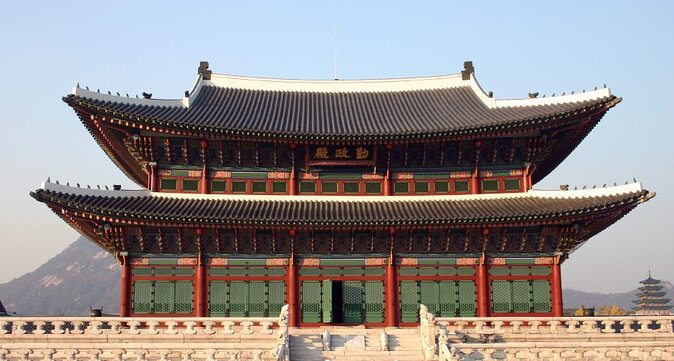
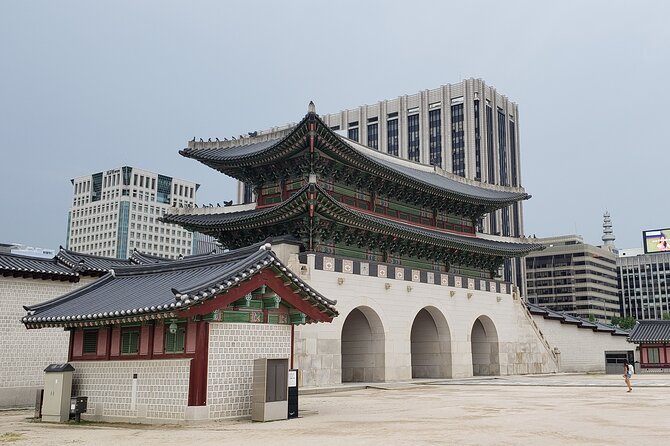
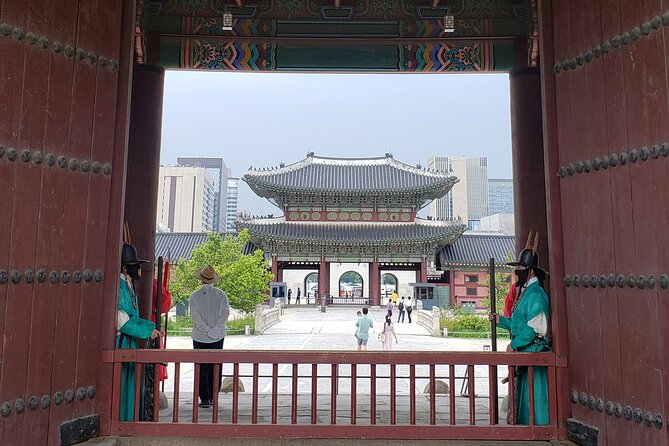
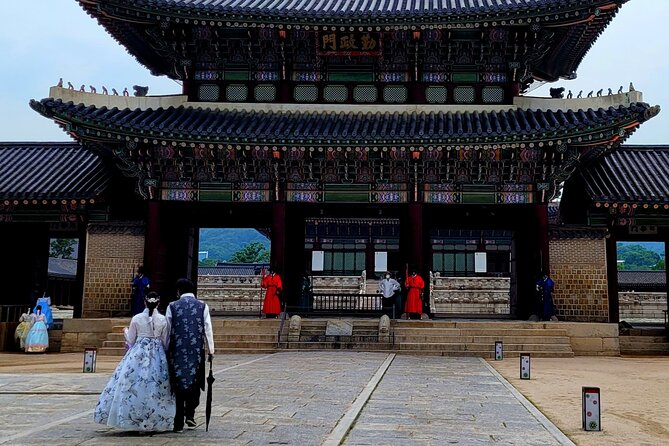
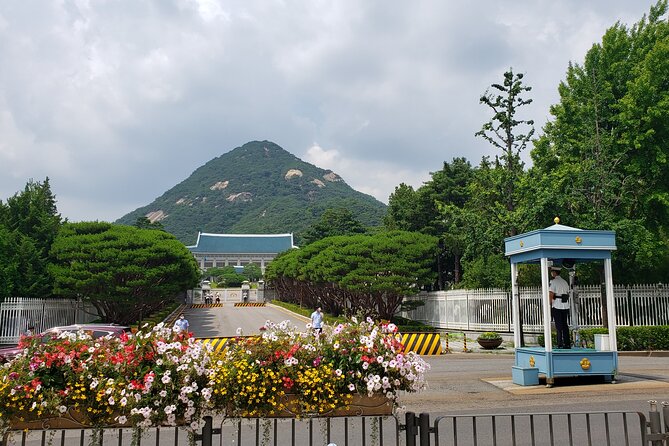
Then comes Gyeongbokgung Palace, the main royal palace of the Joseon Dynasty, built in 1395. You spend about 1 hour 30 minutes, and the palace ticket is included in the tour price. The setting matters too: mountains behind and the city in front, which is exactly the kind of layout that explains how power, protection, and visibility were thought about.
What I like most about this portion is that it’s the longest stop, so you’re not left staring at details for ten seconds and moving on. You’ll have time to understand the overall palace space before you move into the smaller streets afterward.



Bukchon Hanok Village: Where Old Homes Still Shape the Streets
After the palace, you head to Bukchon Hanok Village, a historic neighborhood between two royal palaces. The traditional houses here are called hanok, and the tight alleys and rooftops show how people lived during the Joseon Dynasty.
You’ll have about 30 minutes at this stop, which is enough to get the feel of the neighborhood’s scale and layout. I like the “in-between” nature of Bukchon. It doesn’t hit you with official grandeur the way a palace does, but it shows daily life architecture, and that’s often what makes the Joseon story feel real.
If you’re hoping for a long wandering session with lots of side streets and slow photo stops, 30 minutes may feel short. Still, as an introduction, it helps you understand why Bukchon keeps drawing people back.
Why Lee’s Small-Group Style Works for First-Time Visitors
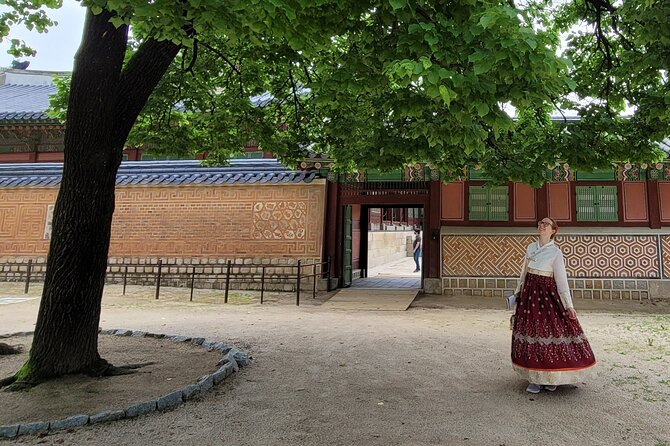
One of the most repeated strengths of this experience is the guide. Lee is consistently described as patient and genuinely helpful with questions about Seoul and Korea, which is huge when you’re new and don’t even know what to ask yet.
Lee also brings a more interactive tone than you might expect for a palace-focused walk. You can get mini quizzes about Korea and even Korean traditional games during break times. That may sound like a gimmick, but it actually helps you process what you just learned by turning facts into something you remember.
The other big win is balance. Lee’s approach blends Joseon Dynasty history with present-day culture facts, so you don’t leave thinking the trip was only about the past. You get explanations that help you decode what you see when you continue exploring on your own.
Price and Value: Is $60.27 Worth It for This Much Walking?
The price is $60.27 per person, and it’s typically booked about 34 days in advance, which suggests steady demand for this tight route. A big part of the value is what’s included: the Gyeongbokgung Palace ticket is part of the tour price.
Other listed stops have admission free noted for Insadong, Jogyesa Temple, Gwanghwamun Square, and Bukchon Hanok Village. That means your money mostly goes toward guide time, the guided route, and getting you into the one paid attraction without having to figure out ticket logistics during your trip.
For a 3-hour outing, the price can feel like a “quick hit” cost. I think it becomes a good deal if you want structure. When you follow a guided route, you’re not spending that time trying to map out how the palace area and old-town neighborhoods connect, especially when your days are packed.
Practical Tips That Make This Tour Feel Easier
Because the plan is mostly walking, I’d treat this like a real walking day, not a casual stroll. Comfortable shoes matter, and it helps to bring a layer, because Seoul weather can shift and you’ll be outside between stops.
You’ll also be on a guided schedule with set stop lengths, so late arrivals can squeeze the rest of the group. If you want time to read signs, look for specific details in the palace grounds, or ask extra questions, arrive early enough to settle and start calmly.
Don’t ignore the mobile ticket detail either. Having the ticket on your phone reduces friction at the palace entrance and lets you focus on the experience rather than logistics.
Who This Tour Suits Best
This works especially well if you’re visiting Seoul for the first time and want a fast foundation. The route is designed to help you orient yourself to major tourist areas for future exploring, and the Joseon-to-modern link makes the city feel less like random attractions.
It’s also a strong fit if you like small groups and conversation. With up to 10 travelers, it’s easier to get personal answers, and the guide’s interaction style tends to land better when you aren’t lost in a crowd.
If you prefer independent wandering with no schedule pressure, you may find the time blocks a bit tight. But if you want a guided starter map that turns into a smarter self-guided day afterward, this is a good match.
Should You Book This Palace and Old Town Highlights Tour?
Book it if you want a structured, efficient Seoul day that covers the big old-town highlights in one go. You’re paying for the guide, the small-group size, and the included Gyeongbokgung Palace ticket, and you’re getting a route that connects palace power, temple calm, and traditional neighborhood life.
Skip it if you want a slow, deep palace experience with long free time at each stop. The tour is timed, and the pacing is part of the design.
Overall, I’d call this a smart value choice for first-time visitors and anyone with a short stay. If you’re the type who likes good explanations and asking questions, you’ll likely appreciate how Lee keeps the history clear while also making it feel connected to what Seoul looks like today.
FAQ
What’s the duration of the Palace and Seoul Old Town Highlights tour?
It runs for about 3 hours.
How many people are in the group?
The group is limited to a maximum of 10 travelers.
Where does the tour start, and where does it end?
The tour starts at Anguk Station (Exit 6) and ends back at the meeting point.
What sights are included on the route?
The tour includes stops at Insadong, Jogyesa Temple, Gwanghwamun Square, Gyeongbokgung Palace, and Bukchon Hanok Village.
What’s included in the price?
The Gyeongbokgung Palace ticket is included.
Is the tour family-friendly and accessible for most travelers?
It says most travelers can participate, service animals are allowed, and it is near public transportation.


