
Reviewed · SEORAKSAN & SOKCHO DAY TRIPS FROM SEOUL
Seoul: Mt. Seoraksan National Park Autumn Foliage Day Tour
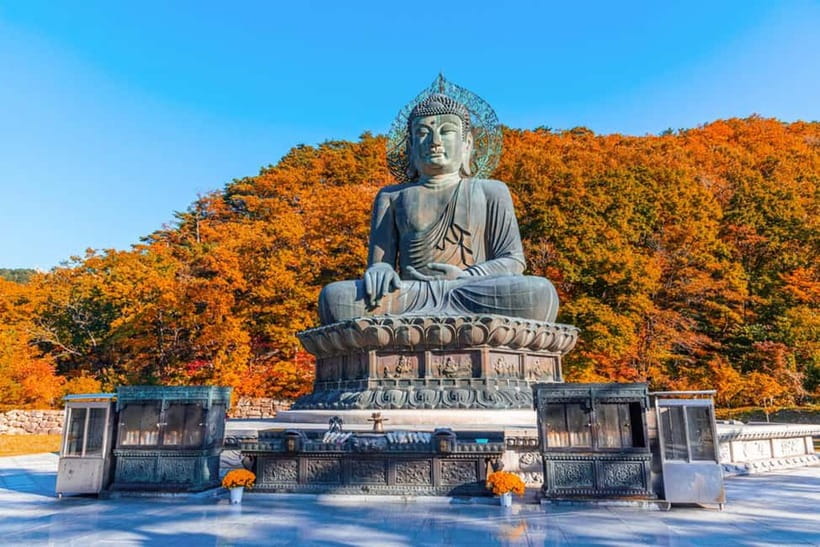
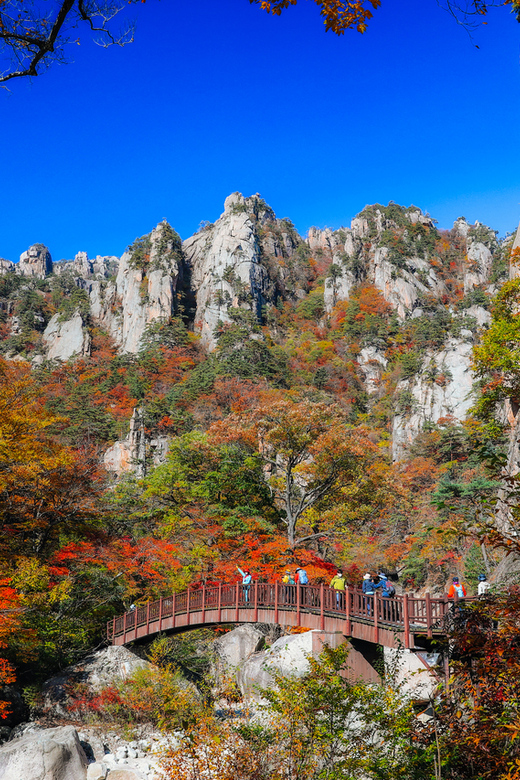
Autumn starts with granite peaks. A Seoraksan National Park day trip from Seoul is one of the easiest ways to trade traffic for mountain air and big fall color. I like the time in the park for real trail wandering, and you get chances to frame Korea’s tallest peaks against red, orange, and yellow forests.
The one thing to watch is weather. Wind, rain, or low visibility can cut down what you see, and the cable car ticket is not included, so you may need a little extra planning if that’s your priority.
Key highlights I think you’ll care about
- Easy out-of-Seoul logistics with transportation included and an early start
- Around 5 hours on your own inside the park to choose your pace
- Big viewpoints plus calmer stops, including temples tucked among the trees
- Ulsanbawi hike options, from a step-heavy climb to gentler walks
- Fall color that depends on conditions, especially if wind is strong
- Staff support in English and Chinese (and often Korean too) to help you stay on track
Morning bus to Seoraksan: the calm start that makes the day work
This is built as a true day trip. You leave Seoul early and head to Gangwon Province, where Seoraksan National Park sits in the north. The most useful part of the schedule is the timing: you typically arrive around 10:00 AM, when the first light has had time to wake the mountains up but crowds may still be manageable.
On the way, the trip includes at least one short stop at a rest area. It’s not a long detour, but it helps. You can stretch, grab water, and reset before you step into park mode. One staff member, Alice, is specifically mentioned for sharing basic info on the way, which tells me this isn’t a totally hands-off shuffle. When you know what to target, you spend more time walking and less time guessing.
You’re not bouncing between multiple towns. It’s one mission: get you to the park and then give you time to explore. That structure is great value if you want autumn views without the headache of figuring out buses, timing, and which trail makes sense.
You can also read our reviews of more tours and experiences in Seoul.
Arriving around 10:00 AM: your best window for photos and fresh air
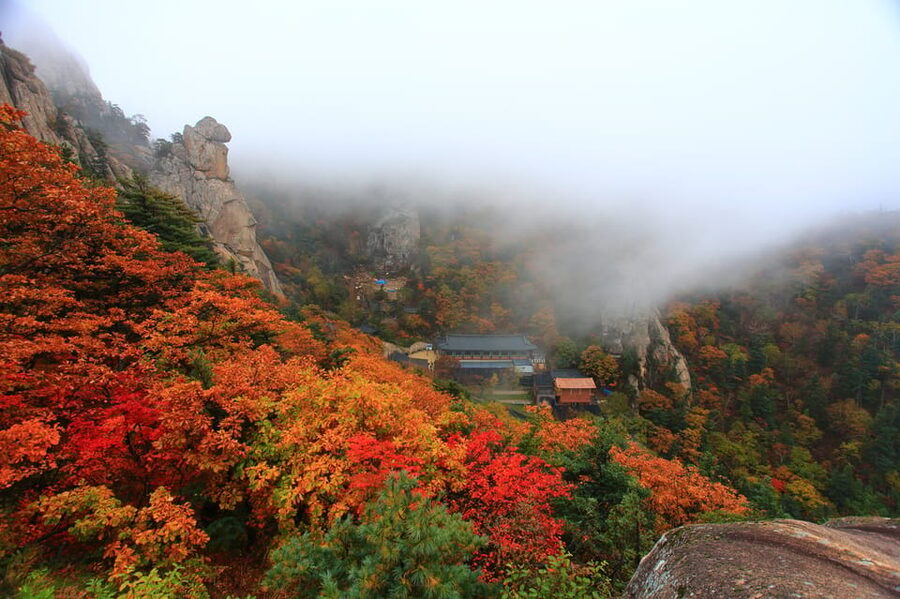
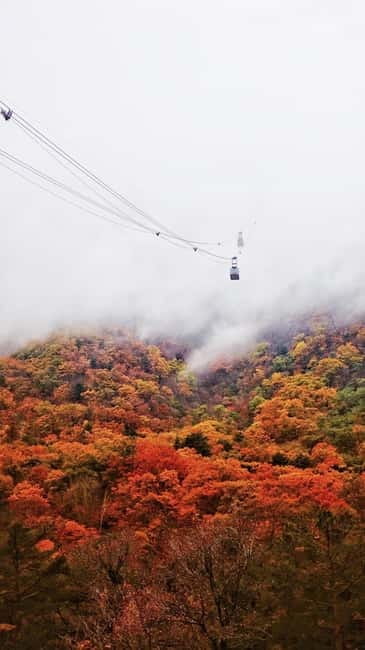
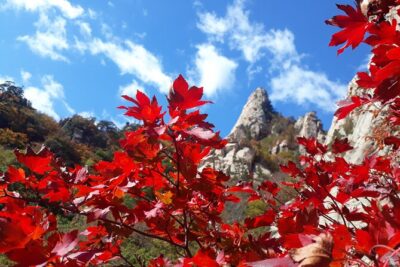
Once you get close, the park can look like it’s on fire with color. You’re heading in time to see mountains blanketed in fall shades of red, orange, and yellow. If you’ve only seen Korean autumns in photos, this is the moment that clicks: trees plus granite peaks equals depth, not just color.
You’ll have time to settle in and choose a plan. The day feels open, not rushed. That matters because Seoraksan trails can change in difficulty fast, and your legs decide how much you can enjoy. If you want photos, you’ll have the daylight. If you want a calmer pace, you can still find scenic spots without grinding uphill for hours.
One practical point: this is a popular autumn pick for families and friends. That’s good because it means the area is well established and there are facilities and options. It also means you should aim to start early and move with intention when you’re inside the park, so you don’t lose the best light to wandering.
Inside the park for about five hours: choose your trail personality
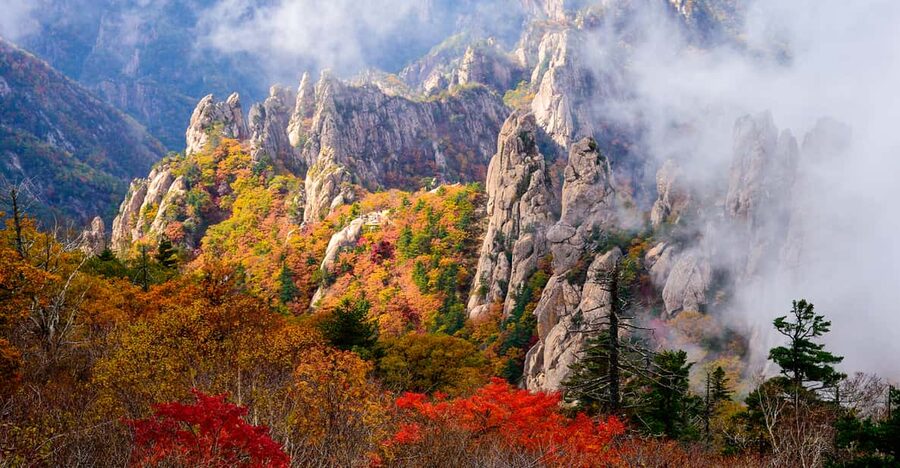
The core of the experience is your free time in the national park, typically about 5 hours. That’s enough time to do something meaningful without feeling trapped.
Here’s what that window gives you:
- Enough time to do a serious hike if you’re up for it
- Enough time to take slower routes and still see viewpoints
- Enough time to stop for a temple moment or a snack without feeling behind
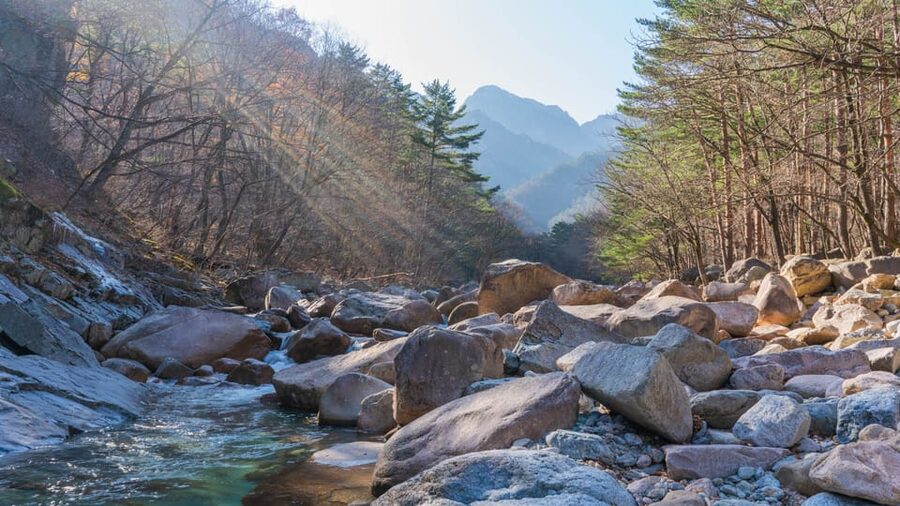
You’ll find hiking trails along the mountainside that offer different types of views. Some focus on sweeping forest color. Others aim toward dramatic granite peaks. This is a big advantage over shorter tours that funnel you into one viewpoint and call it done.
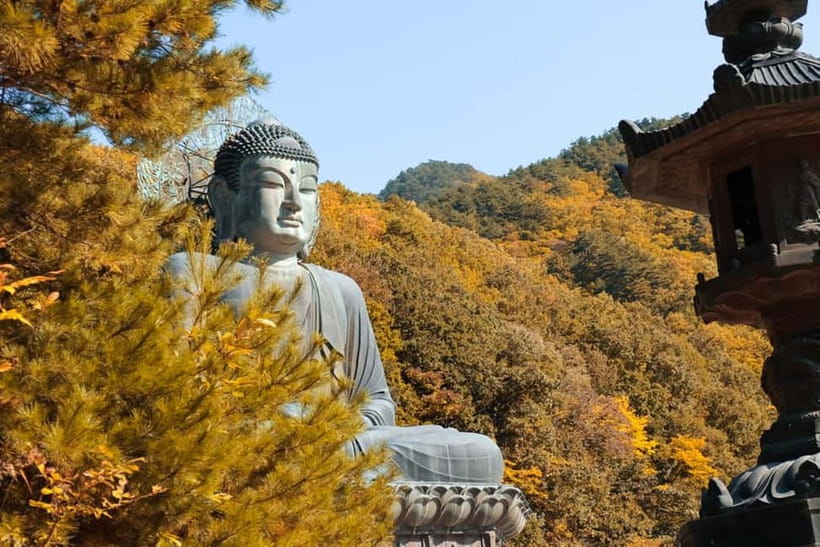
There’s also a chance to spot small religious sites during your hike. Temples appear along the way, often surrounded by trees. If you like travel that’s not only “stand here and look,” those pauses are your reward.
My advice: don’t over-plan your exact trail. Pick a goal, then be ready to adjust based on how your legs feel that day.
Ulsanbawi and the step test: tough climb, real payoff, and easier alternatives
If you want one hike that people talk about for Seoraksan, it’s the climb toward Ulsanbawi. The good news is the views can be stunning. The hard news is the hike can be a serious step test.
In the trip experiences I reviewed, I saw clear signals about two things:
1) The Ulsanbawi route is tough, with lots of steps.
2) There are more basic walks if you decide hiking isn’t your priority.
One example: a traveler described the Ulsanbawi hike as taking about 4 hours, and they did it at a pace that still left time to eat afterward. That tells you the time you’ll actually spend depends on your speed, photo stops, and breaks.
So how should you choose?
- If you want a workout and big payoff, aim for Ulsanbawi, but treat it as a commitment.
- If you want classic autumn views with less strain, choose gentler trails and build your day around lookouts and temple stops.
I like that Seoraksan gives both options in the same general area. It turns the day trip into something you can shape to your comfort level, instead of being stuck with only one difficulty.
Autumn color and the weather reality at Seoraksan
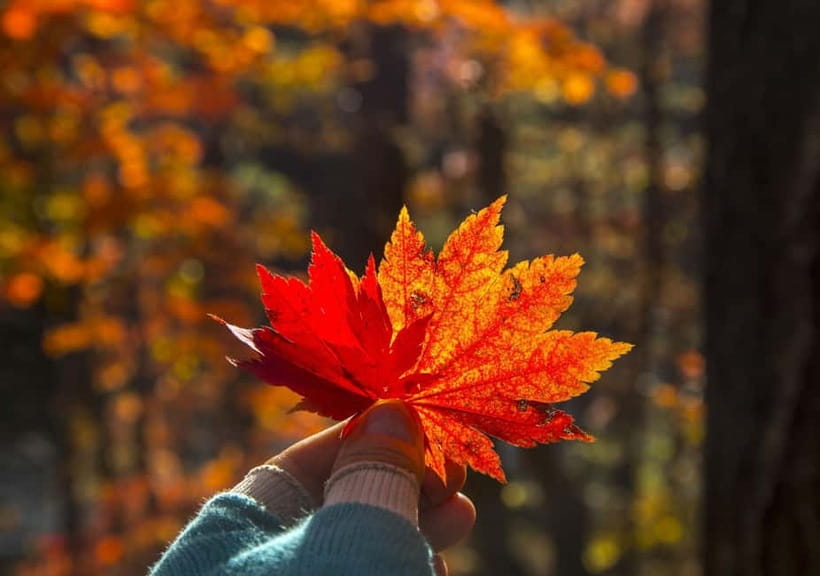
Autumn at Seoraksan is famous, but the mountain does not care about your photo plans. Wind can matter. Low visibility matters. Rain matters.
One person noted that strong wind affected the day and they saw almost nothing. That’s the worst-case scenario, but it’s not imaginary. Seoraksan sits in a mountain setting where weather changes can be fast, and open ridgelines can get harsh.
Another detail that’s useful: people mention getting soaked. That doesn’t mean the entire day is a washout. It means you should treat it like mountain weather, not city weather. Even if the morning seems fine, bring what keeps you dry and comfortable.
Also, the park operation can change due to weather. And traffic and conditions can shift the flow of the day. That’s why the schedule should be treated as flexible guidance, not a clockwork promise.
My practical takeaway: if you’re chasing peak color, go in autumn, but keep your expectations realistic. If conditions are perfect, you’ll love it. If not, you’ll still have mountain walks and the chance to enjoy the atmosphere.




Cable car tickets: optional, not included, and worth deciding early
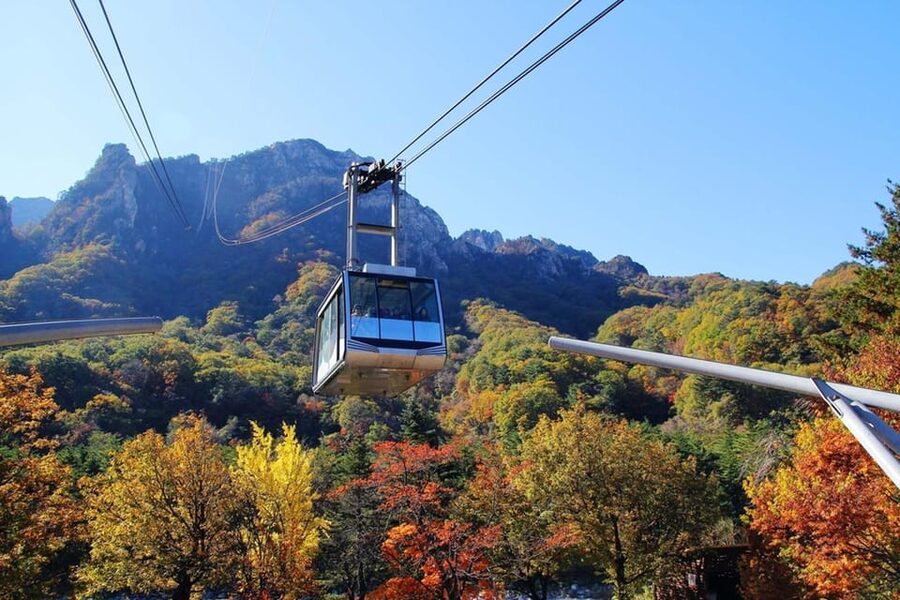
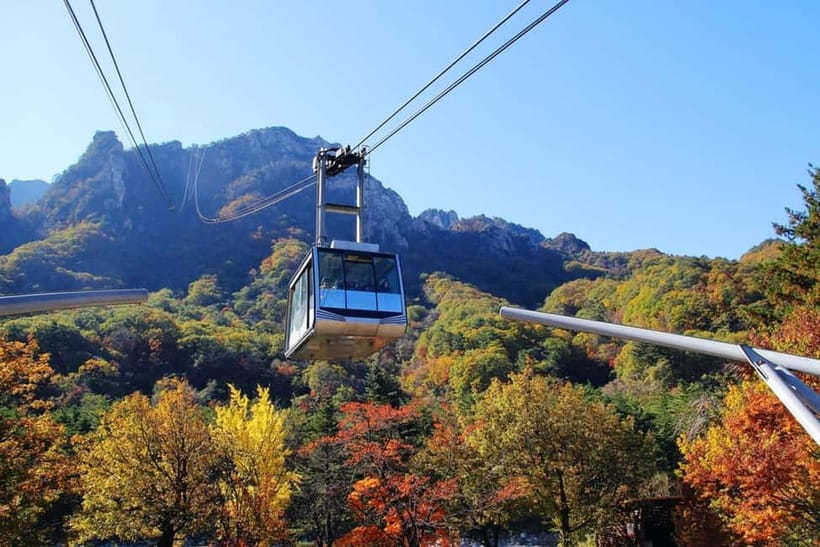
If you like using a cable car to reduce walking, plan for it. Cable car tickets are not included in the tour price.
That choice affects value. If you buy a ticket on top of the tour, your total cost increases. If you skip it, you rely fully on hiking routes, which can be totally fine on a day with enough time, but it changes your difficulty level and stamina needs.
Also, wind can impact visibility and comfort. If your cable car day is gusty or stormy, you might not get the views you hoped for. So I’d treat cable car as a helpful shortcut, not a guarantee of scenery.
If you’re the type who hates steep climbs, decide before you arrive in the park how much walking you want to do. Then pick the route that fits that decision.
Staff support in English and Chinese, plus human touches
This is one of the more supportive day trips I’ve seen in terms of language coverage. The tour includes English and Chinese speaking staff, and the overall info also lists Korean.
More importantly, the support seems practical, not scripted. A traveler credited Alice at a rest stop with basic info. Another mentioned David and the driver, specifically for making the outing go smoothly. If you’re trying to figure out where to start walking, that kind of guidance matters.
The most vivid staff praise I saw was for Jiwwon, described as sweet and attentive, especially during a tough climb toward Ulsanbawi. Another person called out Tino as patient and attentive, noting the group had to deal with latecomers.
There’s a small lesson here: group dynamics still affect your day. If people arrive late, you feel it on timing, and sometimes on the ride back. Try to be early at every meeting point and you’ll get more of the day that you came for.
Timing back to Seoul: you get daylight, not an all-day slog
Your return is planned for about 15:30, with arrival in Seoul roughly between 18:30 and 19:20. That’s a good spread for an autumn day because:
- You’re not stuck returning in darkness.
- You still have enough time in Seoul for dinner plans afterward.
- Your day doesn’t turn into an exhausting overnight marathon.
The tour ends back at the meeting point. That keeps it simple for your next steps.
If you’re doing this as a first Seoul-to-outside-city adventure, the timing helps you adjust. You can taste “bigger travel” without losing the whole day to transit.
Price and value: what $60 covers, and what it doesn’t
At $60 per person, you’re paying for the main stuff that’s hardest to DIY: transportation and staffed support.
What’s included:
- Transportation
- English and Chinese speaking staff
What’s not included:
- Meals
- Traveler’s insurance
- Personal expenses
- Cable car ticket
Is it worth it? In my view, yes if you want a low-stress autumn day. Seoraksan is not hard to reach by public transport, but getting the timing right for a smooth day and a good hiking window can take effort. This tour buys your time back.
It also helps if you value human info. When staff can point you toward a hike that fits your pace, the day feels more efficient. And you still get the freedom to hike on your own for the main block of time.
One cost reminder: since meals are not included, budget for lunch or snacks inside the park. There are restaurants, and you’ll have options, but you should expect to pay out of pocket.
What to pack: shoes matter, and rain is a real possibility
Comfortable shoes are the big one. Seoraksan trails are not designed for soft soles and fashion sneakers. You want grip and support, especially if you do Ulsanbawi and lots of steps.
Based on the way people describe the day, I’d also think about wet weather gear. Even in autumn, mountains can soak you. A lightweight rain layer and a dry-change option can save the day from feeling miserable.
Bring basic mountain basics:
- Water
- A light layer for temperature swings
- Your phone or camera with enough battery (you’ll want it)
If you’re sensitive to cold, add a warmer top. One traveler mentioned cold not damping the mood, which is a hint that conditions can shift enough to feel it.
Who this Seoraksan autumn day tour fits best
This tour is a strong match if you want:
- An easy, hassle-less day trip from Seoul
- Autumn scenery with real hiking time
- Flexible pacing, since you’re not stuck in a tight group crawl the whole day
It also works well for families and friends. The park is popular, so you’re not alone, and you have a range of walks.
Choose caution if:
- You’re expecting guaranteed cable car views.
- You’re very weather-dependent about photo outcomes.
- You have limited mobility and need to avoid steep steps. The tour provides options, but Seoraksan can still be demanding.
Should you book it?
Book this if you want a simple plan: leave Seoul early, arrive in the morning, hike for about five hours, then return before evening. For the money, you’re buying transportation plus staff support, and you still keep freedom inside the park.
Skip or think twice if weather failure would genuinely ruin your trip. This is a mountain experience, and wind or rain can change visibility quickly. Also, if cable car is central to your plans, remember the ticket is not included, so your decision needs to be part of your day strategy.
If you like autumn hikes with granite views and you can handle a bit of mountain weather, this is a great way to see Seoraksan without turning the day into logistics.
FAQ
How long is the day trip from Seoul?
You typically leave Seoul early in the morning, reach Seoraksan around 10:00 AM, and return by about 15:30. You usually arrive back in Seoul between 18:30 and 19:20.
Is transportation included in the price?
Yes. Transportation is included, and the tour is designed as a round trip from Seoul with pickup and return to the meeting point.
Do I get time to hike on my own?
Yes. You have free time inside the park for individual hikes, with about five hours available.
Are meals included?
No. Meals are not included, but there are restaurants available in the park area.
Is the cable car ticket included?
No. Cable car tickets are not included, so you would need to purchase them separately if you want to use it.
What language support is available?
The staff provides English and Chinese speaking support. Korean is also listed as a supported language.
What should I bring for Seoraksan hiking?
Bring comfortable shoes. The terrain involves hiking and lots of steps on some routes, so footwear matters. Weather can also change, so plan for mountain conditions.
More Tours in Seoul
More Tour Reviews in Seoul
Not for you? Here's more nearby things to do in Seoul we have reviewed


Seoraksan & Sokcho Day Trips from Seoul, compared.
 ★ 5.0Mt. Seorak+Nami Island+Garden of Morning Calm Day Trip from SeoulFrom $95959 reviews
 ★ 4.8Mt.Seorak, Nami Island & Korean Garden, No ShoppingFrom $95614 reviews
 ★ 4.7Gangwon-do Day Trip with Alpaca World & Nami IslandFrom $64581 reviews
 ★ 4.7Mt Seorak + Naksansa Temple or Nami Island Group TourFrom $68422 reviews
 ★ 5.0Full-Day Tour in Mt. Seorak & Nami (+Rail Bike Option)From $85186 reviews
 ★ 4.5Mount Seorak and Naksansa Temple One Day Tour from SeoulFrom $71167 reviews
 ★ 5.0[Premium Private Tour] Mt Seorak & East Sea or Nami island from SeoulFrom $25867 reviews
 ★ 4.5Mount Seorak and Nami Island One Day Tour from SeoulFrom $8048 reviews
Browse the lists this tour appears in