
Reviewed · FOOD & DRINK
Seoul Food: Banchan, Bibimbap, and Beyond
Food with a story, not just snacks. This 5-hour Seoul tour pairs classic stops like Heunginjimun Gate and Bukchon Hanok Village with a real focus on Korean flavors, from banchan to bibimbap. I like that you get both food and context from licensed guide Eunice, and you also get a full dinner with snacks and drinks. The main thing to consider is that it is a tight half-day route, so you will want comfortable shoes if you get slow when you are sightseeing.
What makes this experience work is the way the day connects Korean reinvention to what lands on your table. You spend time in iconic neighborhoods, then your food lessons come with cultural explanations, not just menus. As a bonus, the stops are marked free admission, so you are not constantly adding entry fees on top of the tour price.
Key Highlights You Will Actually Feel
- Licensed guide Eunice links food to Korean culture, so you understand what you are eating, not just how it tastes
- A banchan and bibimbap focus plus extra dishes that show how flexible Korean meals can be
- Heunginjimun Gate and Dongdaemun Design Plaza mix Joseon-era Seoul with modern design
- Cheonggyecheon Stream gives you a calm walking reset, especially nice at night
- Gyeongbokgung Palace and Bukchon Hanok Village ground the day in royal and everyday Seoul
Why Seoul Reinvents Food, and You Feel It on This Tour
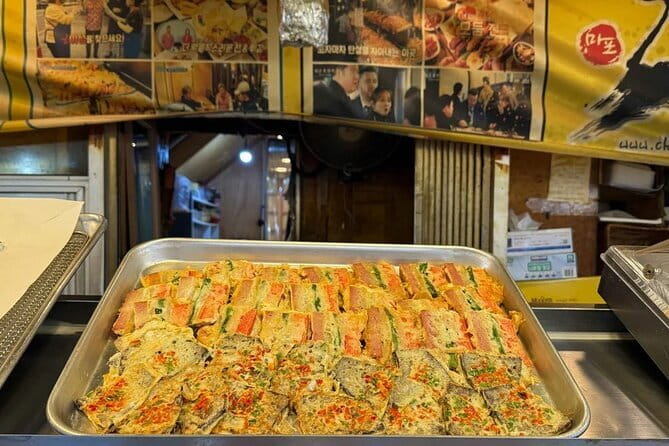
Seoul’s food scene is built on remixing. Korean cuisine borrows, adjusts, and then makes it unmistakably Korean, whether you are eating simple home-style side dishes or a more assembled bowl meal like bibimbap.
This tour keeps that idea practical. You do not just hear general statements about Korean culture, you see how the city’s mix of old and new shows up in meals, prep styles, and table customs. The guide role matters here, because Eunice’s explanations connect cooking choices to history and daily life, which makes your food stops land harder.
The tone also comes across as relaxed. One of the strongest praised parts is how the experience feels like exploring Seoul with someone who makes it easy to navigate food and neighborhoods without feeling rushed or stuck in a script.
You can also read our reviews of more food & drink experiences in Seoul
Meeting at JW Marriott Dongdaemun Square, Then Moving Like a Local
You start at the JW Marriott Dongdaemun Square Seoul, at 279 Cheonggyecheon-ro in Jongno District. With a 1:00 pm start and about 5 hours total, it is designed as a true half-day plan, not a quick snack loop.
Because the tour is private to your group, you avoid the typical awkwardness of being the odd one out at a food table. You also get a mobile ticket, which is helpful in a city where you will likely be checking maps and transit times anyway.
A practical note: the tour includes dinner, snacks, and bottled water, plus alcoholic beverages. If you do not drink, you can still enjoy the food part, but you may want to plan hydration and pace accordingly since the day is long enough that you will feel it.
Heunginjimun Gate and DDP: Two Ages of Seoul in One Walk
Your first stop is Heunginjimun Gate, also called Dongdaemun Gate. It is one of Seoul’s Eight Gates, built in the late 14th century, and it was the main entrance to the city. Even if gates are not your usual thing, this one is a useful anchor. It sets the day up so your later food stories do not feel random.
Then you head to Dongdaemun Design Plaza (DDP), designed by Zaha Hadid. The architecture is the point here, but you also get time for photos and general exploration in the open spaces. DDP works as a mental “reset” between history talk and the next food-heavy area.
One consideration: DDP is visually modern, so if you only like traditional places, you might find it less emotionally satisfying than the palace sites later. Still, it is a good reminder that Korean identity is not frozen in time, and the tour’s food theme is the same.
Cheonggyecheon Stream at Night: A Breather Before Palace Food Talk
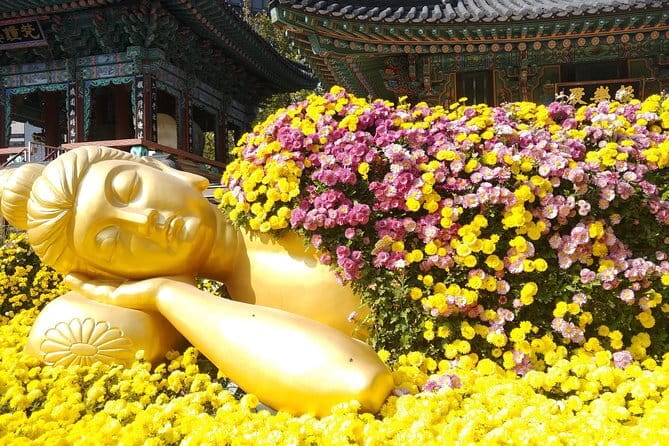
Next is the Cheonggyecheon Stream. Even though it stretches across both Dongdaemun and Jongno, this section gives you an easy, scenic walking route. You can keep your momentum without feeling like you are doing constant “big ticket” sightseeing back to back.
Cheonggyecheon is especially pleasant at night, when the lights reflect off the water. Even on a day that starts in the early afternoon, the stream area can help you slow down. That matters because after you eat, you do not want to be sprinting between stops.
A small reality check: with only about an hour here, you will not linger like you might on a standalone evening stroll. Think of it as a breathing space, not a destination you exhaust.
Gyeongbokgung Palace and Bukchon Hanok Village: Royal and Everyday Korea Side by Side
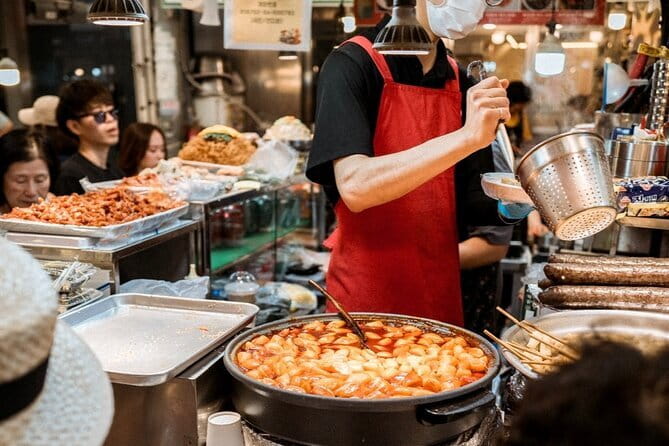
Gyeongbokgung Palace is one of Korea’s grand royal palaces, and it is tied to the Joseon Dynasty. You get about an hour at the palace, which is enough for big-picture appreciation, plus time to absorb the gardens and architecture around it.
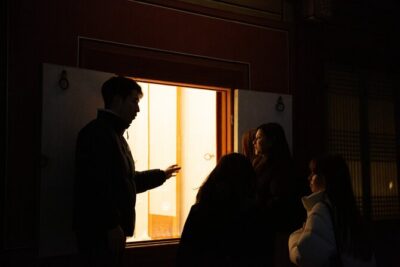
This stop is not just scenery. In a tour built around culture and food meaning, royal settings help you understand why Korean meals have always had etiquette, structure, and regional pride. The guide’s job is to connect those dots so your food stops feel less like random tasting, more like part of a cultural pattern.
After that, you go to Bukchon Hanok Village, with its well-preserved hanok traditional houses. Expect narrow alleys, traditional neighborhood texture, and views that make you understand why people photograph this area so often. You have about 30 minutes there, so the goal is to skim the atmosphere, not master every lane.
One drawback to keep in mind: 30 minutes in Bukchon goes fast. If you love wandering with no schedule, you may want to plan extra time on your own later. For the tour itself, the value is in getting context and direction fast.

Banchan and Bibimbap, Plus the Eats That Go Beyond
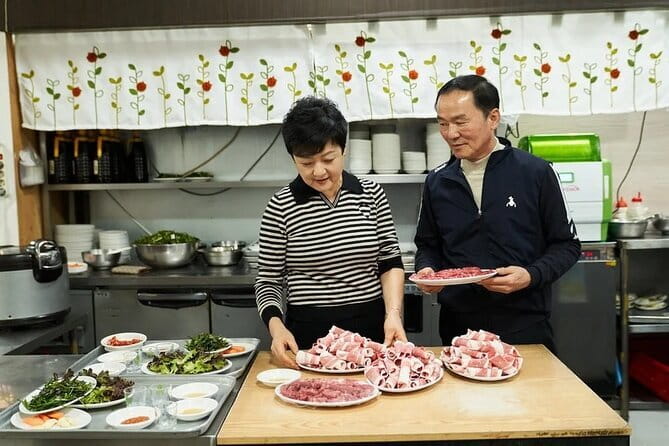
The tour title says it all: Banchan, Bibimbap, and Beyond. The “beyond” part is where this experience tends to feel more interesting than a one-note food tasting.
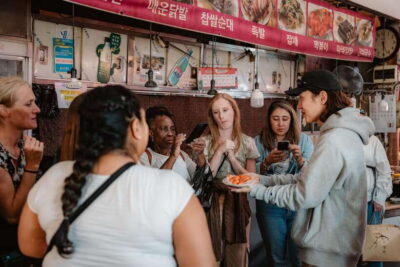
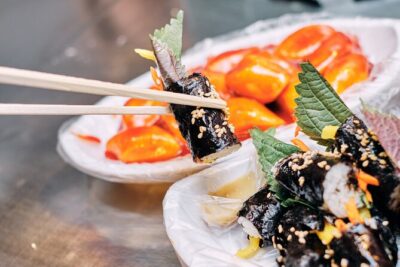
Banchan is the core idea. It is the side-dish culture that shapes how Korean meals work, with variety showing up at the table as a normal expectation. This tour’s approach makes banchan easier to understand, because Eunice’s explanations connect side dishes to how meals are built around balance, seasonality, and shared eating.
Bibimbap is the other anchor. It is the famous mixed bowl meal, and it is also a perfect example of Korean reinvention. The mix of textures and flavors gives you a fast education in what Koreans value in everyday eating.
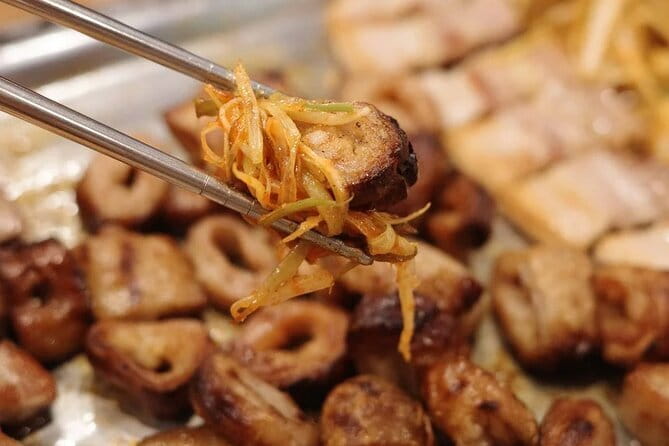
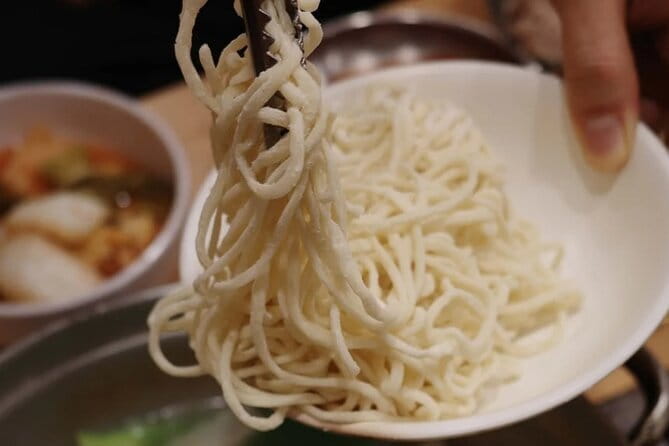
Then you get additional bites that can vary by day, but the praised highlights include things like hearty chicken noodle soup, Korean beef served in more than one style, and even steak tartare with a “magic” sauce mentioned as a standout. That kind of mix is not just about being trendy. It shows how Korean food culture can take global ideas and give them a Korean table identity.
One more detail that came up in feedback: some days include extra local stops beyond food, such as a record store and ending at a tent bar. That is not something you should count on every single time, but it does match the overall vibe people described, which is more neighborly than rigid.
Alcohol is part of the package, since alcoholic beverages are included. If you plan to drink, great. If you do not, you still get a lot of food and guided learning, so you are not stuck feeling like you must participate in the drinking side to get value.
What You Actually Get for $195: Dinner, Snacks, Drinks, and Culture
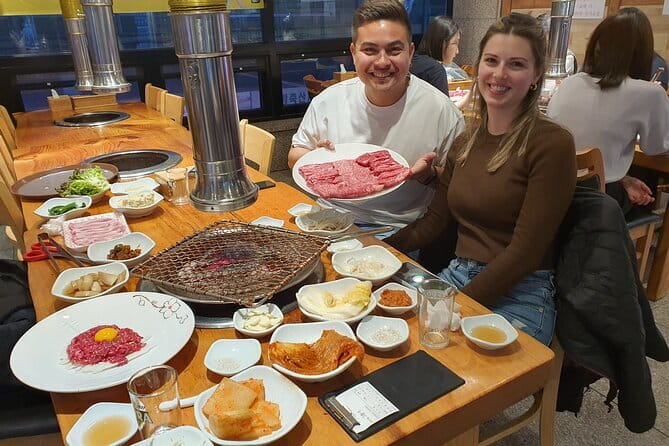
At $195 per person for about 5 hours, the price can feel high if you are only imagining street-food sampling. But this tour is not just “walk and munch.” You get a licensed guide, dinner, snacks, bottled water, and alcoholic beverages included in that fee.
You also get something harder to price: time with Eunice. The most praised aspect is how she explains how history has shaped Korean culture, including how that affects cuisine. When food comes with context, each dish becomes more memorable, and you are more likely to know what to look for later when you shop or eat on your own.
The tour also includes free admission for the major cultural stops listed, including Dongdaemun Gate, DDP, Cheonggyecheon, Gyeongbokgung Palace, and Bukchon Hanok Village as marked on the schedule. That does not make the day “free,” but it does help the tour feel less like you are double-paying for the basics.
The best way to think about value: you are paying for guided planning, the food program, and a curated route that ties culture to what you eat. If that matches your travel style, $195 starts looking like a sensible deal rather than a splurge.
Tips to Make the Most of a 5-Hour Seoul Food Loop
First, come hungry, but not chaotic hungry. With dinner and multiple snack stops built in, you do not want to arrive having eaten a huge meal right before. At the same time, do not start with an empty stomach that turns sightseeing into misery. Think balanced hunger.
Second, wear shoes you can walk in for a half-day. The route moves through major central Seoul areas, plus walking at Cheonggyecheon and time in palace and hanok neighborhoods. Even if the pace feels manageable, your feet will notice 5 hours.
Third, use Eunice’s explanations as a tool. If you want to order with confidence later, listening to why Korean meals work the way they do helps. People praised how she keeps the pacing smooth, with enough time between stops so you can digest and reset before the next dish.
Finally, if you have dietary needs, plan to communicate them clearly to the guide before the food starts. The tour data does not spell out allergy handling, so you should treat communication as your responsibility and ask early so you are not scrambling mid-meal.
Who This Tour Suits Best (And Who Might Want a Different Plan)
This experience is a great fit if you want an organized Seoul food day that still feels like exploring. It also fits solo travelers, because the guide’s approach can help you feel oriented fast and comfortable trying foods you might not choose on your own.
It is also a good match for couples and families who want structure plus local flavor. One family experience highlighted that even people who thought they knew Korean food learned new things, especially from the backstreet angle and old family-run style of eating.
If you hate walking, prefer to stick to one neighborhood, or dislike drinking culture even when alcohol is optional, you might find it less aligned with your style. The tour includes alcoholic beverages, so you should go in aware of that.
Should You Book Seoul Food: Banchan, Bibimbap, and Beyond?
I would book this if you want your Seoul food to come with meaning and direction. The best proof is consistency: people highlight Eunice as an engaging, warm guide who connects food to culture and keeps the pace right, plus the day includes proper eating, not just small bites.
Skip it if you are looking for a super flexible, roaming-only street market experience where you choose your own route. This is structured, timed, and built around a curated flow from Dongdaemun through Jongno.
If you want a first “anchor tour” in Seoul, this is the kind that can set you up for better eating decisions for the rest of your trip.
FAQ
How much does the Seoul Food: Banchan, Bibimbap, and Beyond tour cost?
It costs $195.00 per person.
How long is the tour?
The tour lasts about 5 hours.
What time does the tour start?
The start time is 1:00 pm.
Where is the meeting point?
The meeting point is at JW Marriott Dongdaemun Square Seoul, 279 Cheonggyecheon-ro, Jongno District, Seoul, South Korea.
What is included in the price?
The tour includes a licensed guide, bottled water, snacks, dinner, and alcoholic beverages.
What is not included?
Private transportation is not included.
Is this a private tour?
Yes. Only your group will participate.
Do I get a mobile ticket?
Yes, the tour uses a mobile ticket.
What is the cancellation policy?
Free cancellation is available up to 24 hours in advance of the experience for a full refund. Changes made less than 24 hours before the start time are not accepted.
More Food & Drink Experiences in Seoul

More Tour Reviews in Seoul

Not for you? Here's more nearby things to do in Seoul we have reviewed


Food & Drink, compared.
 ★ 5.0Seoul Street Food Market TourFrom $731,226 reviews
 ★ 4.9Night Market Food Tour with Local GuideFrom $73943 reviews
 ★ 5.0Downtown Seoul Guided Food & Market Tour with 8+ Local TastingsFrom $98580 reviews
Small-Group Night Food Tour in Seoul with Korean BBQFrom $110304 reviews
 ★ 5.0Seoul Night Palace & Market Food Tour with VehicleFrom $79275 reviews
 ★ 5.0Seoul Fun Food Tour: 12 different food tastingsFrom $88266 reviews
 ★ 5.0Soju Tasting at Distillery – story of 3 pigsFrom $43166 reviews
 ★ 4.5The Award-Winning PRIVATE Food Tour of Seoul: The 10 TastingsFrom $178128 reviews
Browse the lists this tour appears in