
North Korea is closer than you think. This DMZ-adjacent outing from Seoul takes you to Aegibong on the Jogang River for some of the sharpest views you can get from South Korea, plus a stop at the Starbucks right by the border area.
I especially like how the day mixes viewpoints with meaning, not just photo stops. And I really like the guide energy, with praised guides such as Gogo, Judy, Hana, and Alex bringing clear history explanations and even humor along the drive and at the sites.
One thing to consider: this tour does not enter the DMZ, it stays at the edge near Aegibong and the river, so if you’re chasing the classic DMZ entrance experience, you’ll want to set expectations accordingly. Also, the Starbucks stop is long enough that coffee lovers will enjoy it, but it may feel like a lot if you came mainly for uninterrupted viewing time.
Key highlights worth caring about
- Closest practical North Korea views: you’ll get binocular access from 조강전망대, Korea’s closest observatory to the DMZ.
- Passport checkpoint at Aegibong: you’ll show your passport at the Aegibong ticket office security area.
- A full circuit of peace sites: Marine Corps Memorial, Peace Eco Park, a bell, and a peace altar, all aimed at context, not just scenery.
- The 150m swing bridge: a short thrill stop with border photo opportunities.
- Starbucks near the border: a very on-the-nose caffeine break with clear sights across the way.
- Well-paced timing: most stops are timed in manageable chunks, including 1 hour at the Starbucks and about 30 minutes at the observatory.
Aegibong and Jogang River: why this is the best North Korea-view plan from Seoul
If your goal is to see North Korea without doing the complicated, less-flexible classic DMZ entry, this Aegibong-focused route is built for viewing. You’ll be operating right along the Jogang River, which forms part of the DMZ boundary near Aegibong, so your photos are based on sightlines rather than long travel to a far-off viewpoint.
The big win here is that you are not just viewing from a single spot. You get multiple “windows” on the border area, starting with the eco-park grounds facing North Korea, then moving to the observatory time at the end of the day. The observatory stop is where the tour puts its main viewing emphasis, including binocular use.
I also like that the day is not purely about looking. The itinerary threads in memorial and peace landmarks, so when you look across the river, you have clearer context for what you are seeing, including how the Korean War and the armistice shaped this whole border zone.
You can also read our reviews of more tours and experiences in Seoul.
Price and value: what you pay for at $49 per person
At $49 per person, the tour is priced like a serious bargain for what you’re getting. It includes a tour guide (English or Chinese), round-trip transportation, and entrance fees. That matters, because border-adjacent days can add up fast once you factor in transit and site tickets.
You’re also paying for logistics. Instead of figuring out how to get to Aegibong and coordinate entrances, this runs as a coach tour from central Seoul with multiple pick-ups, then a structured route of short stops. The total time is about 5 hours, so you avoid the all-day commitment that often comes with other border-region options.
One small caution on value: coffee is not included. There is a Starbucks stop, but the tour data clearly says coffee and/or tea are not included. So treat the Starbucks hour as a chance to buy your drink on-site, not something covered in the $49.
Getting to the tour: Seoul pick-ups at Myeongdong, City Hall, and Hongdae
This is one of the easiest ways to do the DMZ edge if you’re staying in central Seoul. You’ll have a few convenient pick-up points, including Myeongdong Subway Station Exit 9, Seoul City Hall Subway Station Exit 6, and Hongdae Subway Station Exit 3.
That routing is practical. It means you can usually hop on close to where you’re already located, instead of spending your morning crossing the city. The tour also uses a centrally connected drop-off, with the bus dropping you in Hongdae, which is a handy choice if you want to continue your day in Seoul without a long trek back.
If you’re planning a tight schedule, the 9:00 am start time is your friend. In about half a day, you should be back in town with memories (and photos) lined up.
Entering the sensitive area at Aegibong: what the ticket office stop means
This tour does not enter the DMZ proper, but you do go through a security check at the Aegibong ticket office area. The itinerary includes a brief stop there so your guide can receive tickets, and it’s also where you’ll need your passport.
That passport requirement is not optional. The tour data states that you cannot enter without a passport. So keep it with you and make sure it’s in good condition, with the information readable. If you forget it, you risk losing your ability to participate at the checkpoint.
This matters because it changes the vibe of the day. It’s not a casual park outing. You’re entering a controlled border-adjacent zone, so plan to move through checkpoints calmly and on time.
Marine Corps Memorial and the Peace Eco Park circuit: learning while you look
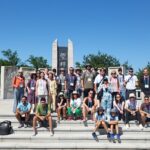
After the Aegibong ticket office, you’ll head to the Marine Corps Memorial, where the focus is the Korean War. The itinerary notes 15,000 Marines battled in the war, and the stop is designed as a moment of reflection before you move deeper into the peace-and-viewing portion of the route.
Then comes the pair of eco-park style stops. First is Aegibong Peace Eco Park, about an hour. The idea here is that you’re not just rushing for border shots. You’re walking through a park space designed to face the North Korea direction, with war relics mentioned in the description. It’s a good stage-setting stop, because by the time you reach later viewpoints, you’ll understand the emotional tone the site wants to create.
Next is Aegibong Peace Ecological Park for about 30 minutes. This portion mentions themed gardens and the Sky Forest canopy view. It also points out the chance to spot 80+ rare bird species. Even if birds are not your main interest, this stop often breaks the day up nicely so it doesn’t feel like a single long viewing line.
What I like about these park stops is the pacing. They give your brain time to process what the border means, rather than turning the day into a constant click-fest.



The 150m swing bridge, bell ritual, and peace altar moments
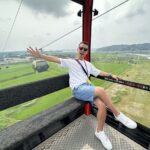
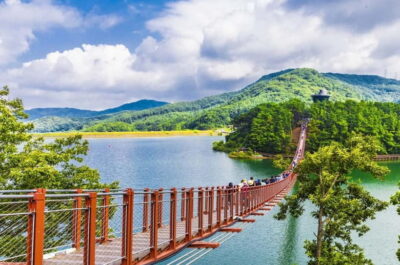
One of the most talked-about parts of the experience is the 150m swing bridge at 애기봉 평화생태공원 흔들다리. The itinerary frames it as a heart-pounding bridge ride, and it’s also described as a key place for border photos.
This is also where you need to think like a practical visitor. If you get any weather-related disruptions, the day can shift. One review specifically mentions that if the bridge happens to be closed due to weather, you should expect a hike up the hill instead. So pack the mindset for Plan B movement, because the viewpoint goal is still the priority.
Right after, you’ll have time at the outdoor performance stage area (about 20 minutes). The description notes you may catch modern or traditional cultural performances if your timing matches, which makes it feel less like a museum and more like a place that hosts life.
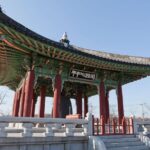
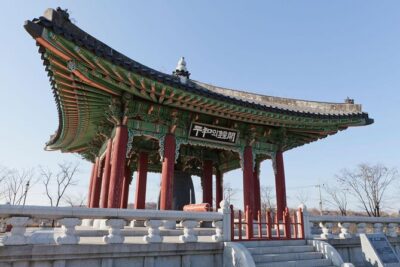
Then you get the ritual stops. There’s 애기봉 평화의종, a peace bell cast in 2000, plus a peace altar area back near the eco-park, with the itinerary highlighting hope for reunification. These are short stops, but they’re built for “pause time,” so you can frame your photos with something more than scenery.
The Starbucks hour and the 조강전망대 observatory: where the payoff happens
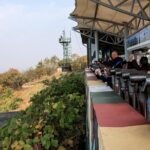
The tour’s most famous stop is Starbucks, described as the world’s closest Starbucks to North Korea, with the stop scheduled for about 1 hour. The idea is simple: you get a latte break while you stare across the border from a very symbolic location. The description also references media coverage that frames the Starbucks as a security symbol and notes that you can see North Koreans walking around from this area.
Important practical note: coffee and/or tea are not included in the tour price. So bring your Starbucks budget mindset. But do not underestimate why the stop is valuable. It’s not just caffeine. It’s a pause that makes the border viewing feel real, because you’re doing it in an everyday setting rather than a formal lookout.
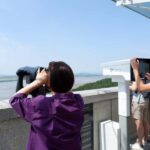
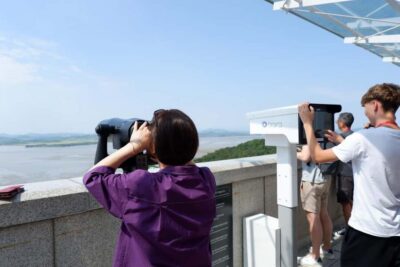
Then you finish at 조강전망대, the observatory. This is the best “final look” moment, with the itinerary saying binoculars reveal villages about 1.4 km away. The stop is about 30 minutes, which is long enough to get oriented, locate features with binoculars, and take your time before the day ends.
If you are the type who likes a big final photo, this is where you’ll want it. In a tight half-day format, the observatory is what makes the whole route feel worth it.
How the day actually feels: guides, timing, and group size
This tour keeps things structured. Most stops are short, timed pieces, with the longest “sink-in” moments being the park time and the Starbucks hour. Entrance fees are included, which also keeps you from spending time figuring out tickets mid-route.
Guide quality is a clear strength based on the feedback. Past guides highlighted in reviews include Gogo, Judy, Hana, Alex, Alice, Crystal, and Juno, and the common praise points are clear explanations plus the ability to answer questions. A big practical benefit: you get context while you’re standing where it matters, instead of learning everything later from your camera roll.
Group size is capped at a maximum of 100 travelers. That’s not tiny, so expect a coach-tour rhythm rather than a private guide experience. Still, the stop durations suggest the route is designed to keep the day moving without turning into a long wait.
Should you book this Aegibong North Korea view tour?
Book it if you want North Korea views from South Korea without gambling on the classic DMZ entry process. You’ll get a strong viewing climax at 조강전망대, plus meaningful stops like the Marine Corps Memorial and peace landmarks, and you get the famously close Starbucks hour as a very memorable setting.
Skip it if your main goal is crossing into the DMZ itself. This plan stays at the edge near Aegibong, and some people may feel the Starbucks hour is too much if they want nonstop border viewing.
If you’re a history-minded traveler who also loves a good viewpoint and don’t mind a passport checkpoint, this is a smart, time-efficient way to put North Korea on your itinerary from Seoul.
FAQ
Does this tour enter the DMZ?
No. It does not technically enter the DMZ. It takes you to the edge along the Jogang River near Aegibong for views.
What is the total duration of the tour?
The tour is about 5 hours (approx.).
How much does it cost?
It costs $49.00 per person.
Is a passport required?
Yes. You need your passport for the security area, and you cannot enter without it.
Where are the pick-up locations?
Pick-ups include Myeongdong Subway Station Exit 9, Seoul City Hall Subway Station Exit 6, and Hongdae Subway Station Exit 3.
Where does the tour end?
The bus drops you off in Hongdae, a central downtown location. (The tour also lists Hongik Univ Subway Station Exit 3 as the start and end point.)
What major stops are included besides the views?
The itinerary includes the Aegibong ticket office checkpoint, Marine Corps Memorial, Aegibong Peace Eco Park, Aegibong Peace Ecological Park, a 150m swing bridge, a peace bell, an altar area, Starbucks, and 조강전망대 observatory.
Are entrance fees included in the price?
Yes. Entrance fees are included.
Is coffee included?
Coffee and/or tea are not included. Starbucks is included as a stop, but you’ll need to purchase your drink there.
Can I get a refund if I cancel?
Yes. You can cancel up to 24 hours in advance for a full refund.
More Tours in Seoul
More Tour Reviews in Seoul
Not for you? Here's more nearby things to do in Seoul we have reviewed


DMZ Day Tours from Seoul, compared.
 ★ 5.0Best DMZ Tour Korea from Seoul (Red Suspension Bridge Optional)From $2941,422 reviews
 ★ 5.0DMZ Tour: 3rd Tunnel, Option(Suspension Bridge, Boat) from SeoulFrom $3521,373 reviews
 ★ 5.0DMZ tour south Korea from Seoul (NK experience hall, defector)From $2620,599 reviews
 ★ 4.9DMZ Insider Tour: 3rd Tunnel, NK Defector Meet & Red BridgeFrom $5015,214 reviews
 ★ 4.8DMZ Tour with Optional Suspension BridgeFrom $455,277 reviews
 ★ 5.0Signature DMZ Tour: Exclusive Defector Talk & Suspension BridgeFrom $274,459 reviews
 ★ 5.0Thrilling Korean DMZ 3rd Tunnel Tour from Seoul + Red Bridge RushFrom $353,097 reviews
 ★ 5.0DMZ Past and Present: Korean Demilitarized Zone Tour from SeoulFrom $372,481 reviews
Browse the lists this tour appears in