
Reviewed · HISTORICAL TOURS
Seoul History Walking Tour
Bell tones. Bigger meaning.
This Seoul History Walking Tour strings together 630 years of change in about 3 hours 30 minutes, from Joseon-era landmarks to today’s democracy battles, led by an Australian guide. You start at Bosingak Bell Pavilion and finish at Jogyesa Temple, hitting key sights in the historical center with lots of chances to ask questions.
I love the small-group setup, capped at 8 travelers, because the explanations feel personal and you can keep up. I also like that you get traditional Korean snacks and an informative memento, so the tour doesn’t end when you walk away from the last gate.
One drawback to plan for: this is a walking-focused afternoon with many outdoor stops, and bottled water isn’t included. Bring comfy shoes and consider packing a water bottle so you can stay comfortable.
Key highlights worth showing up for
- 630 years, step by step through Seoul’s center, with names and themes that connect Joseon to modern Korea
- Small group, max 8, which makes Q and A actually work
- Free entry at every stop, so you can focus on learning instead of fees
- Traditional snacks plus a memento, useful if you like taking notes and remembering details later
- A strong democracy thread, from civic spaces to long-running protest sites
- A finish at Jogyesa Temple, so the final mood shifts from politics and power to something calmer
How the 3.5-hour route maps 630 years of change
This tour is built like a timeline you can walk. Instead of bouncing around random museums, you move through a chain of places that shaped Seoul’s daily life, court power, foreign pressure, and modern civic identity.
The pacing is designed for an afternoon start time of 2:30 pm, with about 15 minutes here, 10 minutes there, and a few longer stops when a place deserves extra attention. Most stops are free entry, so the experience stays focused on interpretation, not ticket lines.
A detail I appreciate is how many of the stops connect to people, not just buildings. You’ll hear about figures like King Sejong and Admiral Yi Sun-sin, plus the broader story of Korea’s democracy struggle against dictatorship. That theme makes the city feel less like a photo set and more like a living argument about what Korea is today.
You can also read our reviews of more walking tours in Seoul


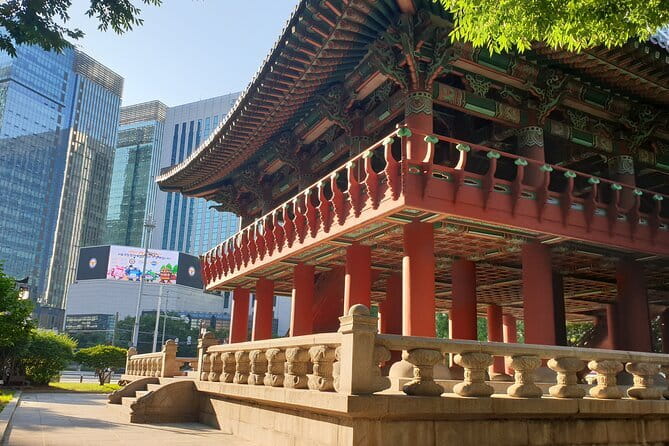
Bosingak Bell Pavilion and the city’s nighttime timekeeping
Your tour begins at Bosingak Bell Pavilion at 54 Jong-ro, right in the Jongno District. The guide sets the tone fast by starting with the question of why the city bells rang 28 times at night and 33 times in the morning.
That detail matters because it frames Seoul as a city with rules you could hear. Bells were public communication, not just background sound. Even if you do not know anything about Korean history, you can understand the logic immediately: when the city is run on shared time, the bells are like a system everyone can follow.
This stop is short, about 15 minutes, so it works best if you arrive ready to listen. If you are the type who likes to read slowly and stare at plaques, you may want to bring your attention skills, because the tour keeps moving.
Cheonggyecheon Stream: water that survived wars and reinvention
Next comes Cheonggyecheon Stream, around 40 minutes of walking and stopping. The stream is introduced with a clear theme: what it provided Seoul through the Joseon Dynasty, the Korean War, and modern times.
That trio, Joseon, war, modern, is the whole point. You see the waterway as continuity. It becomes a clue to how Seoul’s everyday life adapted over time, and how a city can keep a shared asset even when the world around it changes.
This is a free stop, so you can spend time on observation. Look at how people move along it now, then let the guide connect it back to older eras. It is one of those moments where the physical setting makes the history feel practical.
Seoul City Hall and Seoul Plaza: modern civic space, old emotions

You then hit Seoul City Hall, a quick stop of about 5 minutes that focuses on architecture both inside and out. Even without a long visit, it is enough time to understand why this is not just a government building. The tour treats it like a statement about how Seoul wants to function and present itself.
Right after, Seoul Plaza gets about 10 minutes. The guiding question is how the plaza reflects the hearts of modern citizens. That angle is useful. It nudges you to watch how public space behaves, not just what it looks like.
If you like people-watching, this is where you can do it. Even if there is no big event happening, plazas are where a city rehearses democracy and community.
Jeongdong Observatory and Deoksugung Doldam-gil: views plus a story with bite
Jeongdong Observatory is about 10 minutes, and the focus is how much of the palace and cityscape you can see from this perch. This stop is the tour’s “get your bearings fast” moment. After several layers of history, the view helps your brain file everything into a real map.
Then you walk to Deoksugung Doldam-gil for another 10 minutes. The prompt here is playful but pointed: why some Koreans say walking along the stone wall with your spouse can lead to divorce.
It is the kind of local belief you should treat as a cultural flavor, not a promise. Still, it gives you something valuable: a reminder that history is not only official records. It is also small sayings that show how people talk about relationships, luck, and fate in everyday life.
You can also read our reviews of more historical tours in Seoul


Jungmyeongjeon Hall and Ewha Museum: power, pressure, and who gets to learn
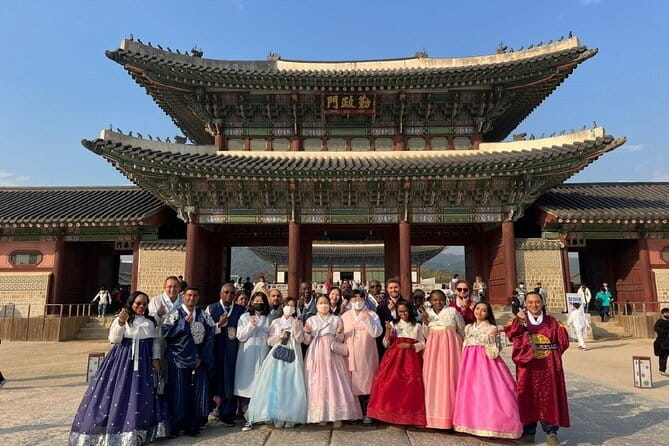
Jungmyeongjeon Hall takes about 10 minutes, with the question of how Imperial Japan forced Korea to surrender its independence. This stop shifts the tour from architecture and civic life into the pressure points that shaped Korea’s modern identity.
Short as it is, the framing matters because it does not treat foreign influence as a vague backdrop. It pushes you to think in terms of forced change, loss of independence, and the long shadow that follows.
Next is Ewha Museum for about 10 minutes, focused on Korea’s first school for girls and how it changed societal views on women’s roles. This is one of the stops that adds depth beyond politics. You are not only learning about who held power, you are learning about who gained access to education.
If your travel style includes understanding social change, not just wars and rulers, this will likely be a highlight. It pairs well with the later democracy theme because education and rights often move together.
Former Russian Legation: a monarch’s midnight decision
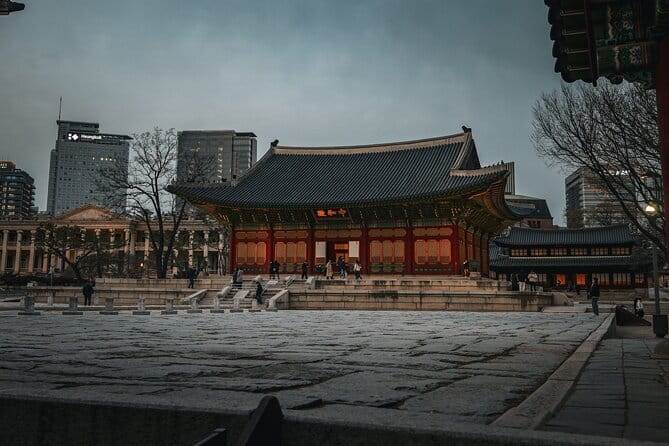
You spend about 20 minutes at the Former Russian Legation, where the question is why a penultimate monarch fled the palace in the middle of the night and stayed here for a year.
Even without getting bogged down in names or dates, this stop has a strong narrative feel. It turns a historic site into a human moment: fear, urgency, and the need for shelter when power shifts too quickly to negotiate calmly.
This is also a good stop for anyone who likes history that includes anxiety and choice, not just grand speeches. You can stand in the space and imagine what it means to make a decision under pressure.
Admiral Yi Sun-sin and King Sejong statues: leadership that shaped the course
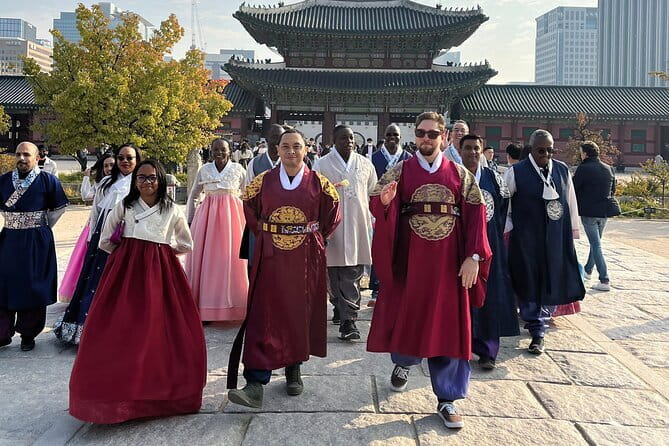
Two quick but meaningful stops come next. The Statue of Admiral Yi Sun-sin gets about 10 minutes, asking how this general saved Korea and changed the course of world history, no exaggeration.
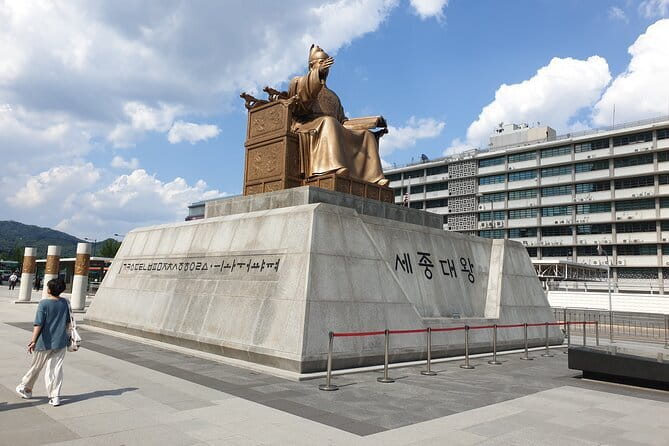
Then you move to the Statue of Sejong the Great for another 10 minutes, focused on why Sejong is considered the greatest king of the Joseon Dynasty.
These are statue stops, so they work best if you let the guide connect them to the bigger themes already building in your head. You are not just seeing who they honored. You are seeing what Korea chose to remember as strength and progress.
If you are tired from walking, this is still worth it. These stops feel like a breather because the guide’s story gives your legs a moment to rest while your brain catches up.
Gwanghwamun Square and the democracy thread you can feel
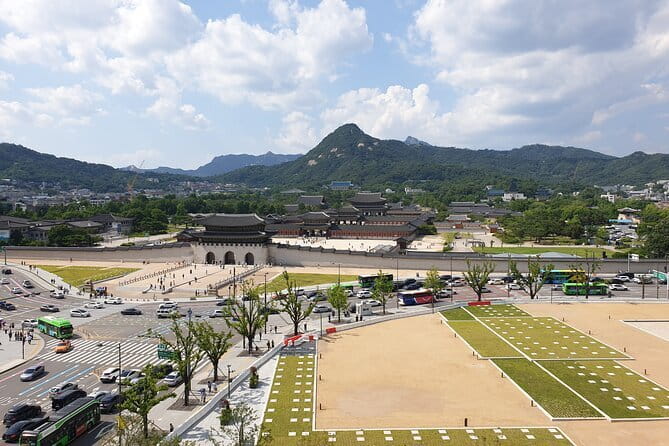
Gwanghwamun Square is one of the longer stops at about 25 minutes. The question here is how many protests it takes to change a democracy.
This is where the tour’s modern theme becomes loud and clear. You are not just hearing about history. You are being asked to connect it to what democracy looks like when it is contested.
It also sets up the next location perfectly, where civic action continues rather than ending. If you care about modern politics, this is the part where you might pause more and take in the mood of the square.
National Museum rooftop views and the Japan embassy protest site
After the square, the tour includes the National Museum of Korean Contemporary History for about 15 minutes. The guiding focus is how much history you can see from the rooftop.
A rooftop stop can sound like a break. Here, it becomes a visual organizer. You look out, then let the guide relate the view back to the ideas you already heard about power and struggle.
Then you visit the Embassy of Japan for about 10 minutes, asked as the site of the world’s longest running protest. That framing matters because it treats the past as active. History is not only behind glass, it is also ongoing public action.
If protests and civic history are not your thing, this might feel intense. But the tour keeps the timing tight, so you can absorb the message without getting stuck in one spot too long.
Jogyesa Temple bells: ending with sound, not stress
You finish at Jogyesa Temple, which caps the walking tour with about 10 minutes of temple time. The question is how the ringing of bells connects us with the universe.
This final stop gives your brain room to shift gears. The day starts with timed city bells and moves through power struggles. Ending with temple sound is a natural emotional reset.
Also, it is practical for planning. The end is the Jogyesa Temple area, and the tour description notes that the tour ends directly up the street from where it began, with your guide assisting with directions. That means you are not left guessing how to get oriented after the last stop.
Price and value: $26.60 for 15 major stops in a small group
At $26.60 per person for about 3 hours 30 minutes, this tour sits in the affordable range for an organized, guided walk that hits major landmarks. The value comes from the structure: lots of recognizable Seoul sites, short visits that keep you moving, and an explanation style that turns each stop into a takeaway.
A big part of the value is what you get included. You receive traditional Korean snacks and an informative memento. That matters more than people expect, especially on a history tour where you want something to help your memory lock in the details later.
Two other practical value points: free entry at the stops means you are not paying extra for access, and the group cap of 8 means you are less likely to feel lost in a crowd. You also get a mobile ticket, which keeps things simple once you arrive.
Not included is bottled water, so you should plan that yourself. And because the tour is booked on average 81 days in advance, it can be popular. If your dates are fixed, it is smart to reserve early rather than waiting for last-minute luck.
What the group size and guide style change on this tour
The max group size of 8 travelers is not just a comfort perk. It changes how much you can get from the guide, especially on a story-heavy route that spans dynasty, war, social change, and modern democracy.
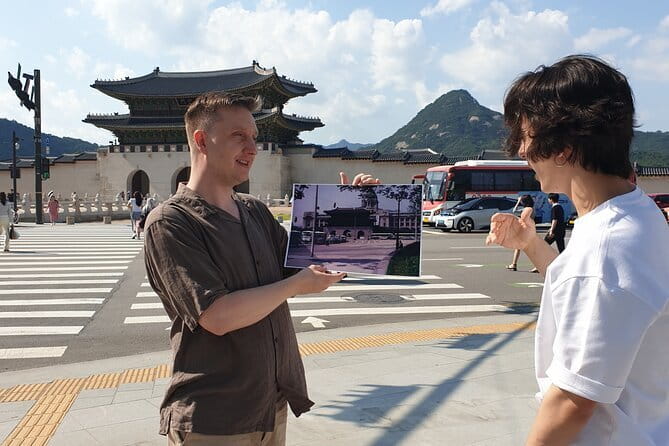
The tour is led by an Australian guide, and one of the standout details in the review feed is that the guide, Eric, provides exceptional information and answers lots of questions. That is the kind of difference you feel when you ask a follow-up and do not get brushed off.
If you enjoy learning with dialogue, this structure helps. If you prefer silent strolling with only minimal narration, you might find the stops a bit talk-heavy. Still, the time blocks are short enough that you can step back and observe when you need a break.
Who should book this Seoul History Walking Tour
This is a great fit if you want history that is active and walkable. You will likely enjoy it if you like connecting landmarks to themes like leadership, education, foreign pressure, and democracy protests.
It also works well if you are short on time. In one afternoon you cover an impressive range of sites, and you get a ready-made route for exploring the area afterward.
It is also a good option for many travelers because most people can participate, it is near public transportation, and service animals are allowed. If you have limited mobility, the walk-focused nature may be something you want to think through based on your comfort with uneven sidewalks and frequent stop-and-go pacing.
Should you book this afternoon walk?
I think you should book if you want an efficient way to understand modern Seoul through real places, not generic blurbs. The mix of free stops, small group pace, snacks, and a guide who answers questions makes it feel like value, not just sightseeing.
Skip it if you dislike walking with frequent stops or you prefer self-guided travel where you control every minute. This tour is built to explain, and it keeps moving.
If you are ready for a guided timeline through the city center, this is a strong way to spend your afternoon.
FAQ
How long is the Seoul History Walking Tour?
It is approximately 3 hours 30 minutes.
Where does the tour start and end?
The tour starts at Bosingak Bell Pavilion, 54 Jong-ro, Jongno District, Seoul. It ends at Jogyesa Temple in Seoul.
What is included in the price?
Traditional Korean snacks and an informative memento are included. Bottled water is not included.
How big is the group?
The tour has a maximum of 8 travelers.
Are there admission fees at the stops?
The listed stops are marked as admission ticket free.
What is the cancellation policy?
You can cancel for a full refund up to 24 hours before the experience starts. If you cancel less than 24 hours before the start time, you do not get a refund.
More Walking Tours in Seoul


More Tours in Seoul


More Tour Reviews in Seoul
Not for you? Here's more nearby things to do in Seoul we have reviewed


Historical Tours, compared.
 ★ 5.0Evening Dark History, Folklore & Ghost Story Walking TourFrom $42593 reviews
 ★ 5.0Hanbok Photoshoot and History Tour at Gyeongbokgung PalaceFrom $60276 reviews
 ★ 4.9From Seoul: Dae Jang Geum Park Historic K-Drama Set TourFrom $55143 reviews
 ★ 5.0City Highlights and Historical Experience No ShoppingFrom $4974 reviews
 ★ 5.0Street photoshoot and Seoul Hidden gem History Walking TourFrom $4568 reviews
 ★ 5.0Full day Private Gyeongju UNESCO Heritage Tour : a glimpse into SillaFrom $25660 reviews
 ★ 4.5Discover Seoul: Local Life and HistoryFrom $9653 reviews
 ★ 5.0Korean History & Heritage TourFrom $47551 reviews
Browse the lists this tour appears in