
This is a border day with real-world weight. You’ll see the DMZ sites people talk about, from the Third Tunnel to Dora Observatory, then finish with a mountain bridge walk.
I like that it’s built for a private group with hotel pickup and drop-off, so your schedule stays yours. I also like that the day is paced with multiple stops that each explain a different slice of the division story, not just one highlight photo.
One thing to plan for: the day runs about 9 hours, so you’ll feel the travel time, and the entrance fee ($7 per person) and meals are extra.
Key points before you go
- Kevin Lee’s guide style focuses on clear, human-scale stories tied to the DMZ, and people highlight how comfortable and safe the day feels.
- A full DMZ circuit includes Imjingak Peace Park, the Third Tunnel, Dora Observatory, and Unification Village stops in one outing.
- Gamaksan Suspension Bridge gives you a physical change of pace, with a 150 m span and about 45 m height over a deep valley.
- Private transportation and hotel pickup/drop-off help you avoid the stress of coordinating public transit for a long, timed day.
- Mobile ticket use simplifies check-in on the day, and keeps less stuff to manage.
- Entrance fees are not included, and you should budget $7 per person plus food.
Private group value: what $410 gets you (and what it doesn’t)
At $410 per group (up to 7), this tour can be good value if you’re traveling with family or a small group. The big win is the private setup: you get guided time plus private transportation, and you’re not stuck waiting around for other people’s pace.
Hotel pickup and drop-off matter more than they sound. A DMZ day is long, and you don’t want to spend your energy figuring out buses, taxis, and timing. This tour handles that part for you, which means you can focus on the experience itself.
The part you need to budget separately is also straightforward: there’s an entrance fee of $7 per person, and meals are not included. So if you’re planning a full-day outing, factor in lunch and small snacks too.
Finally, remember the timing reality: the tour is about 9 hours, but the stops add up to less. The remainder is travel time, time in lines, and the very practical stuff of getting everyone where they need to be safely.
You can also read our reviews of more guided tours in Seoul

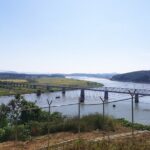

A DMZ day works best when you come with the right mindset
This isn’t a “see a view, take a selfie, move on” kind of outing. The DMZ is tied to the Korean War and the lasting division of a country, including the tragedy of millions of separated family members. Even if you’ve read about the peninsula before, the sites you visit are designed to make the conflict feel specific.
What I like about structuring the day across different locations is that each one nudges you toward a different understanding:
- One stop sets emotional context for separation and remembrance.
- Another shows how conflict logistics could be attempted underground.
- Another places you at a viewpoint meant to show what lies beyond the border.
- Then the bridge and war memorial components give you time to process the information with a change of scenery.
For your comfort, plan simple basics: water, a layer you can carry (mountain air can shift), and shoes that handle walking and uneven paths. Some parts of this day can be crowded, so you’ll want to stay flexible and follow your guide’s pacing.
Imjingak Pyeonghoa-Nuri Peace Park: remembrance with a place-based story
You’ll start at Imjingak Pyeonghoa-Nuri Peace Park, a cultural space built after the 1972 joint statement. It’s the kind of stop that works even if you’re not into museums, because it’s tied to remembrance and real human impact.
This is also where the Global Peace Festival was held in 2005, which helps explain why the park isn’t just a static monument. It’s a space people gather around when they want peace to mean something practical.
The tour includes time for Mangbaedan, where dispersed family members who were born in North Korea or have their hometowns there come during major holidays like Chuseok and Lunar New Year. If you want a moment that connects history to living people, this is it. You’ll see why the DMZ topic is bigger than politics. It’s about families, distance, and memory.
Consideration: you’ll likely spend a good chunk of time walking and reading. If your group is short on patience for quiet, reflective stops, you can still make it work, but you’ll get more out of it if you travel with someone who doesn’t mind slow moments.
The Third Tunnel: why this underground cut matters
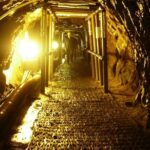
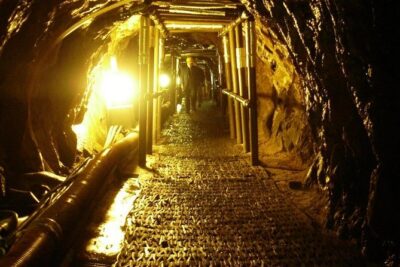
The Third Tunnel is one of the DMZ sites people come for because it’s concrete. Discovered in 1978, it’s about 52 km from Seoul, in Paju’s administrative district. You’ll learn how it runs underground and understand the scale of the effort described by the numbers: roughly 73 m deep, about 1,635 m long, and around 2 m wide.
That width detail matters. It’s the kind of measurement that helps you visualize what moving through a space like that would actually feel like, and why it’s seen as part of the broader tension between North and South.
A practical tip from the experience style here: the guide Kevin Lee is praised for helping groups manage the day well, including getting around crowds at major points like this. For you, that means less time stuck in slow-moving lines and more time actually absorbing what you came to see.
One thing to keep in mind: this is a stop that triggers strong opinions and questions. If your group tends to discuss during tours, this is a good place for it. If your group prefers minimal talk, it’s still manageable, because the site itself is a major visual lesson.
Dora Observatory and Unification Village: what you can see, and what you cannot
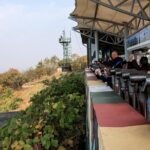
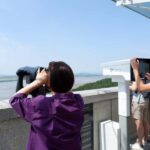
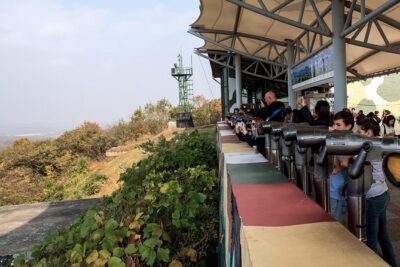
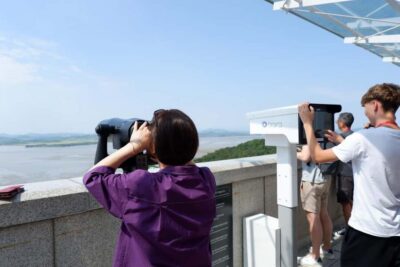
Next comes Dora Observatory on Dora Mountain, positioned within the DMZ area. It’s described as the northernmost observatory in the South, and it gives you an up-close view of North Korea.
This stop hits different from the tunnel. The tunnel is about engineering and hidden movement. Dora Observatory is about distance and visibility, and it brings home the awkward reality that borders are not only lines on maps. They’re things you look at.
After that, the tour includes time at Tongilchon-gil, also known as Unification Village. It’s located within the Civilian Control Line boundaries, founded in 1973 by veterans and native households. You’ll also learn about how it’s shaped by the idea of unification, even while the situation remains unresolved.
What makes this pairing effective is the contrast: you look outward at what lies beyond, then you step into a location shaped by the rules and uncertainty of what’s allowed and what isn’t.
Small consideration: since Dora Observatory and nearby control-line rules can shape how you move and how long you wait, your best strategy is to stay flexible and let your guide handle the flow.
You can also read our reviews of more private tours in Seoul
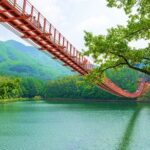
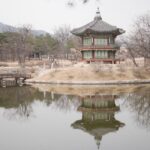
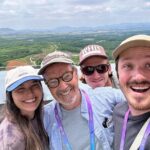

Gamaksan Suspension Bridge: a strong reset after the border stops
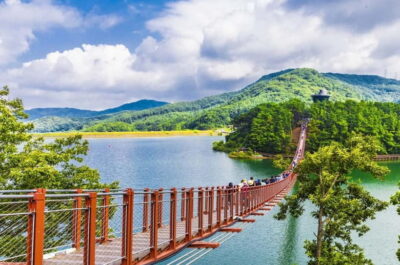
After the heavier DMZ content, the Gamaksan Suspension Bridge gives you a physical reset. It’s on Gamaksan Mountain (675 m) in Gyeonggi Province, and the bridge spans a deep valley.
The numbers are impressive: about 150 m in length and roughly 45 m high. That combination makes it feel more than a quick photo stop. You’ll likely notice the height and spacing as you cross, which helps shift you from thinking only in words and history to experiencing the body sensations of place.
This is also a nice change of pace because the tour uses it as a break in the emotional rhythm. Even if your group is serious about the DMZ, the bridge walk lets you breathe and regain energy.
One practical note: suspension bridges can be windy and can feel a bit exposed, especially at height. If you have a sensitive balance system, take it slow and keep your attention on footing.
War Memorial of Korea: where you go for context after the views
The day also includes the War Memorial of Korea as an optional stop. This matters because the DMZ sites give you the border perspective, but a memorial can help you frame the bigger conflict and its legacy in a more structured way.
The memorial is described as a national moral educational venue, and it preserves materials related to the Korean War. In other words, it’s not only about artifacts. It’s about interpretation, lessons, and keeping the story in public view.
If you’re trying to decide whether to add it, my advice is simple: if your group wants to understand more than what the DMZ stops alone can explain, take the optional time. If you’re tired and your energy is fading after the tunnel and observatory, you can treat the bridge as your final active moment and skip the memorial.
Transportation, timing, and food: how to make the 9 hours feel sane
A 9-hour day is a lot, even when it’s thoughtfully planned. The good part is private transportation and hotel pickup and drop-off. The tricky part is that the day has multiple time blocks and you need energy to enjoy them.
Meals are not included, but you may find this tour’s approach to food helpful. In the feedback tied to this experience, people specifically praised a recommendation for a restaurant stop featuring Army Stew. Even if your guide follows the same general idea, I’d still plan to ask for meal guidance when you’re en route. It’s the easiest way to avoid ending up with overpriced, random food near a busy attraction.
Packing tips for a full day:
- Bring water and a small snack in case lunch runs later than expected.
- Wear comfortable walking shoes. You’ll likely do more walking than you expect once you factor in queues.
- Bring a layer. Mountain and bridge weather can shift.
Also, note the operational hours: the tour runs Tuesday through Sunday, between 8:00 AM and 5:00 PM. That matters for planning your day in Seoul. You don’t want to book something the same morning if your headspace needs extra time.
Who this DMZ plus bridge tour fits best
This is a strong choice if you want:
- A private, guided DMZ day without dealing with public transit.
- A guide who can connect sites to stories people actually carry in their memory.
- A day plan that includes both intense border viewpoints and a change of scenery at the end.
It also tends to suit families with teens, since the experience is described as informative and accommodating, and the guide is praised for making groups comfortable quickly. If your group likes to ask questions, Kevin Lee’s communication style is highlighted as a strength.
If you have mobility limitations, the data says most travelers can participate, but suspension bridges and longer walking segments can still be demanding. In that case, you’ll want to ask your operator what parts of the stops involve more walking so you can plan responsibly.
Should you book? My practical verdict
Book this tour if you want a DMZ day that feels organized, guided by someone who explains the meaning behind what you’re seeing, and wrapped into a longer outing that ends with something physical and memorable like Gamaksan Suspension Bridge.
I’d pass or rethink only if:
- Your group hates long days and would rather do a shorter, less structured experience.
- You don’t want to handle extra costs beyond the $410 group price, since entrance fees and meals are not included.
- Your group prefers a purely museum or city-based day with fewer emotionally heavy stops.
If your goal is to understand the DMZ through several key locations, with smooth transportation and a guide like Kevin Lee who’s repeatedly praised for clarity, friendliness, and safe driving, this is a sensible pick for Seoul.
FAQ
How long is the DMZ tour with Gamaksan suspension bridge?
The tour duration is about 9 hours (approx.).
How much does it cost, and how many people is it for?
It’s $410.00 per group, up to 7 people.
What’s included in the price?
The price includes the guiding fee, private transportation, and hotel pickup and drop-off. You also receive a mobile ticket.
Are entrance fees included?
No. Entrance fees are listed as $7.00 per person.
Are meals included?
No. Meals are not included.
Is this a private tour?
Yes. It’s a private tour/activity, and only your group participates.
What time does the tour run?
The experience operates Tuesday through Sunday from 8:00 AM to 5:00 PM.
Do I need a printed ticket?
No. It uses a mobile ticket.
What is the cancellation policy?
You can cancel for a full refund if you cancel up to 24 hours in advance of the experience start time. If you cancel less than 24 hours before, the amount paid is not refunded.
More Guided Tours in Seoul

More Tours in Seoul


More Tour Reviews in Seoul
Not for you? Here's more nearby things to do in Seoul we have reviewed


DMZ Day Tours from Seoul, compared.
 ★ 5.0Best DMZ Tour Korea from Seoul (Red Suspension Bridge Optional)From $2941,422 reviews
 ★ 5.0DMZ Tour: 3rd Tunnel, Option(Suspension Bridge, Boat) from SeoulFrom $3521,373 reviews
 ★ 5.0DMZ tour south Korea from Seoul (NK experience hall, defector)From $2620,599 reviews
 ★ 4.9DMZ Insider Tour: 3rd Tunnel, NK Defector Meet & Red BridgeFrom $5015,214 reviews
 ★ 4.8DMZ Tour with Optional Suspension BridgeFrom $455,277 reviews
 ★ 5.0Signature DMZ Tour: Exclusive Defector Talk & Suspension BridgeFrom $274,459 reviews
 ★ 5.0Thrilling Korean DMZ 3rd Tunnel Tour from Seoul + Red Bridge RushFrom $353,097 reviews
 ★ 5.0DMZ Past and Present: Korean Demilitarized Zone Tour from SeoulFrom $372,481 reviews
Browse the lists this tour appears in