
Reviewed · HISTORICAL TOURS
Inwangsan hike & historical sites
Night views start with a calm climb. This Inwangsan hike strings together Seoul’s Joseon-era sites and big skyline moments without the daytime crowd crush, led by a friendly guide. You also get a taste of local culture with traditional snacks as you walk.
I especially like the small group size (max 15), because the pace feels personal and easy to manage. I also like that the route combines nature with real place-based history, starting at Sajik Park and continuing along the Seoul City Walls and Hanyangdoseong Fortress.
One practical consideration: the end includes getting back by bus, and the bus fee is not included, so budget a little extra for that final stretch.
Key highlights worth marking on your map
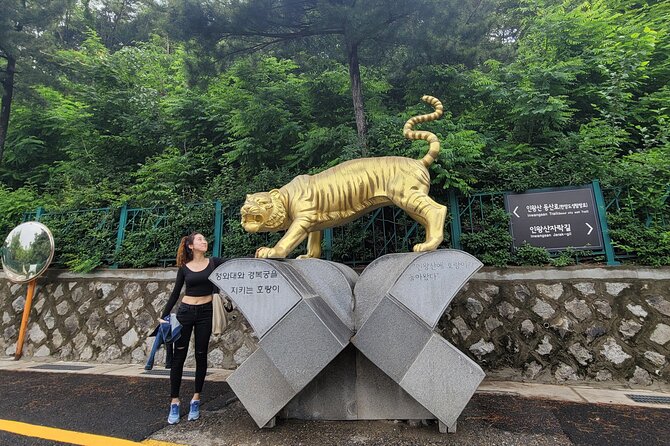
- Sajik Park kickoff with Sajikdan and the Tangun shrine before you ever reach the mountain
- Inwangsan hike that’s described as easy and enjoyable, with less than an hour to the peak
- Seoul City Wall sections (Hanyangdoseong Fortress) as part of the walking route
- Night-sky skyline views timed for illuminated landmarks like N Seoul Tower and Lotte Tower
- Traditional Korean snacks included during the trek
- Maximum 15 people with a certified guide keeping things organized and comfortable
Inwangsan at night, with history stitched into the trail
This tour works because it gives you two kinds of Seoul at once. You start in sacred ground at Sajik Park, then you move into a mountain walk that follows historic fortification lines, and finally you earn those wide city views.
If you like your sightseeing with context, this is a smart format. Instead of hopping between unrelated stops, the route connects the Joseon dynasty story of protecting and organizing the capital with your walk up Inwangsan. And when the city lights show up, the view feels earned rather than just photographed from a busy platform.
The hike itself is described as easy and enjoyable, so you are not signing up for a grueling workout. Still, it is a hike, so bring the mindset that you are walking uphill, taking breaks when you need them, and enjoying the scenery and explanations.
You can also read our reviews of more historical tours in Seoul
Sajik Park first: Sajikdan and the Tangun shrine before the climb
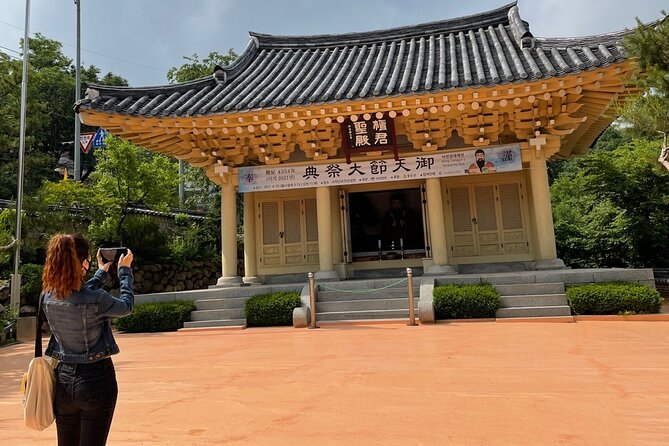
Sajik Park is a strong way to begin because it immediately explains how the Joseon-era court viewed the land and food supply. At the park, you visit Sajikdan and the Tangun shrine.
Sajikdan matters because it was built to support services for the gods of Earth and Crops. In the Joseon dynasty setup, King Taejo, the dynasty founder, constructed Jongmyo shrine and Sajikdan on the east and west sides of Gyeongbokgung Palace, making this a meaningful spatial pairing with the royal complex nearby.
Then there is Tangun. The Tangun shrine enshrines Tangun, the legendary founder of Korea. It’s the kind of stop that can turn a vague lesson into something you can actually picture in your mind, because the explanation is tied to specific places you stand in.
A possible drawback here is also simple: if you prefer skipping shrine visits and going straight to views, you may find yourself wanting to move faster at the start. But if you enjoy understanding why Seoul is arranged the way it is, Sajik Park sets up the whole day’s perspective.
Walking up Inwangsan with Hanyangdoseong Fortress along the way
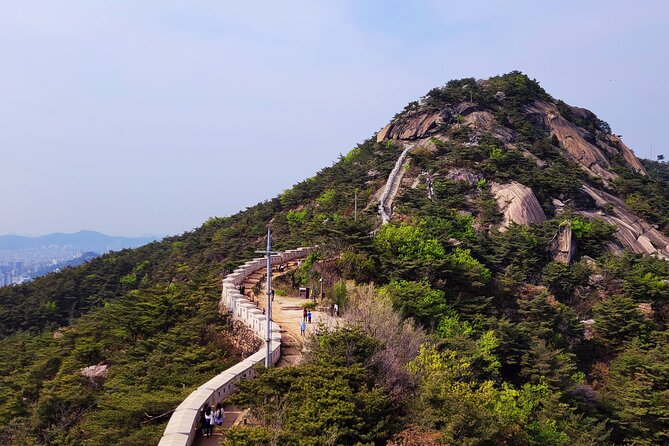
Once you leave Sajik Park, the tour shifts into the mountain portion at Inwangsan. The trail is described as easy and enjoyable, and one highlight is that it takes less than one hour to reach the peak.
That timing is important for two reasons. First, you are not trapped on the mountain for half the day. Second, it gives you enough time to slow down at key points, rather than feeling like the whole hike is just a sprint to the top.
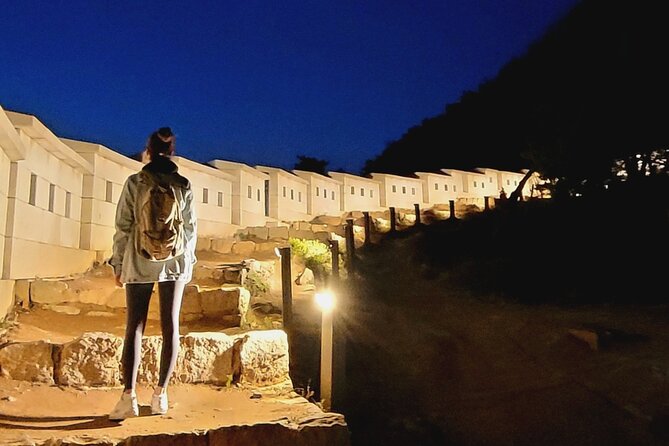
A major “why this feels special” detail is that you walk along Hanyangdoseong Fortress, which is part of the Seoul City Wall. This wall was built in the Joseon dynasty to protect the city from foreign enemies. So even though you are hiking on a mountain, you are also walking along a line of defense that shaped how the capital developed.
And yes, this is where the route starts to feel like a story, not a checklist. You go from spiritual ground (Sajikdan and Tangun) to the physical logic of defense (city wall and fortress), all while moving through forest trails. That combination is why this tour can feel more memorable than a standard “viewpoint hike.”
One detail that shows up in firsthand experiences: there is a library-like spot tucked into the foliage that people talk about because it breaks up the forest vibe with something calm and almost magical. You might spot that kind of rest point if your guide steers you toward the best pause moments.
The summit payoff: 360-degree Seoul views and a calm breather
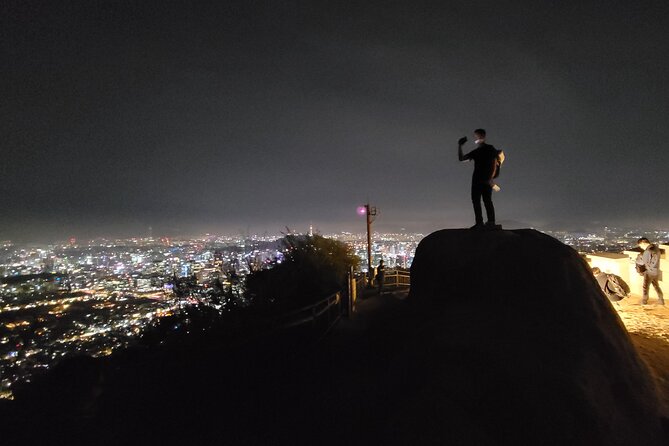
When you reach the top, the day’s pace makes sense. The tour is designed so you get time to watch the city and actually absorb what you are seeing, not just reach the peak and immediately turn around.
Even if you are not a hardcore photo person, wide views do something psychological. They help you understand distance and direction, which makes the rest of Seoul feel less like a blur of neighborhoods and more like a map you can read.
What stands out in the design is that the peak is reachable without turning the hike into a heavy slog. You get that “effort is worth it” feeling without needing to be a trail athlete.
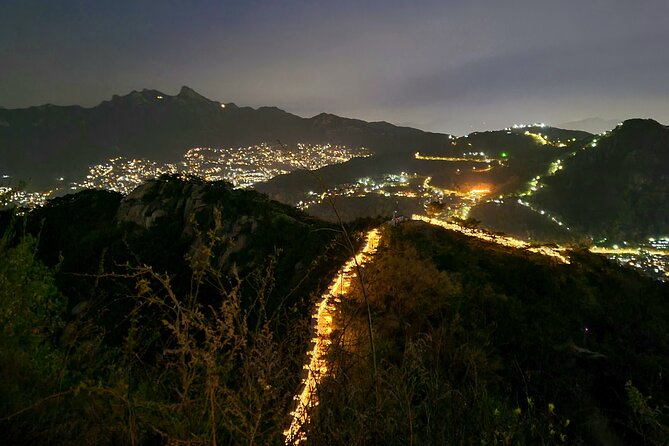
Depending on the timing of your particular departure window, you may also be walking in lower light. One participant recalled getting a flashlight for the late part of the hike, which makes sense for safer footing if the light fades. Either way, treat the end like a nighttime experience and wear footwear with decent grip.
Illuminated landmarks: N Seoul Tower and Lotte Tower from the mountain
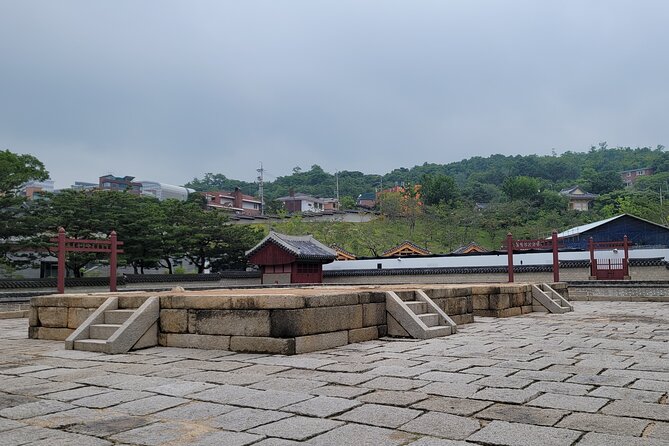
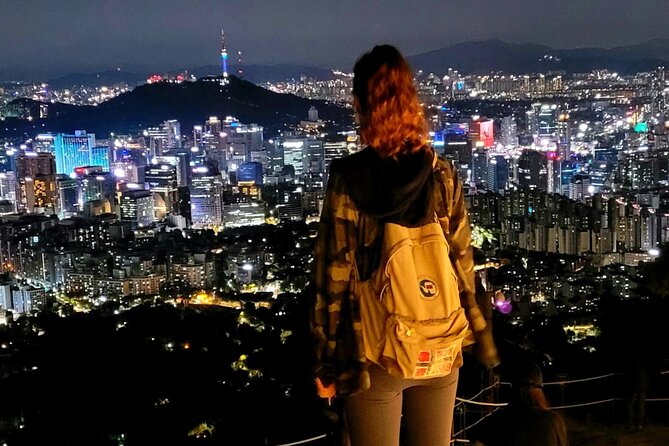
The biggest reason people book this exact Inwangsan angle is the skyline. The plan is built for mesmerizing night views, with illuminated landmarks including N Seoul Tower and Lotte Tower.
Getting that kind of viewpoint matters because Seoul’s towers and downtown lights can feel intimidating at street level, crowded with tour groups and traffic. From the mountain, the city looks layered, and you can take in scale. Even if the skyline is on your bucket list already, night lighting changes the mood completely.
This tour also aims to reduce the “daytime tourist crowds” problem. By timing the experience for night views from the mountain, you are more likely to enjoy the view with space around you, rather than shoulder-to-shoulder walking.
If you are the type who likes watching the light change, this is the right style of outing. The mountain gives you a natural “pause and look” moment, and your guide’s explanations make it easier to recognize what you are seeing.
You can also read our reviews of more hiking tours in Seoul


The guide and group size: why max 15 feels like the sweet spot
The tour is run as a small-group experience, with a maximum of 15 travelers. That matters in Seoul, where many sightseeing tours feel crowded and rushed. With fewer people, your guide can adjust pace, point out details, and keep the group together without turning it into a tug-of-war.
You are also led by a certified guide. The guide associated with Honey Trail on this route is Lee, who is known for being encouraging during the ascent and for sharing context that helps the sites feel alive, not just old.
One of the most praised parts is how the guide keeps the hike friendly. People describe the climb as not difficult, but still appreciate the motivation and attention along the way. That is exactly what you want if you are traveling solo, traveling with kids, or just not trying to prove anything to your legs.
Snacks on the trail: small breaks, big morale
You get traditional Korean treats during the trek. This is not just a “nice extra.” Snacks can completely change how the hike feels, because they turn the walk into a series of comfort breaks rather than one long grind.
In past experiences with this tour, people specifically mention enjoying items like tteokbokki and bread provided during the day. I would treat that as a hint about the snack style: comforting Korean street-food flavors, not just a cookie-and-water situation.
If you have a sensitive stomach, it’s still smart to eat what you are offered slowly and drink what you brought. The tour description does not spell out hydration, so your best move is to come prepared and avoid making the snacks your only fuel.
Timing, meet-up, and how the 3 hours usually feel
The tour runs for about 3 hours. The start is at Gyeongbokgung Station, with pickup at the station area, and the start time listed is 9:00 am.
Because the tour is designed for night views, you should double-check your day’s exact flow with your confirmation details. Sometimes “night views” tours mean a later start in practice, and listing times can vary by season or schedule. Either way, plan your day around a single focused block where you are hiking and then seeing the skyline.
The route includes three main stops: Sajik Park, Inwangsan Mountain, and the Seoul City Wall section on the way through. After the hike, a bus to the city is mentioned, but the bus fee is not included. Also, the activity notes that it ends back at the meeting point, so you may find the “bus to the city” part is a practical transfer rather than a long detour.
For a smooth experience, wear comfortable shoes you trust on uneven paths. Even an easy trail can get slippery depending on weather. And bring a light layer if you tend to feel chilly on higher ground, since mountaintop breezes can be a thing.
Price and value: why $69.28 can be a fair deal
At $69.28 per person for about 3 hours, you are paying for more than just the hike. You are paying for a certified guide, the small-group setup (max 15), the historical site focus, and snacks during the trek.
In Seoul, “value” often comes down to whether the experience saves you time and confusion. With this tour, the route is structured: you start at Gyeongbokgung Station, move to Sajik Park, hike Inwangsan, and follow the city wall lines. You do not have to figure out all the connections yourself, especially at the mountain segment where wayfinding can slow you down.
You are also getting a specific payoff: illuminated skyline views from the mountain, including landmarks like N Seoul Tower and Lotte Tower. Paying for a guided viewpoint hike can be worth it when you care about timing and historical context, not just reaching a random overlook.
Just remember the one extra cost point that is clearly flagged: the bus fee is not included. If you budget a bit for that final transfer, the price starts to look much more balanced.
Who this hike is best for (and who may want something else)
This is a great fit if you want a Seoul experience that feels “local adjacent,” meaning forest trails plus meaningful landmarks, not only indoor museums or busy streets.
It also makes sense if you care about culture and history but still want fresh air. The stops are tied together, so you are not hopping between unrelated monuments. And if you enjoy walking at a relaxed pace, the trail is described as easy and enjoyable, with less than one hour to reach the peak.
If you are traveling with kids or you are building confidence on hikes, the described difficulty level is likely to work. Some firsthand experiences also mention enjoying the hike with a tween, which suggests the day can be manageable for younger travelers when guided well.
If you hate walking uphill or you need a fully seated tour, this probably is not your match. It is still a hike, and the city views require getting up to the peak area.
Should you book this Inwangsan hike with Sajik Park sites?
I think you should book it if you want night skyline views with Joseon-era context, and you prefer a small group guided walk over a crowded bus tour. The combination of Sajik Park, city wall history, easy-ish hiking pace, and snacks is a strong package for the price.
If you are on a super tight budget and you absolutely do not want any extra end costs, note the bus fee is not included. Also, double-check the day’s timing so you truly get the night-view payoff you want.
Overall, this is one of those “short enough, memorable enough” Seoul experiences. You get a real sense of how Seoul is shaped, not just what it looks like at street level.
FAQ
Where does the Inwangsan hike tour start?
It starts at Gyeongbokgung Station in Seoul, South Korea.
How long is the tour?
The duration is about 3 hours.
What is the group size?
The tour has a maximum of 15 travelers.
Are snacks included?
Yes. Traditional Korean treats are included during the trek.
What sites do you visit?
You visit Sajik Park, Inwangsan Mountain, and the Seoul City Wall area. Sajik Park includes Sajikdan and the Tangun shrine.
Is the hike difficult?
The trail in Inwangsan is described as easy and enjoyable, and it takes less than one hour to reach the peak.
Is the bus back included?
A bus to the city is mentioned after the hike, but the bus fee is not included in the tour.
What if the weather is bad?
This experience requires good weather. If it is canceled due to poor weather, you are offered a different date or a full refund.
More Hiking & Trekking Tours in Seoul
More Historical Tours in Seoul


More Tour Reviews in Seoul



Not for you? Here's more nearby things to do in Seoul we have reviewed


Historical Tours, compared.
 ★ 5.0Evening Dark History, Folklore & Ghost Story Walking TourFrom $42593 reviews
 ★ 5.0Hanbok Photoshoot and History Tour at Gyeongbokgung PalaceFrom $60276 reviews
 ★ 4.9From Seoul: Dae Jang Geum Park Historic K-Drama Set TourFrom $55143 reviews
 ★ 5.0City Highlights and Historical Experience No ShoppingFrom $4974 reviews
 ★ 5.0Street photoshoot and Seoul Hidden gem History Walking TourFrom $4568 reviews
 ★ 5.0Full day Private Gyeongju UNESCO Heritage Tour : a glimpse into SillaFrom $25660 reviews
 ★ 4.5Discover Seoul: Local Life and HistoryFrom $9653 reviews
 ★ 5.0Korean History & Heritage TourFrom $47551 reviews
Browse the lists this tour appears in