
A day that mixes palaces and street snacks. It is built for cruise timing, with a private taxi plan that gets you from Incheon to Seoul and back without stress. You get classic landmarks, plus a couple of softer breaks, like hanok lanes and a stream walk.
I especially like the included admissions and AC private vehicle. It is one price, then you spend your energy on sights, not ticket math. I also like how the itinerary is organized around major cultural highlights like Gyeongbokgung Palace and Bukchon.
One possible drawback is the schedule dependency. Gyeongbokgung and the Royal Guard Changing Ceremony shut on Tuesdays, and the ceremony can also be affected by rain or typhoons.
Key highlights at a glance
- Private 7-seater jumbo taxi, even for small groups, so you start and finish smoother
- All admission fees included, which helps the day feel simpler and better value
- Royal Guard Changing Ceremony timing, usually at noon, with known closure rules on Tuesdays
- Insadong and Gwangjang Market, for craft browsing and real Korean food in the same day
- Cheonggyecheon and Sungnyemun, a low-effort walking reset between big palace blocks
- Bugak Skyway and Bukak Palgakjeong views without a long mountain hike
Why This Incheon Port to Seoul Plan Works
This is the kind of day tour you choose when you want maximum Seoul in limited time. You are picked up near Incheon Port, driven into central Seoul, then brought back for your cruise. That matters because Incheon to downtown can take longer than you expect due to traffic, so a dedicated car is doing the heavy lifting for you.
The second big win is that it is truly private. Only your group rides along, and the vehicle stays with you across stops. Even for 1 to 4 people, the day still runs in a 7-passenger jumbo taxi (regular taxi only if that one is not available). Translation: there is enough space for luggage and everyone stays comfortable.
Third, the tour includes air-conditioned vehicle and admission fees. That turns your day into a set of experiences rather than a pile of pay-at-the-door moments. Food is still on you, but most of the “must-see” costs are already covered.
You can also read our reviews of more boat tours in Incheon

The Taxi Ride to Gyeongbokgung, and the Royal Guard Clock
Most people do not come to Seoul just to ride buses. They come for the big palace moment. This tour starts by getting you from the cruise area or Seoul city area to Gyeongbokgung Palace. Depending on where you start, you may spend about 30 minutes to 1.5 hours in the car.
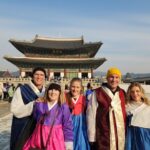
Then the day’s mood shifts to something ceremonial. The itinerary is built around the Changing of the Royal Guard Ceremony, which is held daily at noon (but see closure notes below). If you are the type who likes seeing how a place sets its rhythm, this is your anchor point.
Practical tip: if your pickup lands you near the palace a bit earlier, use that time to walk the grounds lightly before the ceremony. If you arrive right as it starts, you may spend less time figuring out where you want photos from.
Gyeongbokgung Palace Details You’ll Actually Notice
Gyeongbokgung is not just a pretty courtyard. It comes with names and meanings tied to Joseon history, and the palace layout helps you understand how power was shown in everyday architecture.
A couple of specific highlights you can look for as you tour:
- Geunjeongjeon Hall: the place for the king’s coronation and major court ceremonies. When you stand in the hall area, think of it as the political stage of Joseon.
- Gyeonghoeru: the banquet space where the king hosted subjects and entertained foreign envoys.
You also get the larger cultural story. The palace is tied to the idea that Seoul is tied to the Joseon world, and that kind of context helps the day feel more coherent instead of like a checklist.
Important watch-out: Gyeongbokgung Palace and the Royal Guard ceremony are closed every Tuesday. If your cruise lands on Tuesday, the itinerary swaps in Changdeokgung Palace instead. If Tuesday happens to be a national holiday, the closure rule moves to the following day.
National Folk Museum of Korea for Context Between Palaces
After the main palace hit, the National Folk Museum of Korea adds texture. This stop tends to work well when you have already seen grand architecture and you want to understand the people behind it.
You get about 30 minutes here, and that is enough time to see themes rather than try to read everything. The value is in pattern recognition. You start noticing how daily life, traditions, and culture show up outside palace walls.
Drawback to plan around: a museum can be slower if you get stuck reading displays. If you keep moving at your own pace, 30 minutes is manageable. If you love deep reading, you might wish you had more time.
Bukchon Hanok Village Road: Pretty Lanes, Real Walking
Next comes Bukchon Hanok Village. The area sits between major Joseon sites, so it is an easy “culture sandwich.” You get a dense cluster of traditional hanok houses, plus views that make it feel like old Seoul is still standing next to the modern city.
This is marked as about 1 hour, and it works best if you treat it like a stroll, not a race. You will want time to slow down for side streets and to catch the perspective between rooftops.
Photo reality check: expect some uneven footing and narrow lanes. Wear shoes that handle cobblestones or worn pavement. You do not need hiking gear, but you do need non-slip comfort.
You can also read our reviews of more city tours in Incheon

Insadong: Crafts, Tea Houses, and the Car-Free Factor
Then you roll into Insadong, one of Seoul’s best-known historic shopping streets. The appeal here is not just souvenirs. It is the mix: galleries, traditional tea houses, casual restaurants, street vendors, antique shops, and craft-focused shopping.
A few ways to make Insadong work for you:
- Give yourself time to wander the side alleys. The main road is busy, but the lanes feel more like finding things.
- If you like snacks, this is a natural place to grab food like bibimbap as you go.
Also note the street vibe changes on weekends. Insa-dong is car-free every Saturday and Sunday, which can bring more street activity and a more “walkable” feel. If your visit lands on a weekend, plan to enjoy the slower pace.
Gwangjang Market: Where Korean Food Gets Real
If you want one stop where Seoul feels immediate, it is Gwangjang Market. It is the first permanent market in Korea, established in 1905. That older foundation gives the market a different energy than newer, mall-style food streets.
You get about 30 minutes, so this is not a sit-down meal tour. It is a sampling mission. Think of it as a place to taste several Korean staples without committing to a single long course.
If you are curious about what to eat, keep your eyes open for Korean comfort favorites. The tour info specifically highlights traditional foods that many visitors look for around Seoul days, and this market is a classic spot to try them.
Time saver: go hungry, but don’t over-order. A market can eat minutes fast once you start tasting.
Sungnyemun Gate and Cheonggyecheon: A Calm Reset
After markets and palace grounds, this part gives you a breather. You get Sungnyemun Gate, the South Gate area, plus time near Cheonggyecheon Stream.
Cheonggyecheon is between Sungnyemun and the Gyeongbokgung area, so it is a natural walking connector. The stream walk is also one of the best “stretch your legs” moments in the day. It is not complicated. You just follow the flow and enjoy the urban landscape.
Why this works: it breaks up the day’s heavy historical blocks. You can catch photos, slow down your feet, and cool off mentally before the next palace-style stop.
Jongmyo Shrine: Quiet Elegance, Big Meaning
Next is Jongmyo, the tomb shrine complex for long-reigning kings of Joseon. It is UNESCO-listed as World Cultural Heritage, and it has 19 chambers holding spirit tablets.
This is the kind of site that rewards a little patience. Where some palaces feel like dramatic stages, Jongmyo reads more like a solemn place of remembrance. You will likely notice the long, connected rooms and the architecture details, like the gable roof style, that reflect traditional Korean building technique.
This stop can be one of the more moving parts of the day because it feels less like sightseeing for photos and more like a place with rules of respect. If you like culture that is quiet and structured, you will appreciate Jongmyo.
Bugak Skyway and Bukak Palgakjeong Pavilion Views
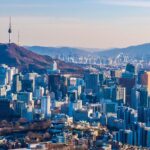
Then you get a shift from courtyards to skyline. Bugak Skyway is a scenic drive route to Bukak Palgakjeong Pavilion, a hanok-style pavilion around 342 meters up on Bukaksan Mountain.
Here is what makes this valuable: you get big views without needing a full mountain hike. The road is about 19 km, with the pavilion offering panoramas of peaks like Bukhansan’s Bibong and Munsubong, and also Seoul’s urban backdrop.
This stop is only about 30 minutes, so treat it like a viewpoint session. Arrive, look, take photos, then enjoy the rest area moment if it is available and time permits. If you have motion sickness, mention it to your driver ahead of time, since it is still a mountain-ridge road.
If Your Route Includes Korean War Memory Sites
The tour info also points to Korean War reflection stops tied to places like Imjingak and the War Memorial of Korea area. These are heavy themes. The value is in learning through specific exhibits, monuments, and dedicated spaces for veterans from countries involved in the Korean War.
Imjingak is described as having DMZ-related video and exhibition spaces, plus connections to observatories like Dorasan. The War Memorial portion includes tribute elements and veteran-focused memorials.
I like including this kind of stop because it balances the day. You spend the morning with Joseon culture and street life, then you end with something that makes you pause and think.
If your group prefers lighter sightseeing only, you can ask your guide to prioritize the core palaces and markets over any heavier memorial stop.
Private Taxi Details: Comfort, Luggage, and the English Factor
This is where the private-taxi model matters. You ride with an experienced driver who speaks a little English, and you are also provided with South Korea-registered taxis with transportation insurance. Even for small groups, you stay in a 7-passenger jumbo taxi when possible, which makes the day feel less cramped than typical shared tours.
One thing to know, based on feedback themes: English support is not guaranteed at a fluent guide level. Some drivers do explain clearly and patiently, but you should not assume complex narration will always happen.
If you want the day to run smoothly, bring a translation app on your phone and use simple questions like:
- What should we look for here?
- What is the best photo spot?
- How long will we need at this stop?
Also, the tour is flexible if there is time. If you strongly prefer one site and can drop another, you can ask, and the provider says they may adjust the day tour course.
Price and Value: Does $225 Add Up?
At $225 per person, this is not the cheapest way to see Seoul. But it is often fair value if you compare it to the total of admissions plus the cost of getting a private car at cruise time.
Here is why it can pencil out:
- Admissions are included for the stops where tickets apply.
- You get a private vehicle that handles the timing from Incheon Port and back, plus intra-city driving.
- If you are traveling as a small group, the 7-seater taxi plan can make the per-person cost feel closer to a shared experience.
Where you need to spend your own money is mostly food and drink, plus optional gratuities. If you plan to eat at markets and local spots anyway, that is normal.
In short: the price makes sense if you value convenience, comfort, and reduced planning. If you prefer to self-navigate by subway and you already know the sites, you might find cheaper options.
When Things Close or Weather Changes Your Route
Seoul days can shift, and this tour is upfront about the big variables:
- Gyeongbokgung Palace and the Royal Guard ceremony close on Tuesdays.
- The ceremony may not be available on rainy days or typhoons.
- The drive from Incheon Port to downtown Seoul can take longer due to traffic congestion.
The best way to protect your day is mindset. You are not booking a rigid script. You are booking a guided route that can swap in alternatives like Changdeokgung Palace on Tuesdays.
Also, if your cruise schedule is tight, keep your schedule flexible in your mind. If you need to adjust pacing at a stop, your driver can help you manage time inside the day.
Who This Tour Suits Best, and Who Might Want Something Else
This tour fits best if you:
- Are on a cruise day and want Seoul without the stress of transit logistics
- Prefer a private taxi over hopping between train lines with luggage
- Want a structured blend of major palace sights plus markets plus a viewpoint
- Appreciate cultural context, not just quick photo stops
It may not fit as well if you:
- Want a fully fluent English guide who narrates like a museum docent
- Hate walking through markets and palace grounds, since several stops involve real foot time
- Are visiting on a Tuesday and want specifically the Gyeongbokgung Royal Guard ceremony, since you need to plan around the closure swap
Should You Book This Incheon and Seoul Private Day Tour?
If you want an efficient Seoul day that feels organized, yes, I think you should consider booking. The big reasons are the private 7-seater taxi, the included admission fees, and the itinerary logic that mixes big palace culture with real city life in places like Insadong and Gwangjang Market.
My final advice is simple. If you care a lot about the Royal Guard ceremony, check your calendar for Tuesdays and keep an eye on weather. If you are flexible and ready for a swap to Changdeokgung when needed, this tour can be a very satisfying way to see a lot of Seoul in one go.
FAQ
Is pickup included in this tour?
Yes. Pickup is offered from Incheon Port or from the Seoul city area, depending on where you are starting.
How long is the private tour?
The tour runs about 6 to 8 hours.
Are admission tickets included?
Yes. The tour includes admission fees for the stops listed.
What happens if my visit is on a Tuesday?
Gyeongbokgung Palace and the Royal Guard Changing Ceremony are closed every Tuesday. The tour visits Changdeokgung Palace instead.
Can the Royal Guard Changing Ceremony be canceled?
Yes. The ceremony may not be available on rainy days or typhoons.
Is this tour private?
Yes. It is a private tour/activity, with only your group participating. Even for 1 to 4 people, the tour uses a 7-passenger jumbo taxi when available.
More Boat Tours & Cruises in Incheon
More Tours in Incheon



More Tour Reviews in Incheon


Not for you? Here's more nearby things to do in Incheon we have reviewed



Incheon Tours & Transfers from Seoul, compared.
 ★ 5.0Private Airport Transfer : Incheon to/from Seoul (up to 7 pax)From $98344 reviews
 ★ 5.0Flexible Private Guided Tour in Seoul (Optional Incheon Layover)From $225323 reviews
 ★ 5.0Private Airport Transfer * Incheon Airport <-> Seoul (1-5 people)From $95235 reviews
 ★ 5.0Private Airport Transfer: Incheon Airport to Seoul City (1-5 pax)From $10592 reviews
 ★ 5.0Private Layover Tour from Incheon Airport to SeoulFrom $24078 reviews
 ★ 5.0Seoul Layover Private Tour from Incheon AirportFrom $23065 reviews
 ★ 5.0(P/Transfer) Incheon Airport ↔ Seoul (Up to 5 Pax)From $6061 reviews
 ★ 5.0Private Airport Transfer: Seoul City to Incheon Airport (1-5 pax)From $10552 reviews
Browse the lists this tour appears in