
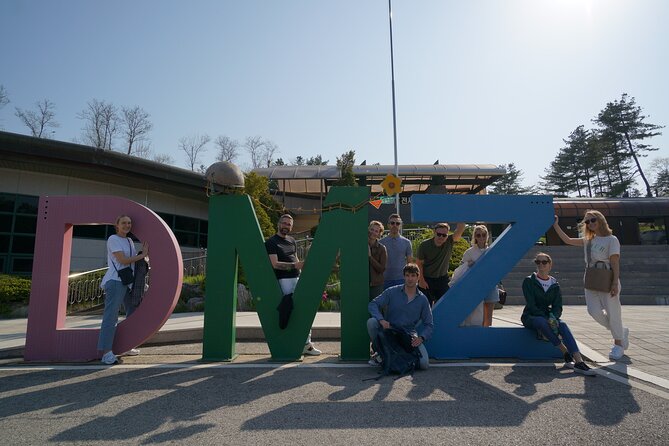
Reviewed · DMZ DAY TOURS FROM SEOUL
[DMZ Private Full day Tour] & The War Memorial include Lunch
Two Koreas, one long day.
This private DMZ and War Memorial tour turns Seoul into a firsthand crash course on the Korean War, with hotel pickup plus major border-area sites like the Third Tunnel and Dora Observatory.
I really like two things about this outing. First, it is truly private, so you can ask your English-speaking guide questions as the story unfolds, including guides like BJ Kim and Alfonso, who explain the geopolitical context in plain, practical terms. Second, you get an easy, all-in schedule: admission tickets at each stop and lunch at a traditional Korean restaurant, so you are not hunting around for food or ticket logistics.
One possible drawback: access can tighten during periods of tension, and parts of Dora Observatory may be closed. That means you might get fewer views than you hoped, but the rest of the day still delivers the core DMZ and War Memorial learning.
Key points to know before you go
- Private group, private pace through the DMZ sites, with time to ask questions
- Hotel pickup and drop-off plus private transportation that keeps you out of logistics mode
- Imjingak Pyeonghoa-Nuri Park + the Third Tunnel + Dorasan Station in one coherent flow
- Dora Observatory views can be affected if access is restricted
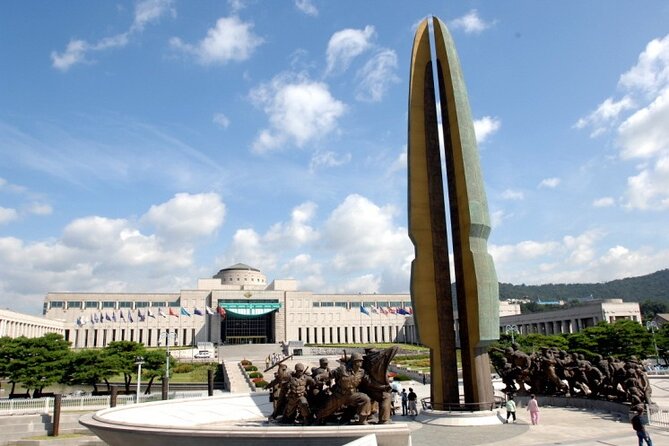
- War Memorial of Korea with lunch ties modern events to earlier Korean history
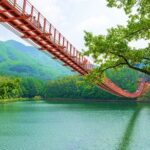
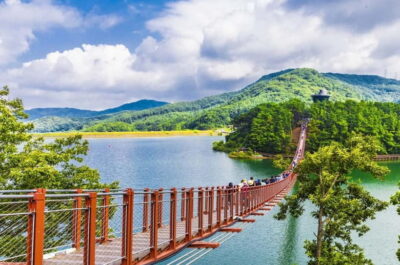
- Extra bridge options may be added, either Gamaksan Suspension Bridge or Majang Lake Suspension Bridge
Why a private DMZ day feels different from a bus tour
The DMZ is not a normal sightseeing loop. It is controlled, emotionally charged, and time-sensitive. Doing it privately changes the feel immediately, because the day is built around your group, not around shuffling strangers at the same few photo spots.
I like that this tour leans into explanation, not just locations. When you are standing where lives and borders were shaped, a good guide matters. In this case, you travel with a fluent English-speaking driving guide, and the guided conversation is a big part of the value. That is why names from past groups pop up again and again, like BJ Kim and Alfonso, with the same theme: they connect the sites to what matters politically, historically, and practically.
There is also a mental payoff. Instead of trying to decode signage, security procedures, and timing, you can focus. Your guide handles the coordination and you keep your energy for the moments that stick with you.
You can also read our reviews of more private tours in Seoul
Getting to the DMZ smoothly from Seoul, and why going early helps
This is an 8 to 9 hour day with pickup included. In practice, the DMZ portion has a rhythm you should respect. You will likely be heading toward the DMZ security process first, and you may ride a bus to the checkpoints as part of the routing.
Here is the simple takeaway: go early, stay flexible. One of the best practical tips I can give is that meeting slightly earlier than planned can help because DMZ-related ticketing and entry logistics can be first come, first served. Also, some tours are closed on certain weekdays, so your guide may steer you toward a timing strategy that keeps the day running smoothly.
And yes, bring your paperwork seriously. You must bring a passport. This is not a “nice to have” item, and you do not want to be the person scrambling at the last minute while everyone else is queued up.
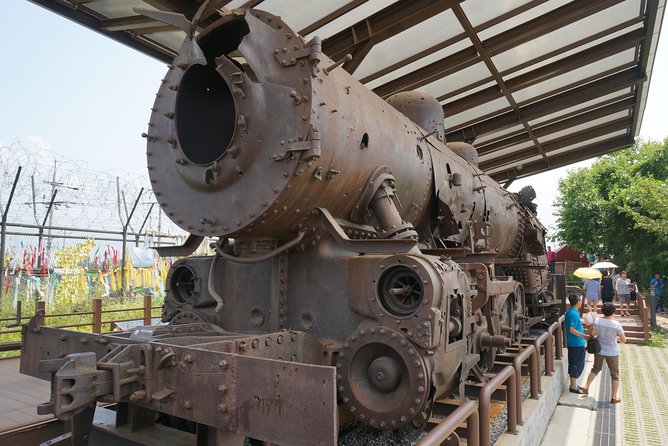
Imjingak Pyeonghoa-Nuri Park: the war story starts with monuments and the rust train
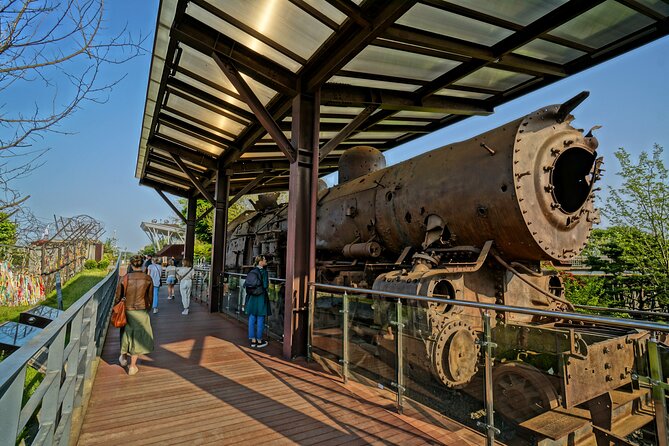
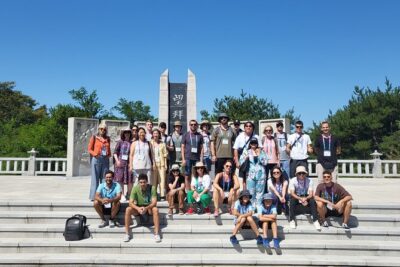
Most DMZ days start with context, and Imjingak Pyeonghoa-Nuri Park is that setup stop. You are surrounded by monuments related to the Korean War and the division, and it is the kind of place where the symbols do some of the heavy lifting before you even reach the tunnel.
One standout detail here is the broken rusted train, damaged during the Korean War. Even if you are not a train person, it is an eye-catcher and a memory anchor. It gives you a concrete visual for what the conflict did to infrastructure and daily life, not just military strategy.
You spend about 2 hours here. That duration is useful because it gives time to absorb the meaning instead of rushing through a checklist. The possible drawback is also obvious: if you want pure time in the DMZ proper, this stop can feel like pre-work. But I think it is the right kind of pre-work, because the later sites make more sense when you understand what you are looking at emotionally and historically.
The Third Tunnel: where Cold War engineering becomes a lesson
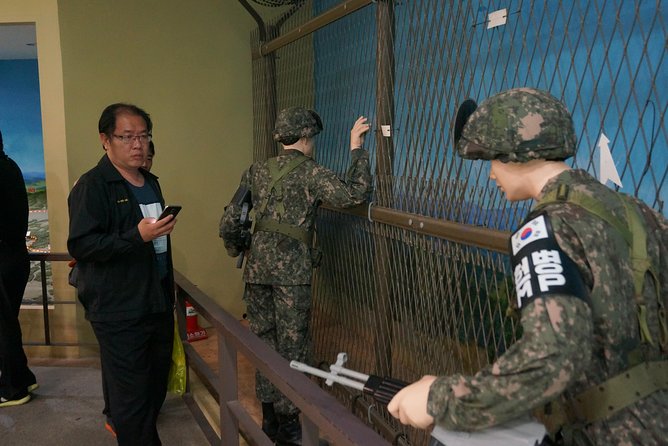
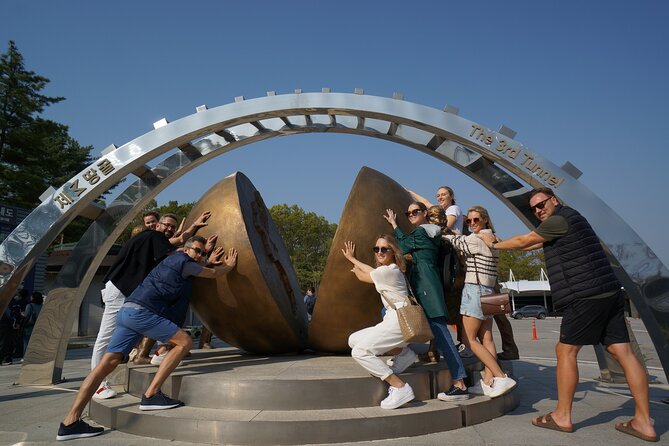
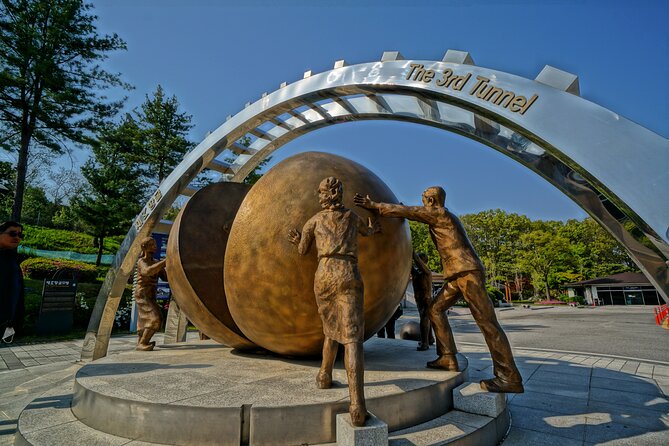
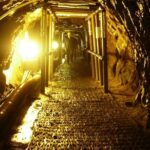
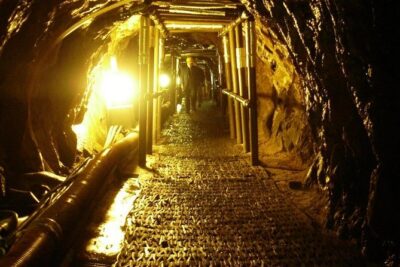
Next up is the Third Tunnel, located in the DMZ area. This tunnel was made by North Korean soldiers in the 1970s, and the point of the stop is not just the physical structure. It is what tunnels represent in a border conflict: planning, fear, and the idea that a line on the map is never enough.
You get around 1 hour 30 minutes here, including admission. The timing makes sense. You are not just walking past artifacts. You are taking in a place tied directly to military capability and the long-running tension between North and South Korea.
A practical note: tunnels can feel tight and visually intense. If you do not love enclosed spaces, pace yourself, and let your guide know what you need. The best guides keep the story clear without making the experience claustrophobic.
Dorasan Station: a symbolic place with real-world meaning
Then you reach Dorasan Station, a train station located in the DMZ area. This stop is short by design, about 30 minutes, because it functions as a symbol as much as a site.
Dorasan Station is about the idea of connection. It is the kind of place where you look at something physical and then immediately think about the political reality behind it. In other words, it is not just a platform, it is a reminder that reconciliation has to beat bureaucracy, security rules, and history all at once.
I like that the station stop is intentionally brief. It keeps the momentum going toward Dora Observatory, where the experience gets more intense visually and emotionally.
A few more Seoul tours and experiences worth a look
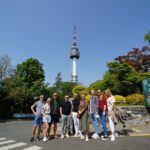


Dora Observatory: the views you want, and the closures you should expect
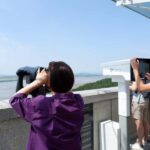
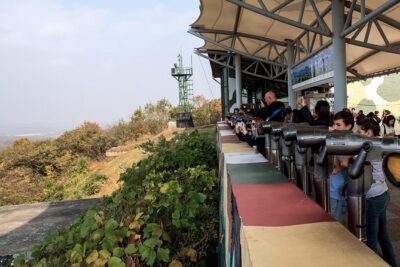
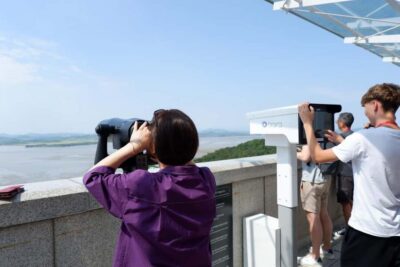
After the station, you head to Dora Observatory, where you can see parts of the real North Korea territory through the observatory. This is the moment people usually picture when they book a DMZ day, and the stop lasts about 1 hour including admission.
But here is the reality check that matters for planning: access can change. If tension is running high, you might find that certain areas, like the top viewing areas, are closed. In past experiences, this has happened even for well-prepared groups.
What does that mean for you? It means you should treat the observatory as a yes if conditions allow, and a partial if they do not. The rest of the itinerary still provides the backbone of the day, so you are not signing up for a single single-point-of-failure moment.
If you are the type who plans everything down to the minute, keep your expectations flexible. The best DMZ memories usually come from rolling with what you are given in that exact day’s access rules.
War Memorial of Korea and lunch: the story turns from present tension to bigger frames
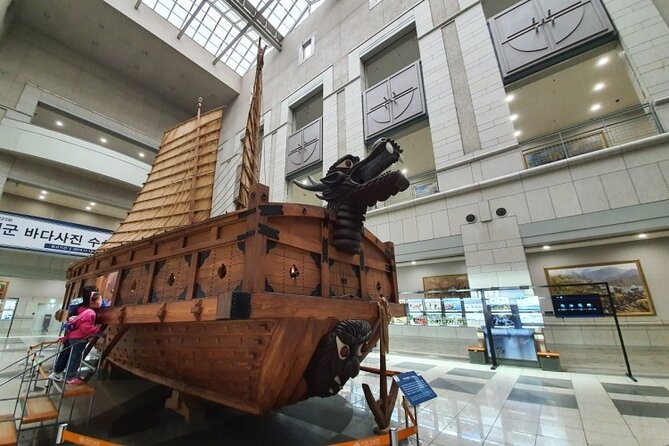
The tour then shifts from the DMZ area to history at the War Memorial of Korea. You also eat lunch here, at a traditional Korean restaurant as part of the experience.
This is where I think the schedule earns its keep. By the time you arrive, you have seen border symbols, tunnels, and restricted views. The War Memorial helps you connect those modern realities to the broader arc of Korean conflict and earlier Korean history.
You spend about 3 hours at the War Memorial. That length matters because a museum like this can become a blur if you rush it. Three hours gives you enough time to pick what you want to focus on, and it gives your guide room to explain themes rather than just point at items.
And lunch is not an afterthought. Having lunch included removes the usual tension of trying to find a place near a major attraction while your schedule is moving. You can actually sit, reset, and then return to the learning with better attention.
Optional suspension bridge time, when it fits
Your package also includes time for one of two suspension bridge options, either Or Gamaksan Suspension Bridge or Or Majang Lake Suspension Bridge.
The important detail here is that the itinerary does not spell out when the bridge time happens. So I would treat it as a bonus stop that depends on the day’s routing and pacing. If you like photos, views, and a quick change of tempo between heavier stops, this can be a nice contrast.
If you prefer a tighter history-only day, you might not care about bridges. Still, even for history-minded visitors, these short scenic breaks can help you recharge so the museum content lands better.
What you get for the $194, and when it is a smart value
At $194 per person, this tour is not the cheapest way to see the DMZ. But it is trying to save you the most expensive part of independent travel: time, confusion, and security check coordination.
Here is what you are paying for, in practical terms:
- Private transportation with hotel pickup and drop-off
- A fluent English-speaking driving guide who explains context, not just logistics
- Admission tickets included at each listed stop
- Lunch included at a traditional Korean restaurant
- A private tour setup where only your group participates
If you attempted to DIY this, you would still need transport, tickets, timing, and guide help for understanding the sites quickly. The real value is that the day is built for learning while you are moving, not for figuring things out when you are tired.
Also, the tour is often booked around a month in advance. That is usually a sign that demand stays steady, especially for dates when DMZ access is smooth. If you want a specific travel rhythm, booking earlier can reduce stress.
The guides really shape the experience
A DMZ day can become either memorable or exhausting depending on how the story is told. The strongest part of this tour shows up again and again in guide feedback, especially around BJ Kim and Alfonso, where the shared praise is about both historical depth and the ability to explain the geopolitical context in a way that clicks.
What I look for in a guide here is the balance: factual enough to respect the subject, but conversational enough that you are not overwhelmed. Based on the way these guides are described, they manage that balance well, including patience for questions.
So when you book, think of the guide as a second ticket. It is the tool that turns DMZ locations into understanding.
Who should book, and who might want a different approach
This tour is a great fit if you:
- Want a guided DMZ day without wrestling security and timing on your own
- Like history and want the sites connected into a clear narrative
- Prefer private pacing so you can ask questions in real time
- Want lunch handled for you, in a traditional setting
You might choose differently if you:
- Get frustrated by access changes, like possible closures at Dora Observatory
- Only want outdoor, open-air sights and dislike enclosed spaces like tunnels
- Have no interest in museums and prefer quick photo stops
For most people, though, the mix works. DMZ sites provide the tension and symbolism, and the War Memorial gives you the broader framework to understand why that tension exists.
Should you book this DMZ and War Memorial private tour?
I would book if you want a day that feels structured and meaningful, not random. The private format, the admission tickets included, and the lunch make the day easy to execute. More importantly, a good guide helps you turn the experience from seeing places into understanding them.
I would also book with a light touch on expectations. Dora Observatory views can be affected by access rules on the day, so plan for a good outcome, not a guaranteed outcome. If you can stay flexible, you will enjoy the full arc of the day, from monuments and the rusted train at Imjingak through the Third Tunnel and Dorasan Station, and then into the War Memorial’s bigger historical frame.
If you are excited by the idea of standing near the line that split a country, this is one of the more practical ways to do it from Seoul.
FAQ
How long is the DMZ Private Full day Tour?
It runs about 8 to 9 hours total.
Does this tour include lunch?
Yes. Lunch at a traditional Korean restaurant is included.
Which stops are included in the DMZ portion?
The itinerary includes Imjingak Pyeonghoa-Nuri Park, the Third Tunnel, Dorasan Station, and Dora Observatory.
Is admission included for the stops?
Yes. Admission tickets are included for each listed stop.
Do I need a passport for this tour?
Yes, you must bring a passport.
Is hotel pickup and drop-off included?
Yes, pickup and drop-off at your hotel are included, along with private transportation.
Is this a private tour or a shared group?
It is a private tour. Only your group will participate.
Is free cancellation available?
Yes. You can cancel up to 24 hours in advance for a full refund.
More Private Tours in Seoul

More Tours in Seoul


More Tour Reviews in Seoul
Not for you? Here's more nearby things to do in Seoul we have reviewed


DMZ Day Tours from Seoul, compared.
 ★ 5.0Best DMZ Tour Korea from Seoul (Red Suspension Bridge Optional)From $2941,422 reviews
 ★ 5.0DMZ Tour: 3rd Tunnel, Option(Suspension Bridge, Boat) from SeoulFrom $3521,373 reviews
 ★ 5.0DMZ tour south Korea from Seoul (NK experience hall, defector)From $2620,599 reviews
 ★ 4.9DMZ Insider Tour: 3rd Tunnel, NK Defector Meet & Red BridgeFrom $5015,214 reviews
 ★ 4.8DMZ Tour with Optional Suspension BridgeFrom $455,277 reviews
 ★ 5.0Signature DMZ Tour: Exclusive Defector Talk & Suspension BridgeFrom $274,459 reviews
 ★ 5.0Thrilling Korean DMZ 3rd Tunnel Tour from Seoul + Red Bridge RushFrom $353,097 reviews
 ★ 5.0DMZ Past and Present: Korean Demilitarized Zone Tour from SeoulFrom $372,481 reviews
Browse the lists this tour appears in