
Reviewed · DMZ DAY TOURS FROM SEOUL
Seoul: Closest DMZ Observatory with North Korea View (1.4km)
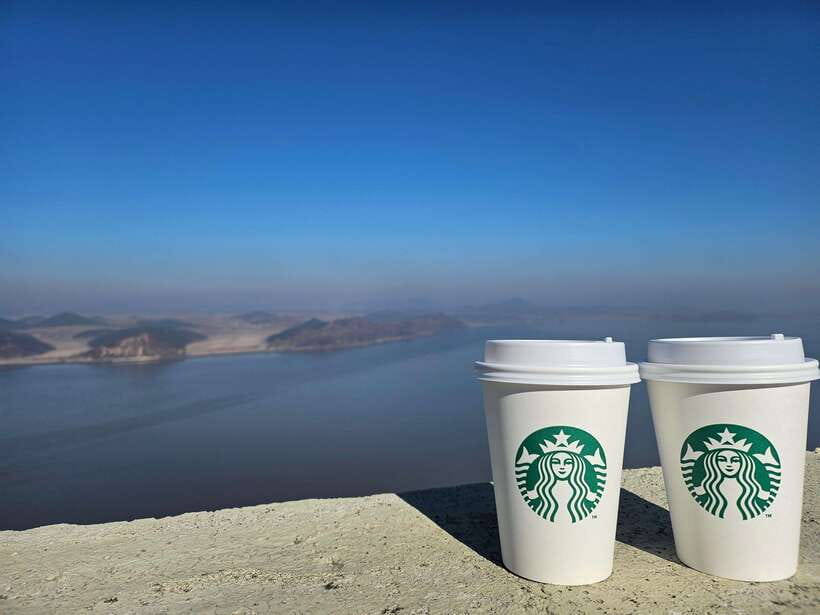
A North Korea view from a cafe stop. This day trip takes you to the Jogang Observatory area at Aegibong Peace Eco Park, where the North Korea skyline is visible with your own eyes. One big draw is that it is not just a photo stop, you also get a guided walk through the eco-park setting first, then time at the observatory.
I especially liked two parts. First, the idea of heading to the closest Starbucks viewpoint to North Korea makes the visit feel memorable and different from a typical DMZ-style “look and leave” tour. Second, the tour experience includes time at the observatory with a free telescope, so you are not relying only on the naked eye.
The main drawback is practical: you must bring a passport on the tour date, and that can be a dealbreaker if you forgot it or planned to travel without one. Also, you will want to think ahead about food and drinks since none are included.
Key highlights worth planning for
- 1.4km distance to the North Korea view point, from the observatory area
- A “Starbucks closest to North Korea” stop that feels more like a setting than a gimmick
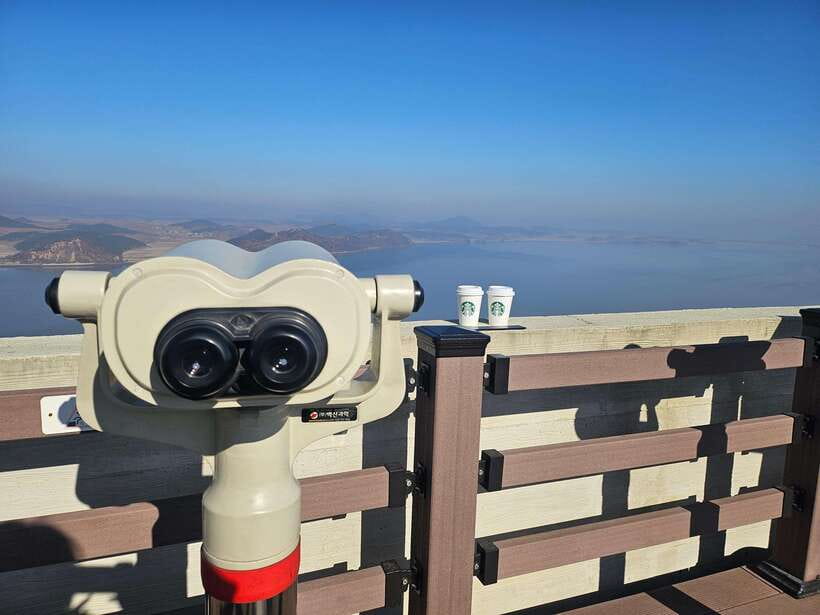
- Free telescope at the Jogang Observatory for closer viewing
- Aegibong Peace Eco Park stops that mix nature, exhibits, and viewpoints
- A guided structure built for learning, plus photo help from the guide
A Starbucks Seat With a 1.4km North Korea View
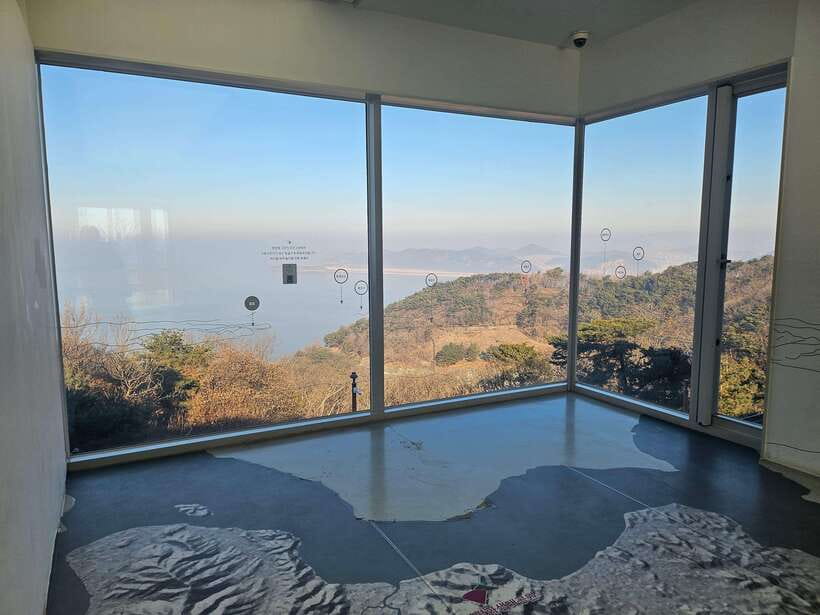
This tour centers on an observatory spot that is about 1.4km from North Korea. That is close enough that you are not just talking about theory. You are looking out toward real territory, and the experience has a grounded, human scale.
The Starbucks angle is part of what makes it emotionally tricky in a good way. You are basically stepping into a very normal, everyday place while facing something extremely not normal. It helps you understand the contrast of everyday life and high-stakes geography in one glance.
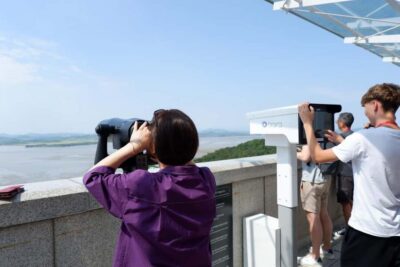
At Jogang Observatory, there is an area where you can view North Korea directly, plus a telescope you can use for free. That matters because the view can be subtle. With the scope, you have a better chance of turning “I think I see something” into “now I understand what I’m looking at.”
One practical note: the tour is scheduled as a day trip from Seoul, so you are stacking movement, guided time, and viewing time. If you hate long coach rides, you will want to make peace with the timeline and treat the observatory portion as the core payoff.
How the Day Flows, From Seoul Pickup to City Hall Dropoff
The day is built around a simple rhythm. You start with pickup in Seoul options, then you head out by bus or coach, get guided time at Aegibong Peace Eco Park, spend a dedicated block at Jogang Observatory, then return to Seoul.
Pickup options vary depending on what you book. Common start points include Hongik Univ. Station Exit 3, Hotel Skypark Myeongdong 3, and The Plaza Seoul, Autograph Collection. This is useful if you are staying near a major hub, because you are less likely to burn time getting to a random meeting corner.
The schedule includes bus or coach travel both ways, plus guided segments. In plain terms, you will do a lot of “inside the day” time, meaning: listen to the guide, watch the route pass by, then focus at the viewpoints. If you like having your time managed, this format works well.
At the end, the tour finishes at Seoul City Hall. That is handy because it keeps you in a central location after a long day. You can then head to dinner without negotiating another complicated transfer.
Aegibong Peace Eco Park: Suspension Bridge and Ecological Exhibits
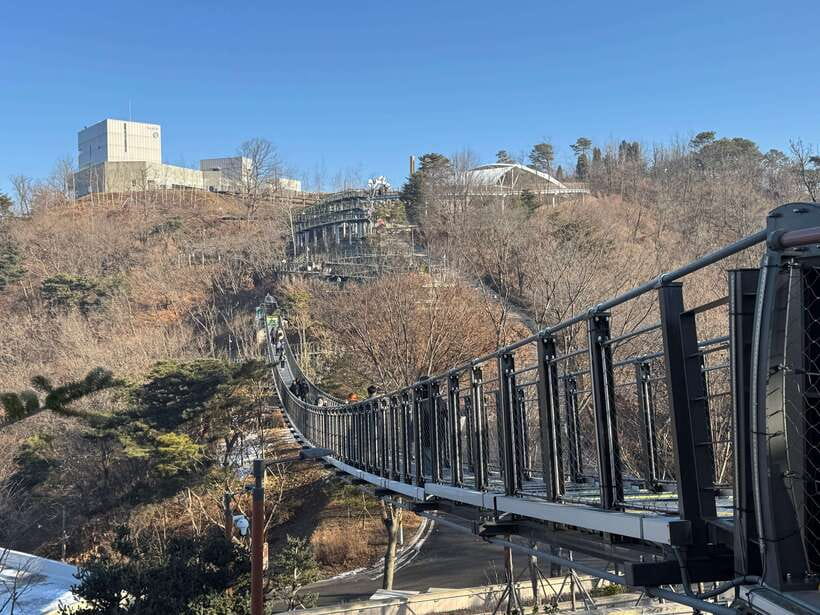
Before you ever reach the observatory, you enter Aegibong Peace Eco Park, which is more than a waiting room. It includes an ecological exhibition hall, an observatory area, and an ecological trail. If you only care about the North Korea view, you might worry you are “wasting time” walking around. But this part actually helps set context.
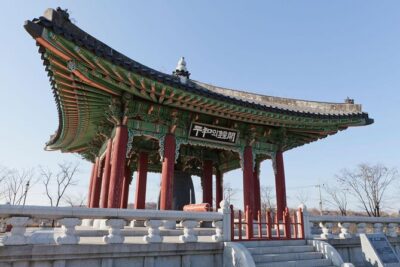
The park was built around a renovated old observatory, which gives the whole area a layered feel. You are walking through a place that has been repurposed for today, but the “look outward” purpose is still there. That makes the later telescope and view feel less random.
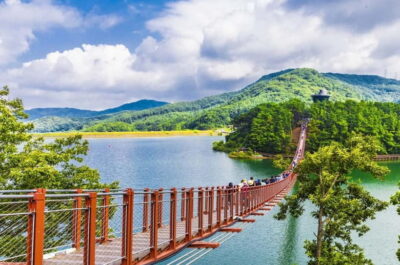
On the way to the Starbucks viewpoint, you cross a suspension bridge. This is small in duration but big in mood. It helps you move from city energy into a calmer, more scenic space, and it also makes the approach to the observatory feel like a journey rather than a straight line.
There is also a beauty factor here. The park combines natural scenery with architecture that is meant to harmonize with it. You may find that you want a few minutes just for the environment and not only for the border view, because it gives your brain a breather.
Jogang Observatory and the Free Telescope at the Starbucks Closest to North Korea
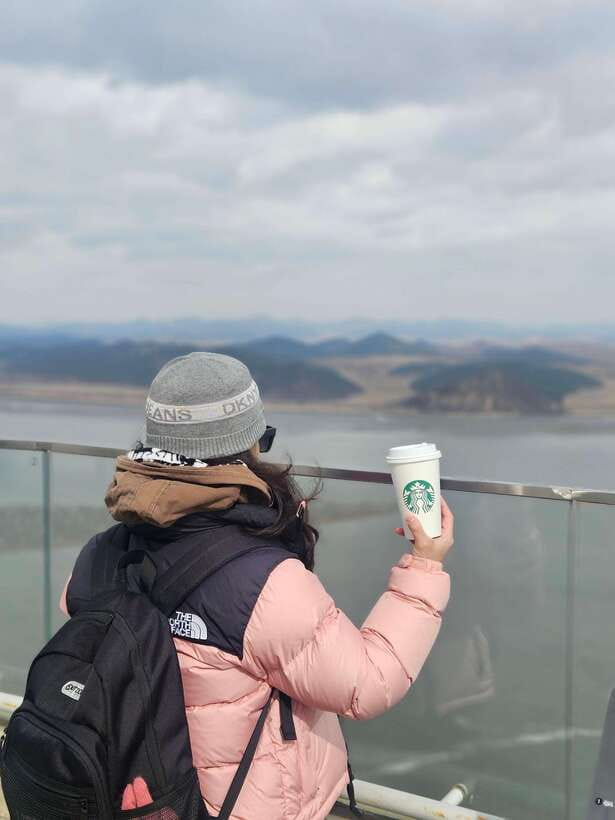
Jogang Observatory is the main stage. This is where you get the direct view area and where the telescope is available for free use. The goal is to help you see, not just to point.
The “Starbucks closest to North Korea” stop is basically your gateway. You can think of it as an unusual landmark that anchors your visit. Instead of standing at a fence with no comfort factor, you are in an observatory-style setting where the space is designed for looking.
In front of the Starbucks area, there is an observatory viewpoint built for viewing. If the day’s visibility is decent, you can expect to see North Korea with your own eyes. And if visibility is less cooperative, the telescope becomes your best friend.
One useful mindset: do not rush to take one photo and move on. I would spend your first moments simply looking, then use the telescope once you understand the basic direction and what you’re trying to locate. That two-step approach makes the scope time feel more productive.
Also, this is where you get guided explanation. One consistent theme from past guide quality is that they blend history and present-day context in a way that is easy to follow, with a tone that respects the seriousness but still keeps you engaged. If you care about understanding what you see, this matters more than you might think.
What You Can Expect to See, and Why the Day Matters
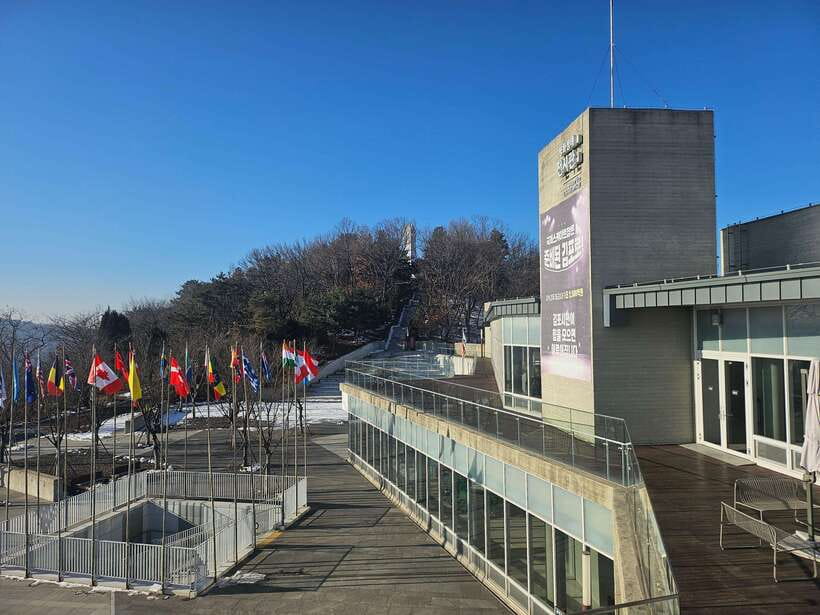
This tour is built around one clear promise: you can view North Korea from the observatory. Still, the real-world experience depends on day conditions, just like any long-view sightseeing. You are looking at distance, not a museum diorama.
The biggest advantage of this observatory format is that it can feel reliable even when other access is limited. There is at least one example of a day when the main DMZ access was closed, yet the group still managed to see into North Korea from this viewpoint. That does not mean every day will be identical, but it shows why this stop is often seen as a strong option if you want more certainty.
You should also expect the view to be more about shapes and positioning than crisp, close-up details. That is where the telescope helps, because it can sharpen your perception of what you are looking at.
If you come hoping for a dramatic Hollywood-style frontier panorama, you may be disappointed. If you come wanting a real, grounded look at the divide and the geography, you will likely find it surprisingly powerful.
Price and Value: What $47 Buys on This 7-hour Trip
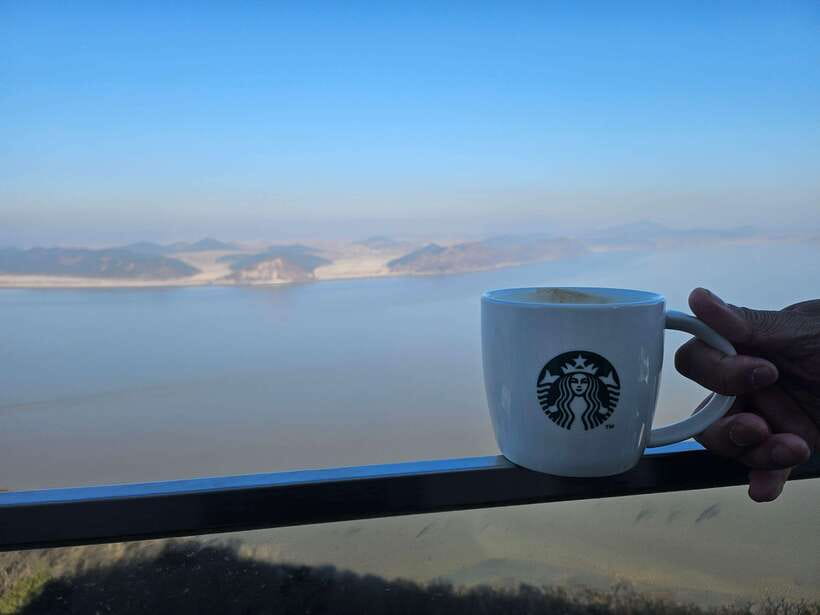
At about $47 per person, the value is tied to what is included. Your ticket covers transportation, a tour guide, and admission. Food and drinks are not included, so you will still want to budget for that separately.
Why that matters is simple. Day trips to border regions can add up once you include transit and entry costs. Here, the pricing is more predictable because admission and guide time are built in.
Also, the structure is doing work for you. You are not organizing transfers and coordinating multiple stops on your own. Instead, you get coached time at the eco park and a dedicated block at the observatory, which is where your experience will pay off.
The one cost consideration is the human one: you are spending most of your day in a guided schedule. If you prefer independent, stop-when-you-feel-like-it travel, you might feel boxed in. But if you want a guided learning arc, the value reads as fair.
Tour Guides, Language Support, and Photo-Friendly Time
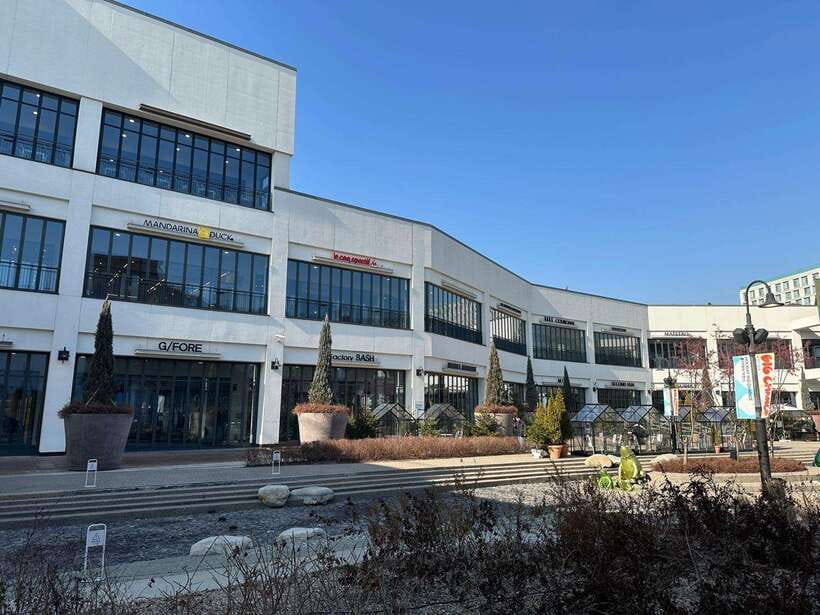
A big part of the success of this experience is the guide approach. Multiple guides have been praised for making the information understandable and for balancing humor with respect. That balance matters because the topic is serious, but your day will be long, and you still want your guide to keep it moving.
If you want a language match, this tour offers live guide options in Chinese, English, and Japanese. Having real-time interpretation changes the experience. You are more likely to understand what you are looking at, and that makes the telescope moment more meaningful.
Photo help is also part of the experience. The guide focus includes making sure people get good shots, which is helpful in a viewing environment where the angles can be tricky and time can feel tight.
So, if you are coming for the viewpoint but you also want context, this is the kind of tour where the guide makes a practical difference, not just a background detail.
Practical Tips: Passport, Timing, and What to Bring
You must bring a passport on the tour date. A copy of the passport is acceptable. Still, I strongly suggest bringing the actual passport if you can, because it reduces the chance of last-minute problems.
Beyond paperwork, pack for a day that includes walking and standing. You are going through an eco park area and crossing a suspension bridge before you reach the observatory zone. Comfortable shoes help more than you might expect.
Bring your own snacks or at least be ready to buy them, because food and drinks are not included. If you skip this, the long coach stretches plus guided time can make hunger feel like a distraction.
For photography, expect long-view conditions. If you have a phone camera, use stable support if possible, and take a couple of slower, steadier shots. Then, once you get telescope time, take a moment to orient yourself before you shoot. That prevents wasting the scope portion on confusion.
Finally, plan your day around the full schedule, not just the observatory stop. You start with pickup and travel, then guided eco-park time, then observatory time, then the ride back, ending at Seoul City Hall.
Who This Tour Fits Best (and Who Might Want to Skip It)
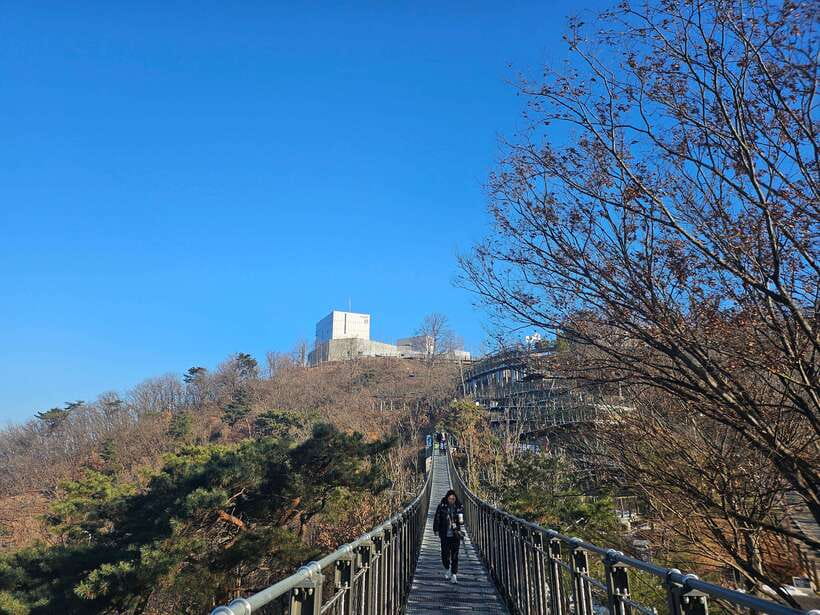
This is a great fit if you want a structured way to see the North Korea view from the closest observatory-style viewpoint tied to the Starbucks landmark. You also get a park setting that makes the approach feel like something more than a single platform.
It works especially well if you care about learning, not just looking. When the guide explains the context clearly, the telescopic viewing moment becomes a real “I understand what this means” experience.
Consider skipping it if you dislike guided day trips or if the passport requirement is an issue. Also, if you want a fully independent itinerary where you control every stop and pace, this tour’s schedule will feel more rigid.
Should You Book This 1.4km Observatory Tour?
I think you should book if your priority is seeing North Korea from a Seoul-area day trip with a guide, admission included, and a free telescope. The setup around Aegibong Peace Eco Park and Jogang Observatory gives you both learning time and real viewing time, all in about 7 hours.
Book it especially if you want a plan that can still deliver viewing even on days when other DMZ access is limited. It is not a guarantee for every weather day, but the format has shown it can work when broader access tightens.
Skip it if you cannot bring a passport, or if you are only interested in a quick photo and nothing else. This is a guided experience that asks you to slow down, listen, and then look carefully.
If that sounds like your kind of travel day, you’ll likely leave with a view that sticks, plus a better understanding of the border as a real, geographic reality.
FAQ
Where is this tour located?
The tour takes place in Gyeonggi Province and includes time at Aegibong Peace Eco Park and Jogang Observatory, then finishes back in Seoul City Hall.
What is the duration of the tour?
The total duration is listed as 7 hours.
How much does it cost?
The price is $47 per person.
What is included in the price?
The tour includes transportation, a tour guide, and admission fee.
What is not included?
Food and drinks are not included, and you’ll also have personal expenses during the day.
Do I need a passport?
Yes. You must bring a passport on the tour date. A copy of the passport is fine.
What languages are available for the guide?
The live tour guide is offered in Chinese, English, and Japanese.
Is there a telescope for viewing?
Yes. At Jogang Observatory, there is a telescope that you can use for free.
Where do I meet the group?
The meeting point may vary depending on the option booked, with listed start options such as Hongik Univ. Station Exit 3, Hotel Skypark Myeongdong 3, and The Plaza Seoul, Autograph Collection.
What is the cancellation policy?
You can cancel up to 24 hours in advance for a full refund.
DMZ Day Tours from Seoul, compared.
 ★ 5.0Best DMZ Tour Korea from Seoul (Red Suspension Bridge Optional)From $2941,422 reviews
 ★ 5.0DMZ Tour: 3rd Tunnel, Option(Suspension Bridge, Boat) from SeoulFrom $3521,373 reviews
 ★ 5.0DMZ tour south Korea from Seoul (NK experience hall, defector)From $2620,599 reviews
 ★ 4.9DMZ Insider Tour: 3rd Tunnel, NK Defector Meet & Red BridgeFrom $5015,214 reviews
 ★ 4.8DMZ Tour with Optional Suspension BridgeFrom $455,277 reviews
 ★ 5.0Signature DMZ Tour: Exclusive Defector Talk & Suspension BridgeFrom $274,459 reviews
 ★ 5.0Thrilling Korean DMZ 3rd Tunnel Tour from Seoul + Red Bridge RushFrom $353,097 reviews
 ★ 5.0DMZ Past and Present: Korean Demilitarized Zone Tour from SeoulFrom $372,481 reviews
Browse the lists this tour appears in